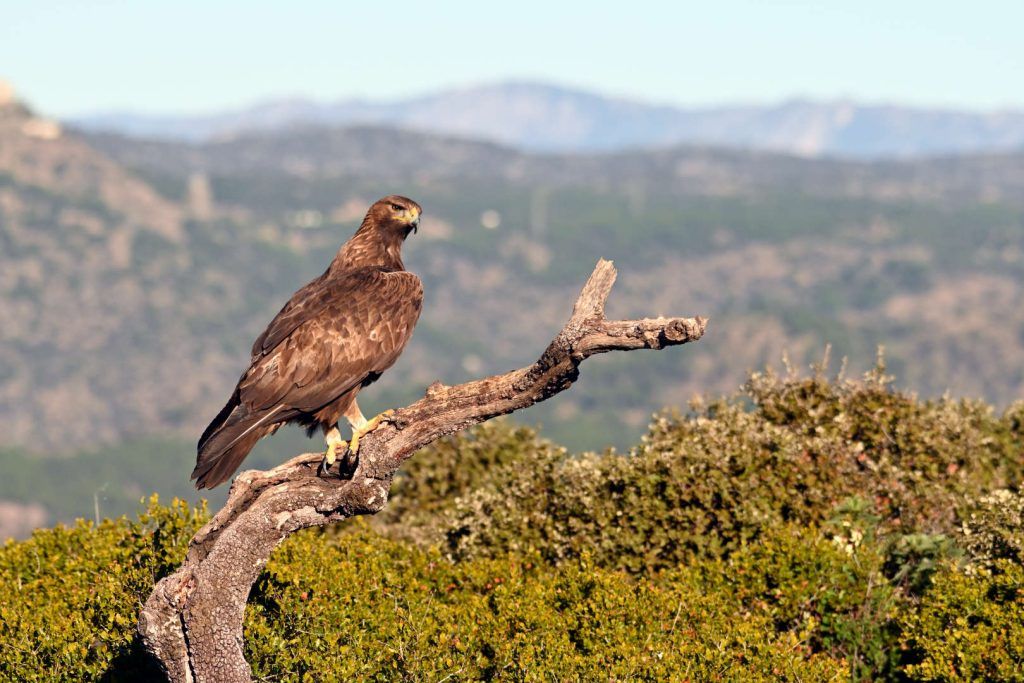
It was some time ago that I stumbled upon this particular cliff queen when I was hiding out photographing other birds of prey. It appeared suddenly, stealthily, but with a majestic bearing that left no doubt that I was in the presence of a true golden eagle, the queen of our skies. Want to know more about this story?

It was around January 2022. I was traveling through the Sierra de Andújar Natural Park, desperately searching for the Iberian lynx. The trip didn't turn out as I had hoped, I even managed to spot out of the corner of my eye the lynx, but I wasn't able to photograph it. But during those days I still had time to explore the area in search of other mammals and birds. At some point I'll tell you about my encounter with several otters wild. But today it's time to tell you a little more about the queen of our skies: the golden eagle.
Surely you have already found other articles on the blog dedicated to Iberian birds of prey, such as this article dedicated to common goshawk, or this other one dedicated to eagle owl. All these articles on birds of prey actually form a broader, long-term dossier of articles and videos about the birds of prey that I find on my travels around the Iberian Peninsula.
The fact is that those days in the Andújar mountains gave us much more than the despair of not finding the lynx. I was able to reserve one of those days to stake out a hide and photograph different birds that came to feed. I already knew that the Andújar mountain range was famous for the variety of birds of prey that can be found there. I was hoping that a imperial eagle that I had seen crossing the skies in the distance. Unfortunately for me, it did not come down. But other birds of prey did come in, among them this beautiful one golden eagle.

The golden eagle is the eagle of larger size of our skies. It is the eagle more powerful from the Iberian Peninsula, perhaps only eclipsed by the imperial eagle. It's easy to identify, precisely because of its size, but also because of its coloration, especially in adults, which have a very characteristic dark brown color.
Young specimens are darker, almost black, with white tones that stand out on their wings. But these colors change to copper and brown tones as they grow. They are not as tall as vultures. Their height can range between 75 and 100 centimeters. However, when they spread their wings, things change and their wingspan It's one of those that gives you a bit of fear. 1.80 and 2.30 meters of a powerful bird of prey with outstretched wings.

It ranges throughout the Northern Hemisphere, and here on the Peninsula, we can find it in all mountainous areas and high-altitude cliffs. The only areas of the Peninsula where it is not common are the islands and the wide, flat areas of the plateaus. Being a large bird, it usually inhabits and nests in ravines and mountain cliffs, where it builds its nests.
Adults form pairs that don't usually travel far; on the contrary, they find a place to nest and breed. In fact, the Iberian Peninsula is one of the areas in Europe where the largest number of pairs nest. The exact number is difficult to calculate, but it is estimated that between 1,500 and 1,700 pairs are distributed throughout the country.
Unlike other birds of prey, the golden eagle can feed on a wide variety of piecesFrom mammals such as rabbits and hares, birds such as pigeons and partridges, and reptiles such as lizards.
Regarding the reproductive cycle, is similar to that of other raptors we've seen previously. The mating season begins at the end of January, and laying takes place a month later. These raptors lay between one and three eggs per season. The female is responsible for incubating the eggs for 40 to 45 days. Both the male and female feed the chicks for about 30 days after birth. From then on, they begin to feed themselves, gradually exploring the world around them.
They usually build large nests, 1.5 meters in diameter and almost 2 meters high, and each pair usually has several nests distributed throughout their territory that they use during each breeding season.
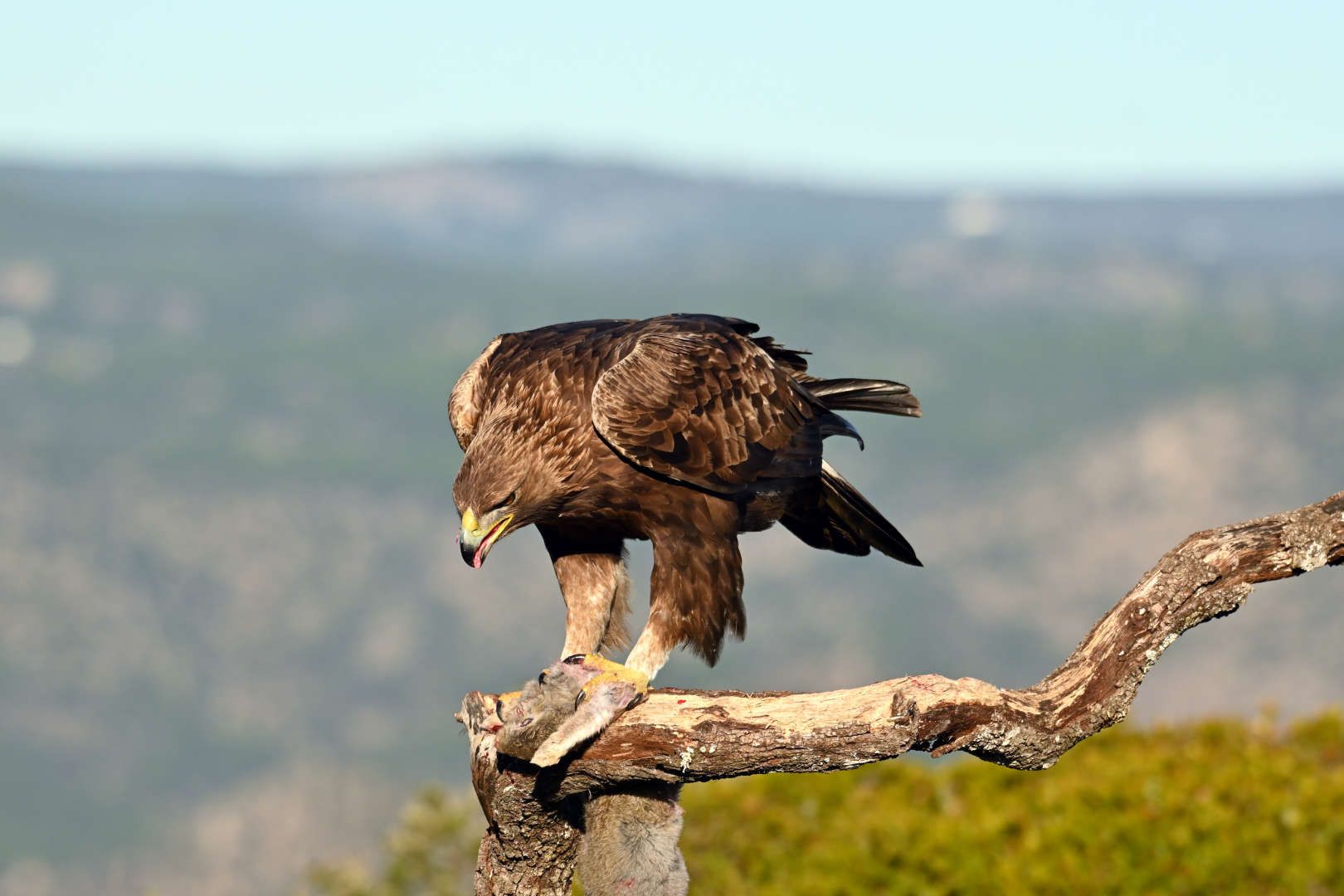
Without a doubt, while photographing this majestic bird of prey, what caught my attention most were its enormous claws and powerful beak.
 Observe the fearsome claws that this golden eagle wears. They're scary, aren't they? They're true precision blades, capable of grabbing, tearing, and piercing bones. Combining their powerful talons with precision vision, far superior to that of humans, these raptors can launch themselves from the skies, calculating down to the millimeter where they need to land to catch their prey.
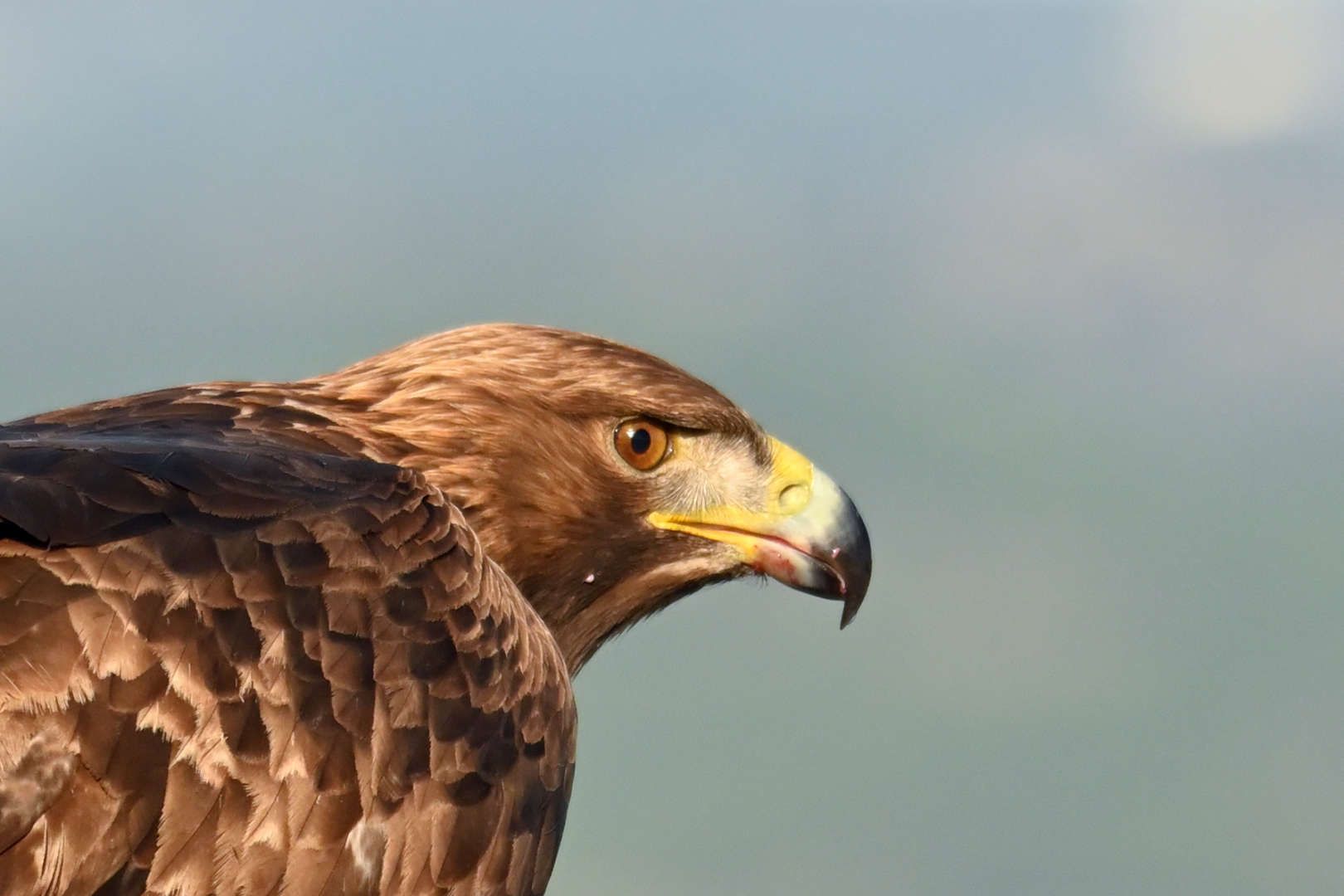
Regarding the beak, also gave me quite a bit of a scare. Prepared to grab and tear tissue, even fracturing bones. A killer beak and fearsome claws are the perfect combination to increase the chances of capturing its prey.
The truth is that my trip through the Sierra de Andújar wasn't what I expected. I wasn't able to photograph the Iberian lynx (although I calm my spirit knowing I saw one out of the corner of my eye once). On the other hand, the mountains offered me the chance to film a litter of otters in the Jándula River. I also spent a very enjoyable morning photographing from a hide in the mountains. golden eagle and to common goshawk among other birds of prey.
Greetings to all.