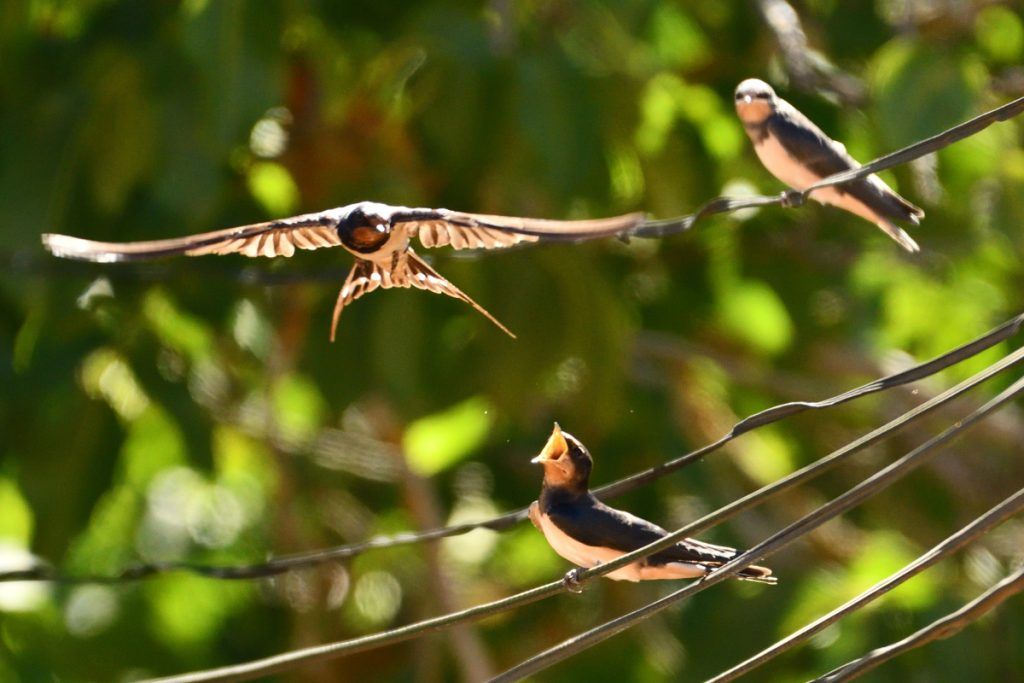
The story I'm going to tell you is a clear and faithful reflection of life itself. The story tells of the effort and work of a couple of barn swallow to procreate and raise the next generation. It speaks to the harshness of nature, but also to how beautiful and fascinating nature can be. And that story begins in early June, in a small town in what I call "El Terruño."
The story actually begins long before June. Long before that pair of swallows built their nest in a small town in the Alto Tajo Natural ParkThe truth is that this story that I want to tell you today begins when it occurred to me document the white nests, so curious, that the common aircraft They were building in a town on the outskirts of the city of Guadalajara.
Those nests were peculiar precisely for its white color. It is one of the few places in the Iberian Peninsula where house martins build their white nests. This is because they use the raw material they find most readily available: kaolin from a treatment plant installed in the town itself. If you haven't seen the video of these common swifts and their white nests, you'll find it by clicking on this link.
The fact is that after discovering the white nests of the common swifts, I became interested in the species and also in its "first cousins" the barn swallowsThese two species of hirundinids (commonly called swallows) have a fascinating life. They can travel thousands of kilometers from the center or even the south of the African continent to the Iberian Peninsula. to spend a cooler summer, and return to Africa again when summer comes to an end in our latitudes.
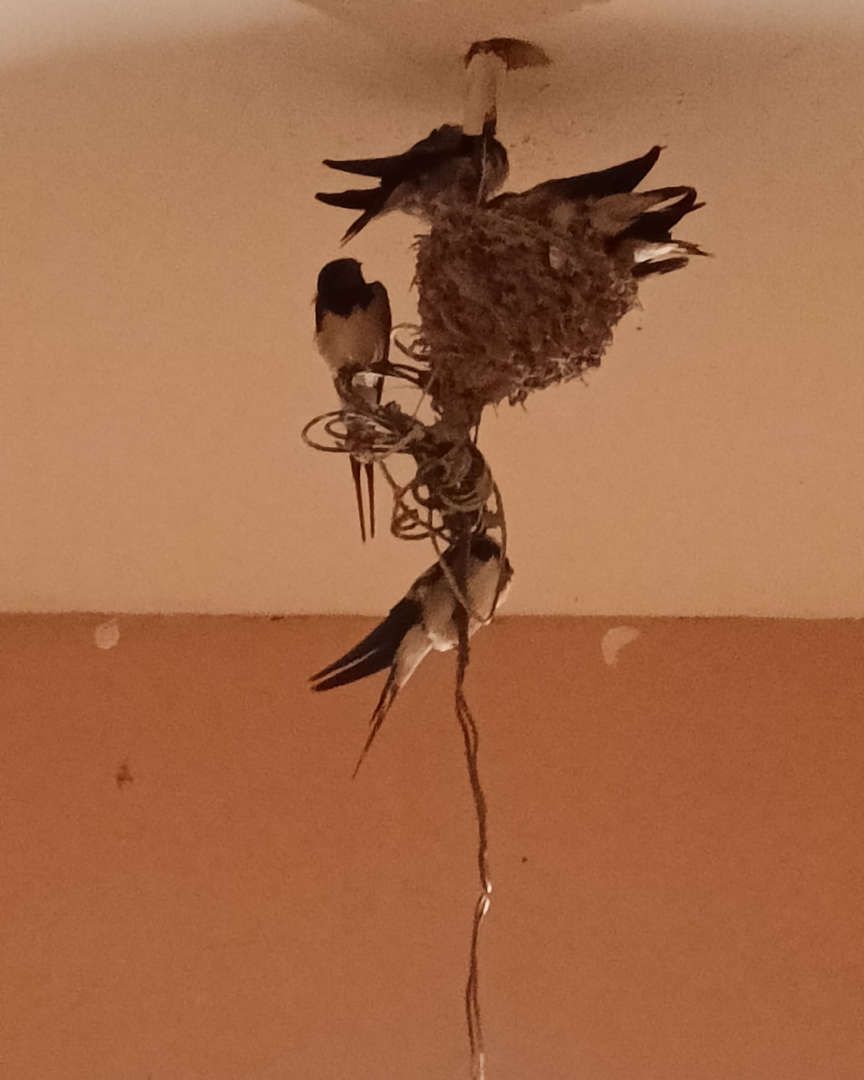
During the summer break between the two migrations, the swallows build their nests on the ledges of our houses, under our balconies, or even, as you can see in the attached photograph, using the cord of a lantern at the entrance to my house. They lay their eggs in these nests and raise them until the chicks are large and independent enough to begin their migration to Africa again.
Please don't read too much into the photos in this article. Almost all of the photos you'll see here are of the chicks when they decided to fly the nest and spent their first day in a walnut tree near where I live. The truth is, I haven't been able to document the process with sufficient quality. But I have been present and witnessed day by day how these barn swallow chicks grew and developed, and that's the story I want to tell you now.
As I was saying, the month of May When a pair of swallows finished building their nest, the female laid her eggs. They did so in the purest swallow nest style, in the upper corner of the entrance to my country house.
The eggs developed and hatched after several days. Little by little, the parents fed the chicks as they grew, but one day, in early June, the tragedy surprised the pair of swallows almost unexpectedly.
The nest was anchored on a vertical wall, and with the increasing weight of the chicks, day by day, there came a time when the nest could not support it and came off the wallThis also happened when I was out of the house. So when I arrived, I found an upside-down nest on the ground in the driveway, and the six chicks, who hadn't yet grown big enough to flap their wings and cushion the fall, died by the impact, under one's own nest.
I had never seen animal behavior like what I saw over the next two days. The adult pair of swallows continued to come to the place where the nest had been with food for several hours. When they reached the entrance and couldn't find the nest that had been there, they would begin to chirp with what seemed to me to be a pitiful cry, trying to find out where their young were.
More than 24 hours passed like this. The parents returned to the house, circling it, twittering pitifully, hoping to find their chicks. When they received no response, they flew away again, only to return a short time later to repeat the process.
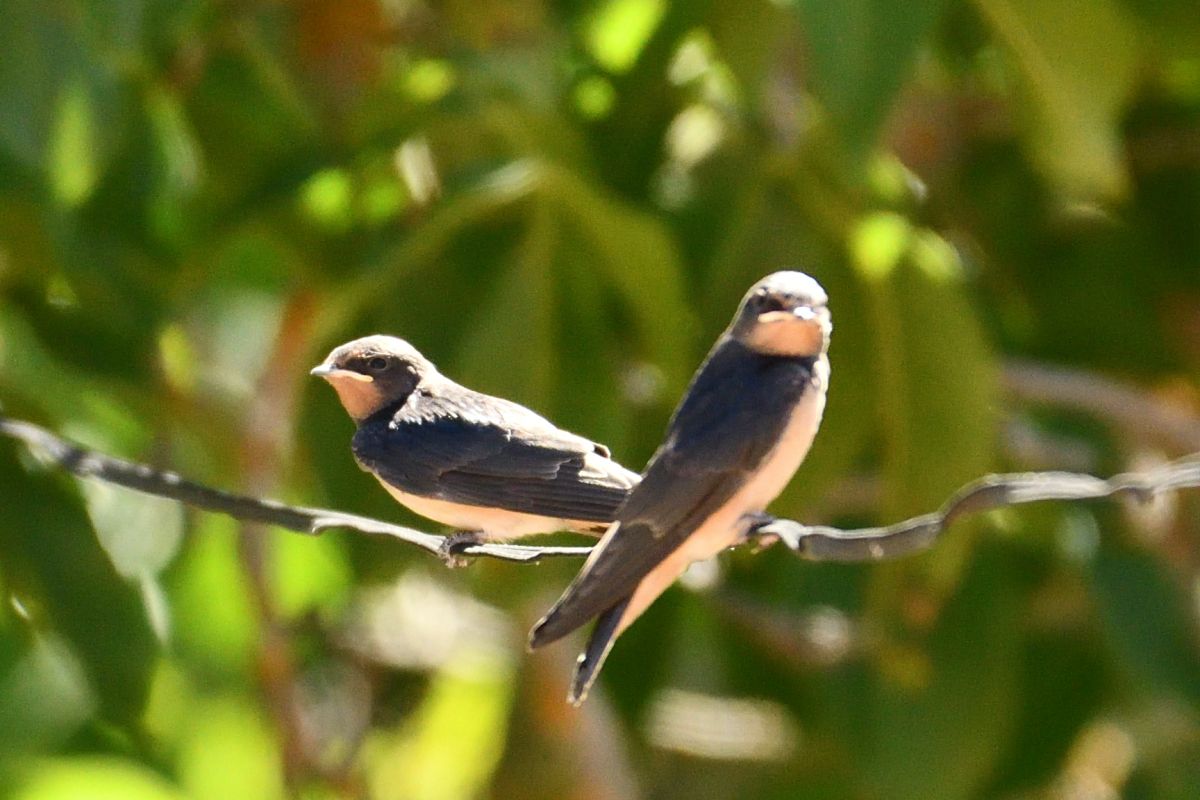
Almost 48 hours later, the pair of swallows changed the chipOver the next two days, they found a new place to build a new nest. This time they went upstairs, and instead of anchoring the nest to a vertical wall, they decided to build it around a power cord from an outdoor lantern. It may seem like a worse location, but I think the nest can hold much more weight here, supported and suspended at the same time by a cord hanging from the ceiling. Are birds that smart? Who knows, but I'd say so.
Several weeks later, the eggs hatched, the chicks grew, and we were almost halfway through August. Then, one morning, like any other, the chicks began to chirp in a way they hadn't done before. They seemed more anxious and nervous than in previous weeks.
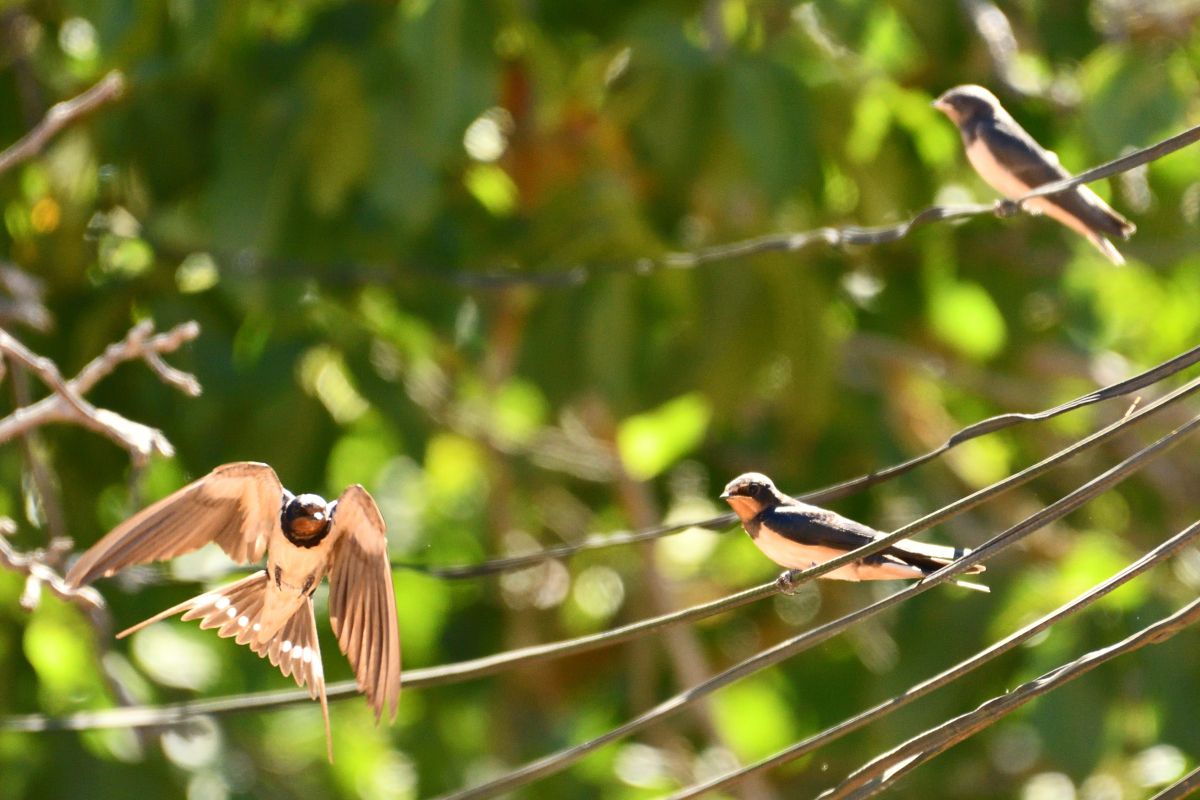
That morning, and little by little, one by one, the chicks were leaving the nestThey left the small porch where the lantern had been installed, and took their first flight, together with their parents, around the Terruño country house.
Luckily for me, I was home that morning, so as soon as I heard the commotion coming from the nest, I grabbed my binoculars and camera, ready to photograph whatever was going to happen. And the photos you have in this article are the result of that curious and exciting morning, when I watched the chicks emerge one by one from the nest and fly twittering with joy alongside their parents.
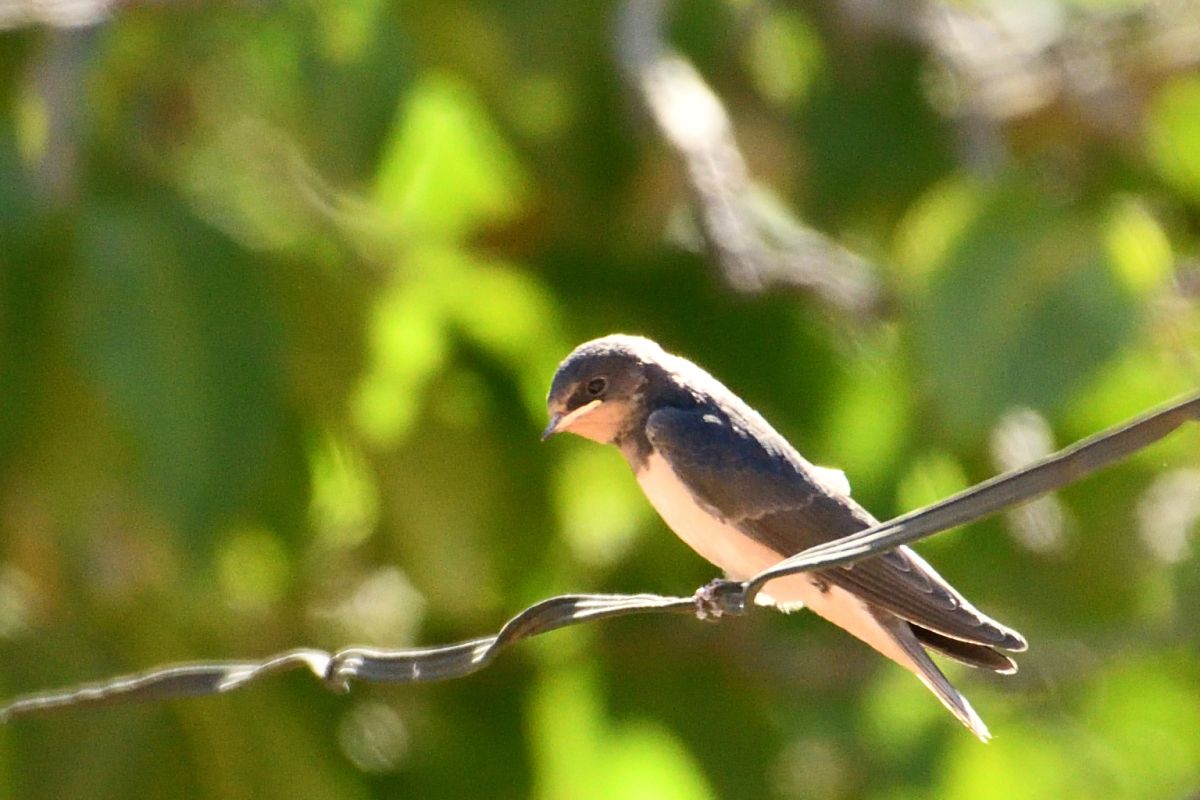
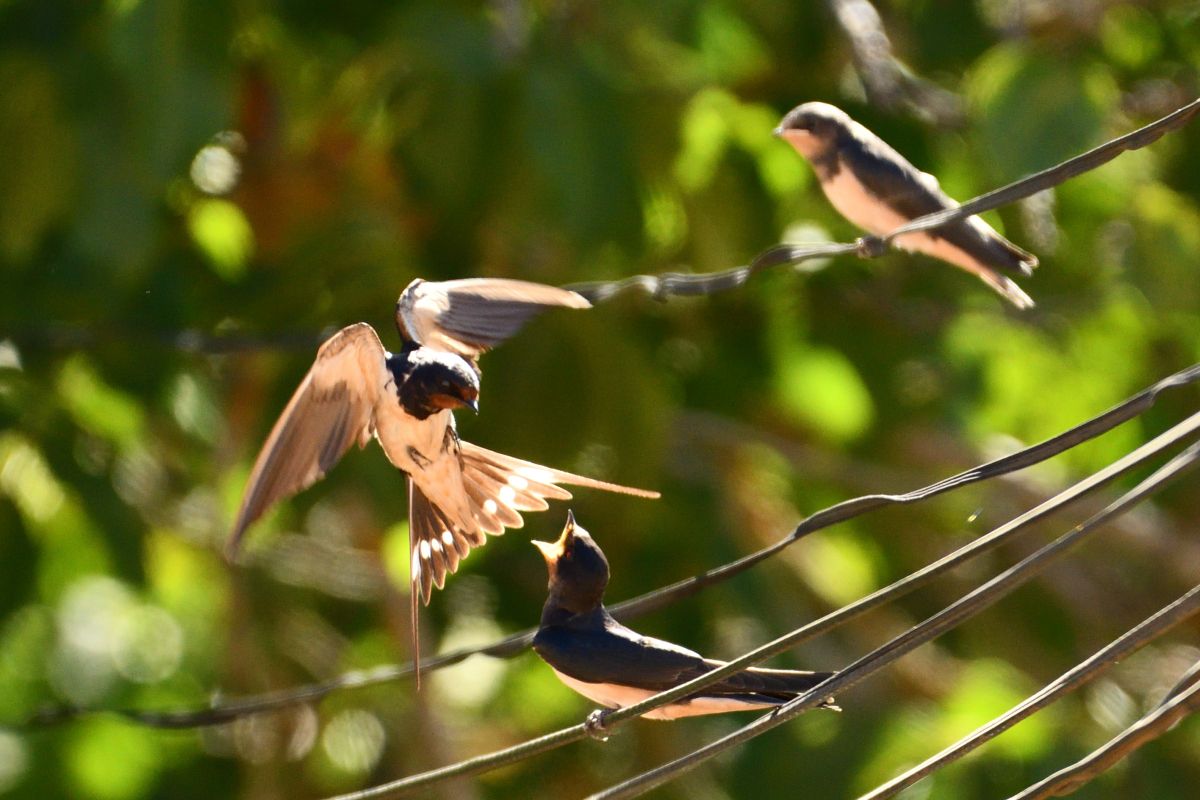 They didn't go far, they made a couple of test turns and ended up landing on the telephone wires and on the highest branches of a walnut tree in front of the house. Perched there, I could see 5 chicks (you can tell because they have the shorter tail and a white band of feathers under the neck) and two adults, the parents, with a longer tail and the same strip of feathers under the neck, but red.
Not at all. It's mid-August, the chickens have flown the nest, but Every night they all return to the same place, including their parents, to spend the night, sleep, and recharge. And the strangest thing is that now that they're grown, they can't all fit inside the nest... so they have to sleep clinging to the power cord, or on the edge of the nest... I know there are fights to see who gets the most comfortable spot inside the nest 🙂
This story isn't over yet. The chicks still need to grow, improve their flight skills, and improve their ability to hunt for food, even in flight. The barn swallow's basic diet is based on insects it catches in flight, so improving its flight ability is essential.
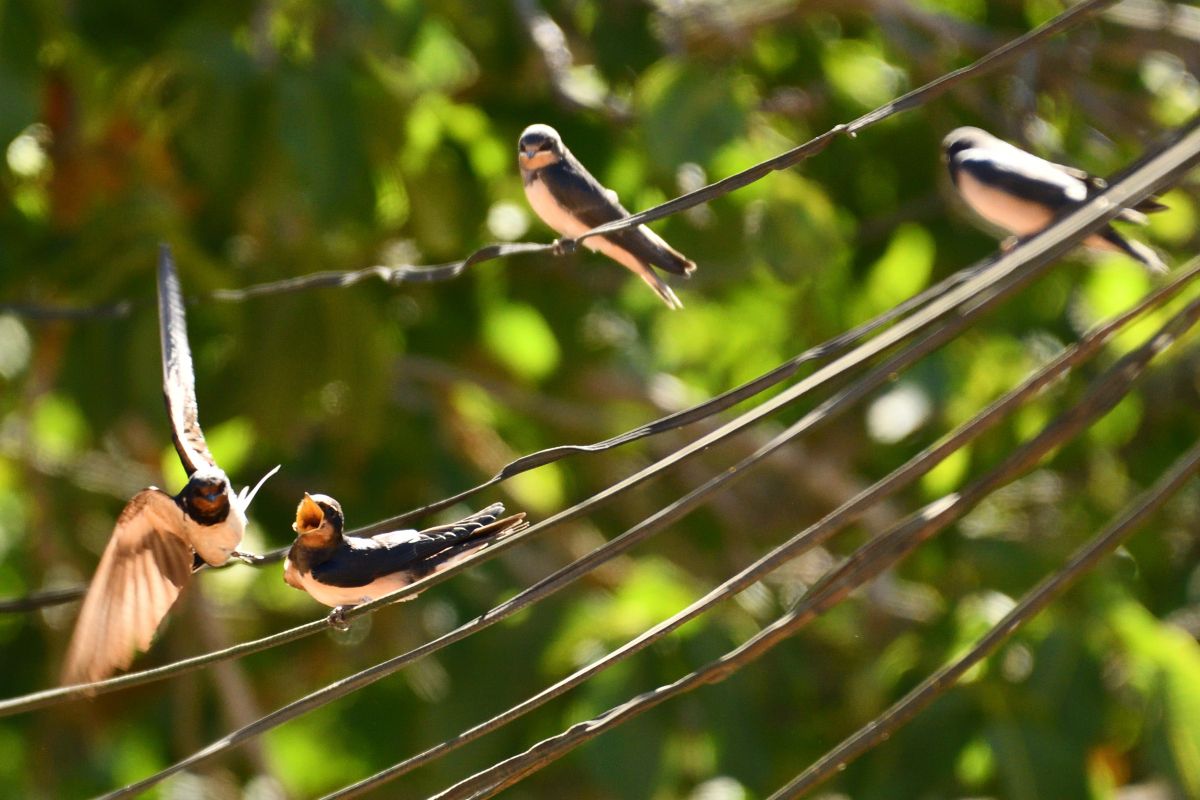 But improving your flight ability is not only essential for feeding. At the end of summer, both parents and the new generations will embark on a long, long flight to Africa..
So every morning I watch the chicks depart, accompanied by their parents. I imagine (and assume) that during the day the adults teach the young how to fly, all the tricks they can for hunting in flight and feeding themselves. But they also teach them valuable experiences for facing such a long and tiring journey as flying to Africa, especially for little birds that, as adults, weigh no more than 40 or 50 grams!
Friends, I hope you enjoyed this story, although long.