"One sunny spring day, a baby flamingo named Adamina was born. She wore white plumage adorning her long pink legs.". This is how the children's story titled begins "A different flamenco", the version flamenco from "The Ugly Duckling". The truth is that the white coloration of the flamingos of the Llobregat Delta has always aroused curiosity. Why are these flamingos white if those of Corruption in Miami (the traditional ones) are pink? The explanation, as always, is quite simple...
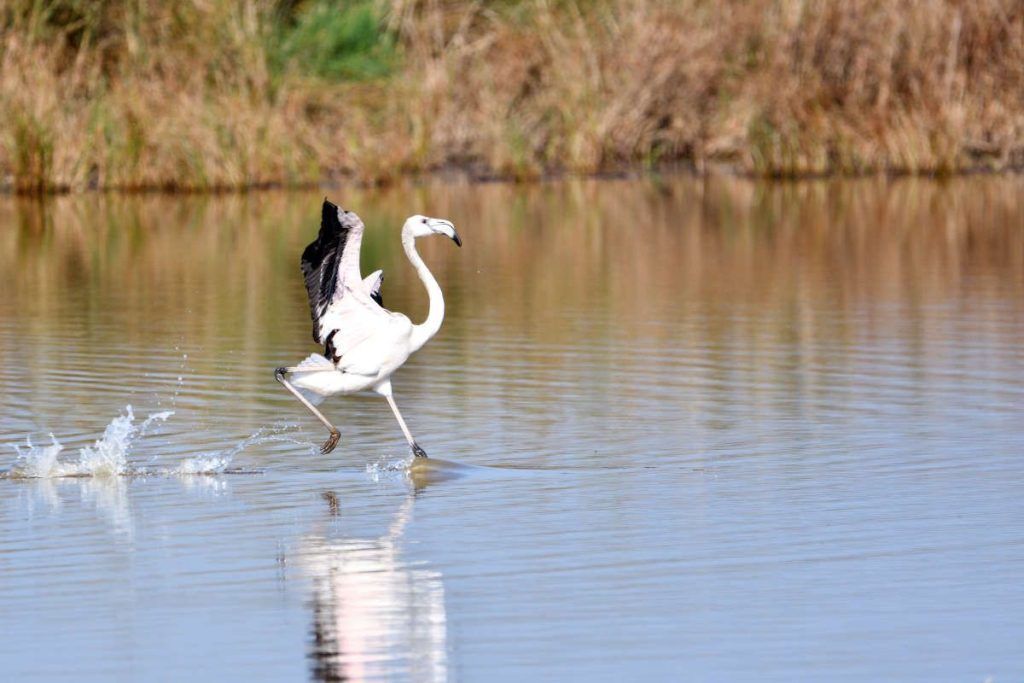
The flamingos of the Llobregat Delta They are perhaps the best-known inhabitants of these wetlands. In the natural spaces of the Llobregat, we can find dozens of bird species, but the flamingos are the ones that attract the attention of all visitors. And the question every visitor asks is obvious: why are these flamingos white?
Flamingos are large aquatic birds. They can reach up to 170 cm in height. They can be found in brackish water ponds, wetlands, and marshes near the coast, although on the Iberian Peninsula, they can also be found in some inland wetlands of Castilla-La Mancha.
The coloration of your plumage They can vary in color from whitish to reddish, including pinkish hues, although their flight feathers (largely hidden when perched) are usually black. They have a distinctive curved beak and long, slender legs that allow them to venture into lakes and lagoons for protection and feeding.
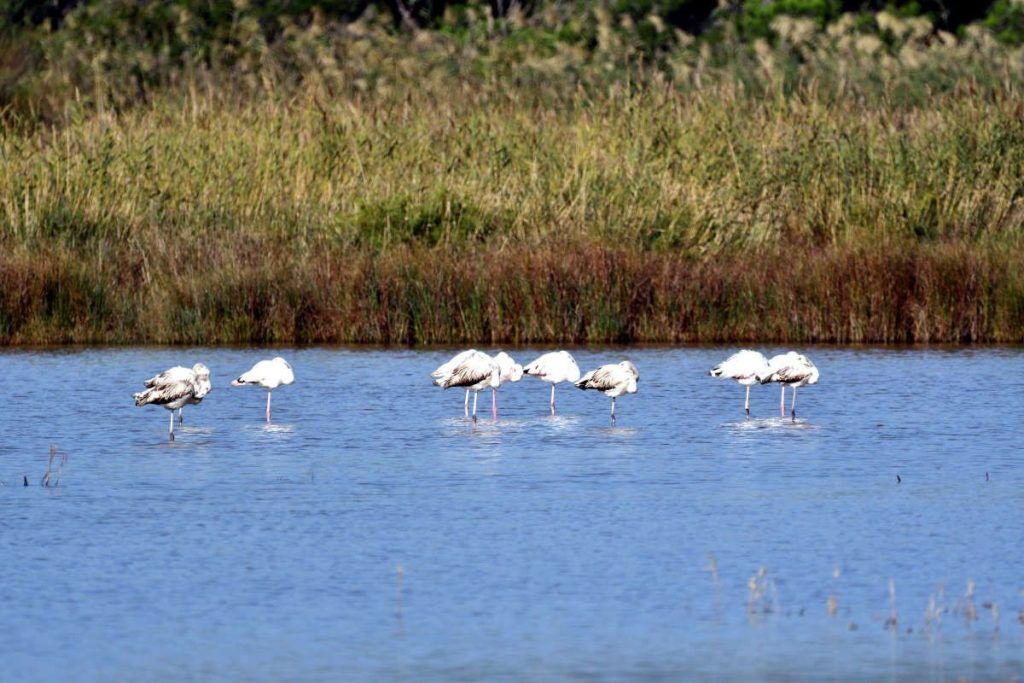
Flamingo populations on the Peninsula depend largely on the water level The areas in which they are concentrated depend on the number of birds. This depends on whether we have years of drought or, on the contrary, constant rainfall. The main colonies are distributed between Doñana, the Ebro Delta, and other wetlands, although the largest known population is found in Málaga, in the Fuente de Piedra lagoon. Although it is not a migratory bird, its sporadic movements are well known. The main colonies move between North Africa and the Mediterranean coasts of Spain, France, and Italy.
The coloration The livelihoods of these birds depend largely on their diet. Flamingos feed on small aquatic organisms and insects. Small crustaceans, mollusks, worms, algae, and other organic matter such as protozoa. If their habitat is rich in mollusks and crustaceans, their plumage will be more pinkish and even reddish. On the contrary, if their diet is based more on algae, insects, and small worms, their coloration will be whitish. The color of the flamingos Llobregat Delta It therefore gives us information about the type of food these animals find in their waters.
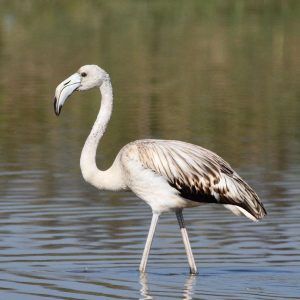 The elegant pose and majestic behavior of flamingos also often attract the attention of visitors to the Delta. Less common is to observe their behavior during the breeding and nesting season. At the beginning of April, they build their nests. nests with mud and plant remains in protected areas within wetlands (islands and elevations of land).
The female deposits 1 or 2 eggs in the nest and are incubated by both parents for about 30 days. After a few days in the nest, the young are independent enough to leave the nest and gather in groups. "daycare centers" watched over by a few adults. The remaining adults disperse in search of food for the group, and for the first few weeks they digest this food before secreting a gruel that they deposit in the beaks of their young.
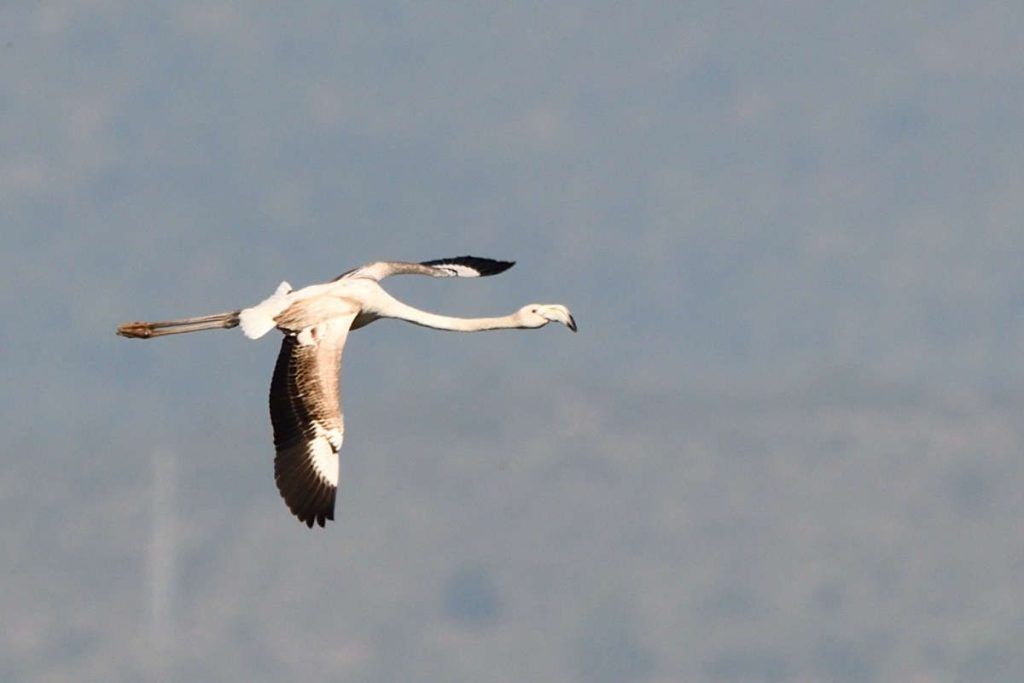
Of course, there's a surprise at the end! As I mentioned, flamingos feed on small crustaceans, algae, mollusks, insects, and other aquatic organisms. But how do they do it? They have long, slender necks and thin, slightly ungainly legs. How do they get their food?
Well, in a curious way that we rarely see unless we spend several hours observing these animals. Their feeding technique is simple: with their long legs, they stir up the sandy bottom of wetlands while ingesting all the particles released into suspension. Then, their tongue filters the water and retains as much organic material as possible. THEY DANCE FOR MEAL!
It is possible that the name of flamingos come from this tap dance These animals mark each other for food. Who knows? Once we've figured out why they have that white coloration... figuring out where their name comes from is perhaps material for another article 😉
Happy weekend and enjoy this peculiar video.