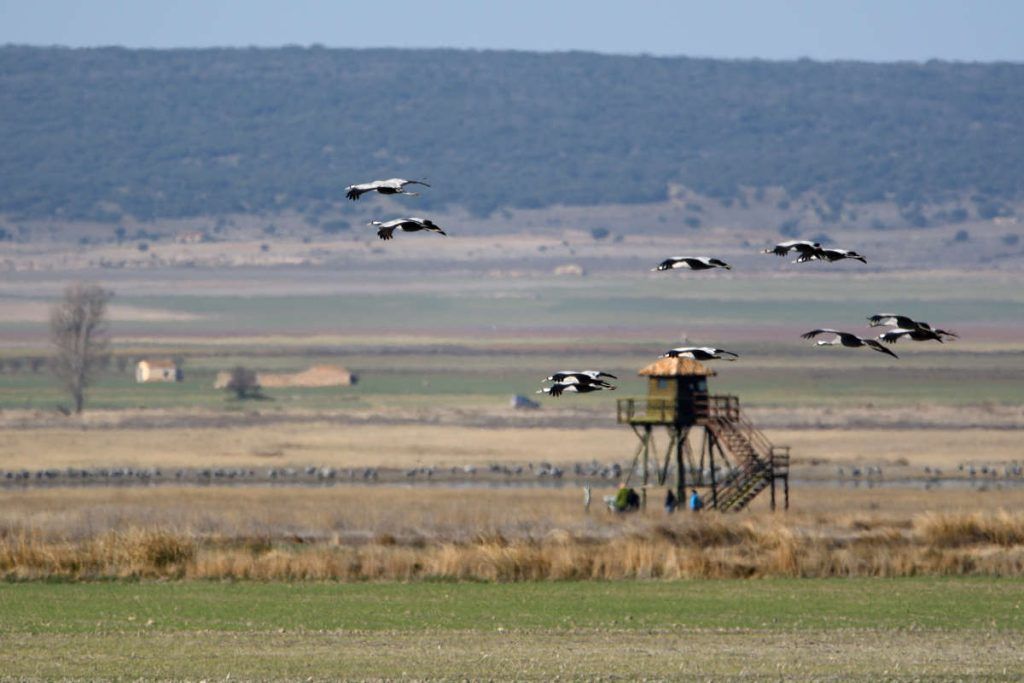
We rarely consider the vast distances some animals travel around our planet. Turtles, whales, reindeer, butterflies, salmon... Schools of fish, herds of mammals, and flocks of birds change places once or twice a year. This time Fotogario has spent several days documenting the crane migration From the south of the Iberian Peninsula to breeding areas in central and northern Europe. Want to learn a little more about these slender birds?
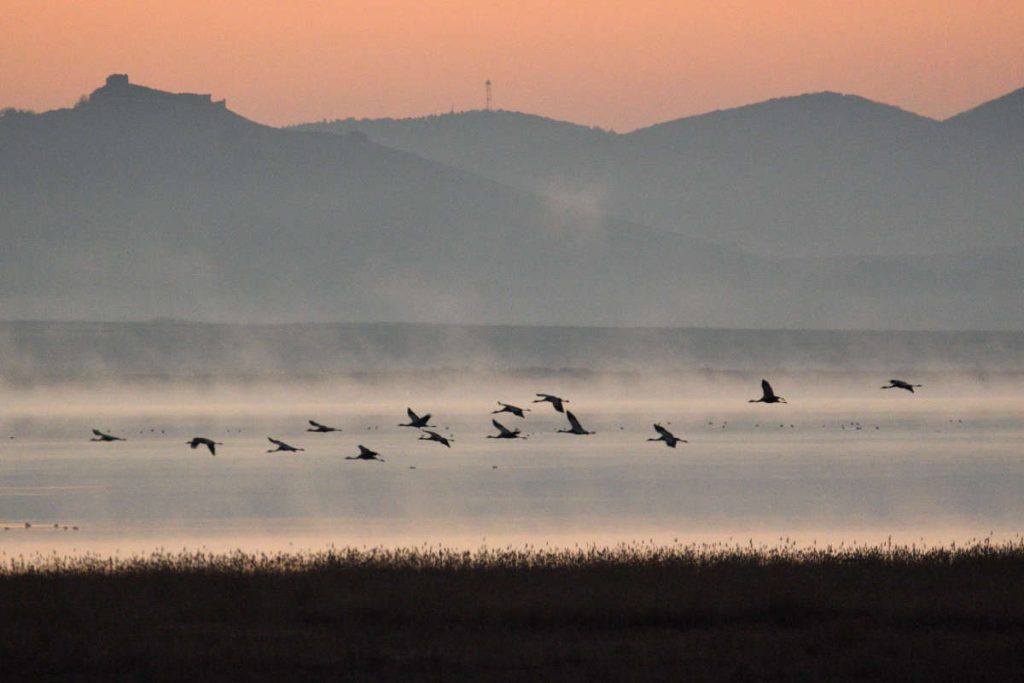
Twice a year, cranes migrate from north to south (and back again from south to north), flying over the Iberian Peninsula. In some cases, this journey involves more than 3,000 kilometers one way and the same number of times back.
Just as if we were traveling that distance, cranes need food and rest to make the entire journey. That's why some lagoons and wetlands become transit areas for thousands of birds twice a year. The Gallocanta Lagoon, in the province of Teruel, has become one of the most important areas to observe this annual migration.
It's curious. If we visit Gallocanta Lagoon at the wrong time of year, we'll only see a small wetland on a plain of cultivated fields. If we visit in summer, we run the risk of the lagoon drying up, making the landscape almost disappointing.
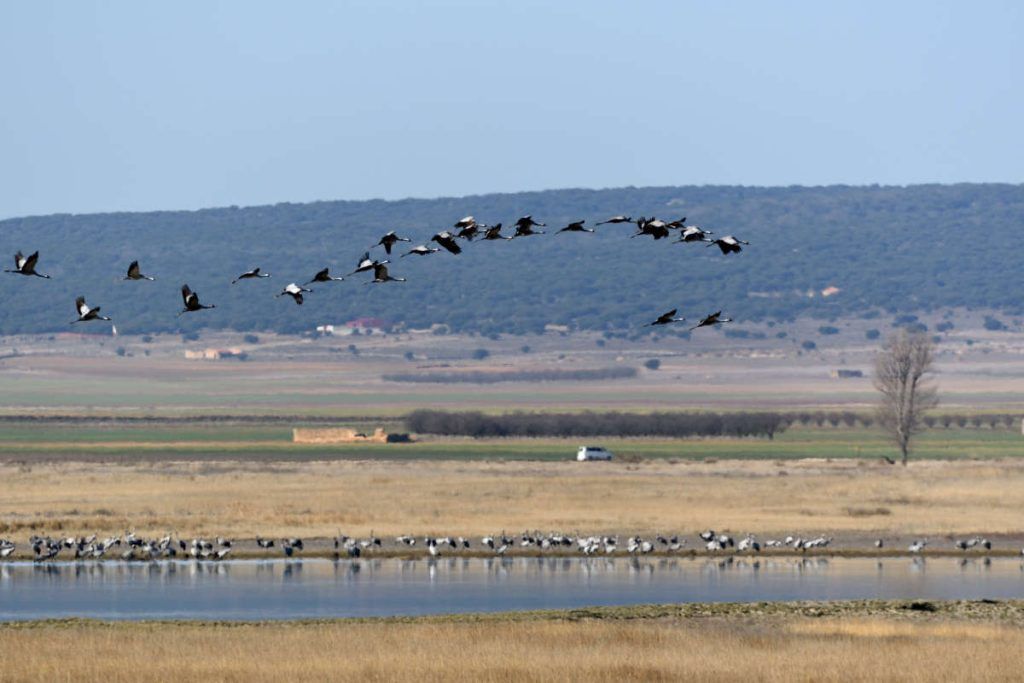
But if we time our visit right, we'll find a wetland teeming with birds migrating. the true secret of the lagoonThe engine that drives this whole process is the water level in the pond. If we've had rainy springs and autumns, the pond will be brimming with both water and cranes.
But we can say that the two peak periods of crane migration are divided between October and the end of February.
From the end of summer and during the fall the cranes They come down from northern Europe to spend the winter in the south of the Peninsula. And again, at the end of winter and beginning of spring, the cranes return to northern Europe where they will spend the summer and also raise their young.
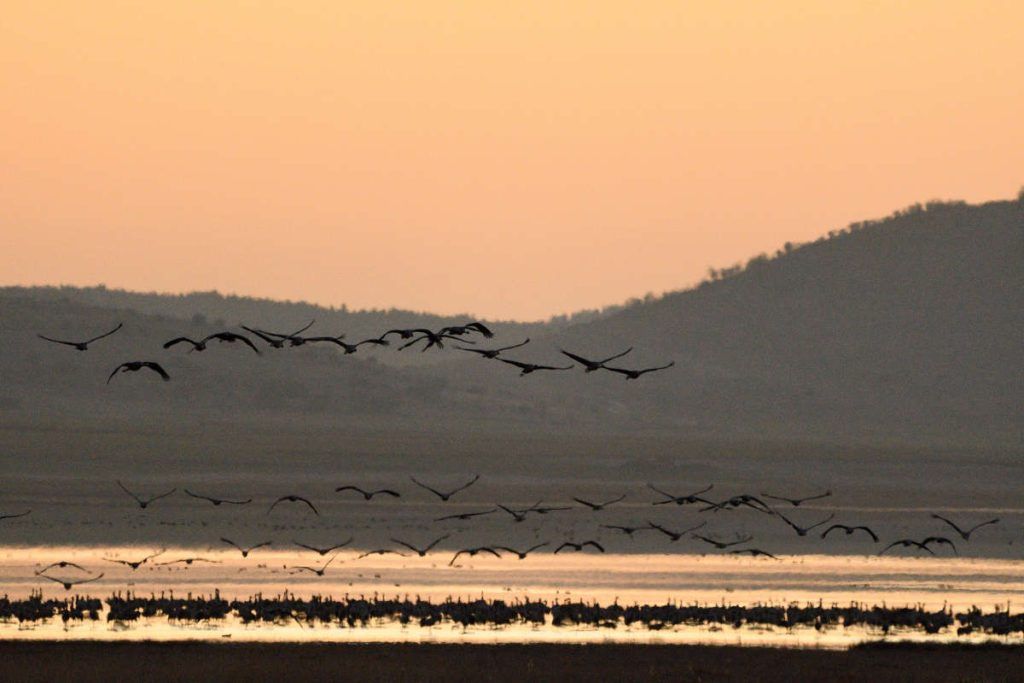
Wild animals have a biological imprint, a survival instinct that keeps them constantly alert. When night falls, cranes retreat to lakes and wetlands to protect themselves from potential attacks by nocturnal predators.
The Gallocanta Lagoon provides shelter during the night, and the grain fields provide all the food needed by thousands of cranes. In a forest-free plain, there's no risk of vermin and predators lurking in wait for these large birds. That's why they feel so safe in these resting areas.
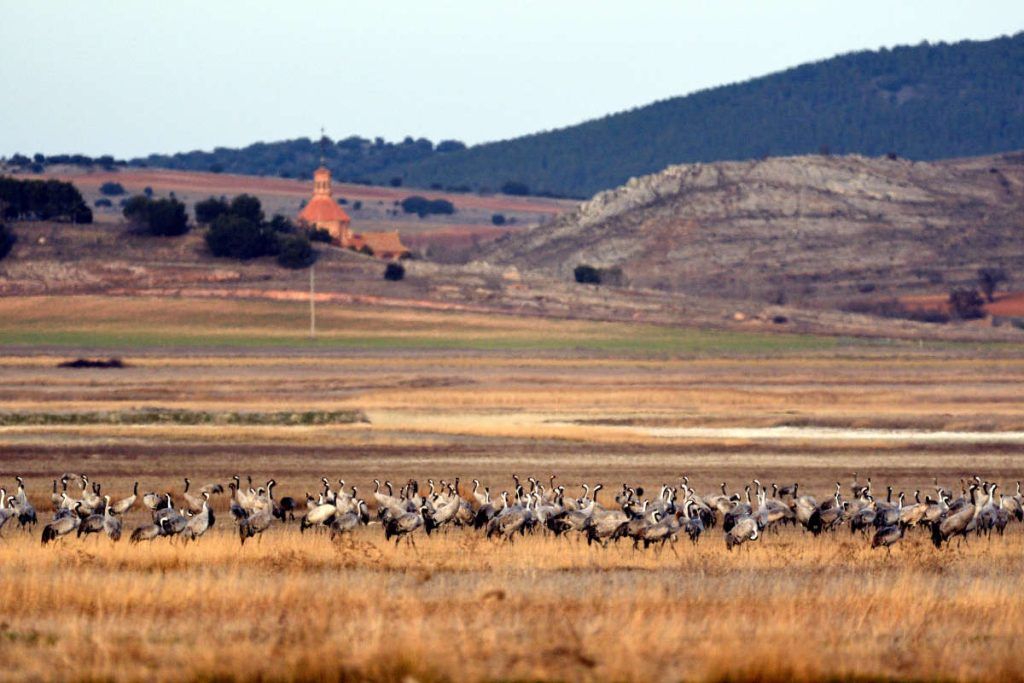
Cranes are large, slender birds easily recognized by the trumpeting call they make. Their flight in training It is also very recognizable creating symmetrical shapes, flights in a line, in a "V", etc. They spend the winters on the Peninsula where they find a large amount of food, especially seeds and roots.
"We got up at 6 am. By 6:30 we were already photographing cranes. The day ended and we continued on the forest trail...." (Facebook Photo Gallery).
Unfortunately in the Peninsula it is not usual to observe its courtship cycle, which includes great leaps, dances, and displays of display. Courtship takes place in the summer areas of northern Europe, where they will also have their young. But on the Iberian Peninsula, especially in late February and early March, we can, with luck, observe the first amorous and pre-courtship displays.
Just because we miss the courtship season doesn't mean the scene in Gallocanta and other areas of the Peninsula isn't spectacular. In years of rain and high water levels, we can observe thousands upon thousands of migrating cranes, taking advantage of a couple of days to feed and recharge. And I assure you, seeing thousands of cranes taking off at first light or feeding scattered across the grain fields at midday is a sight you'll never forget.
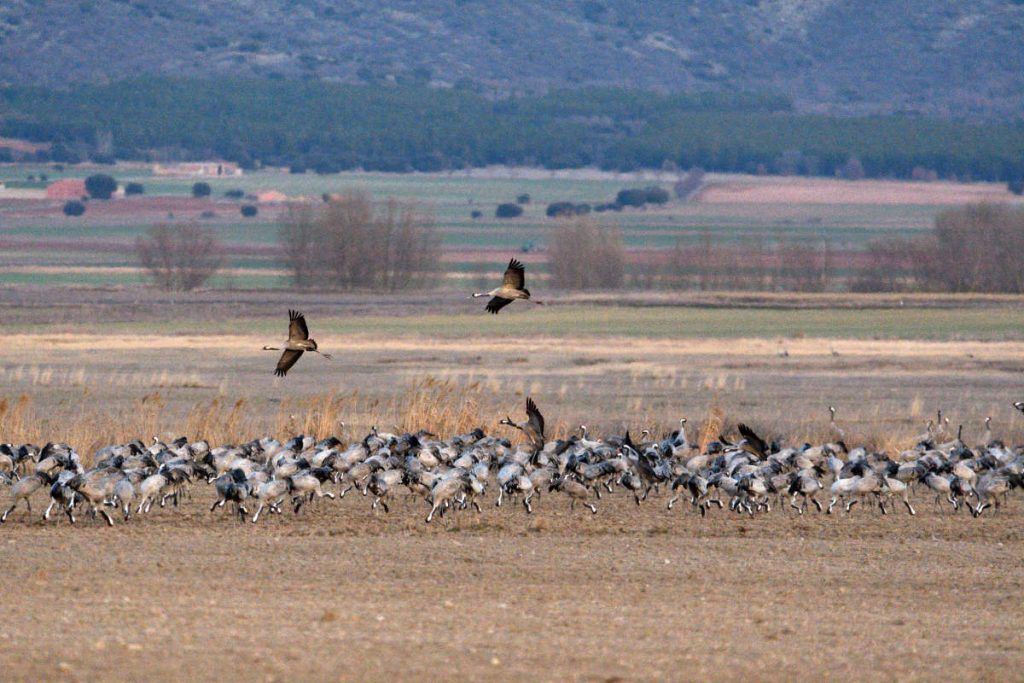
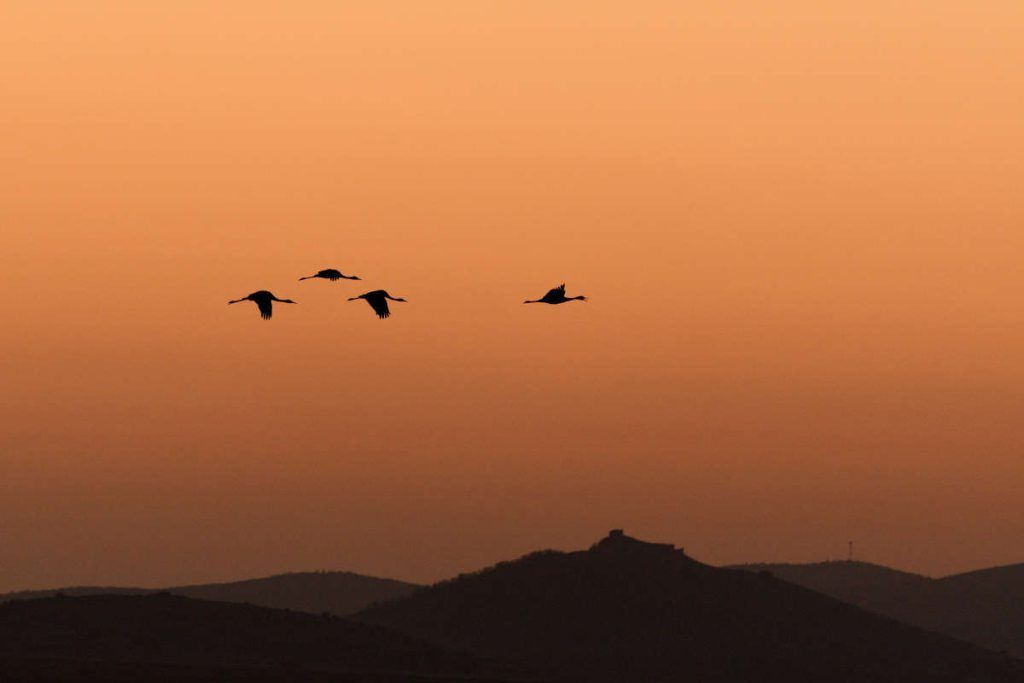
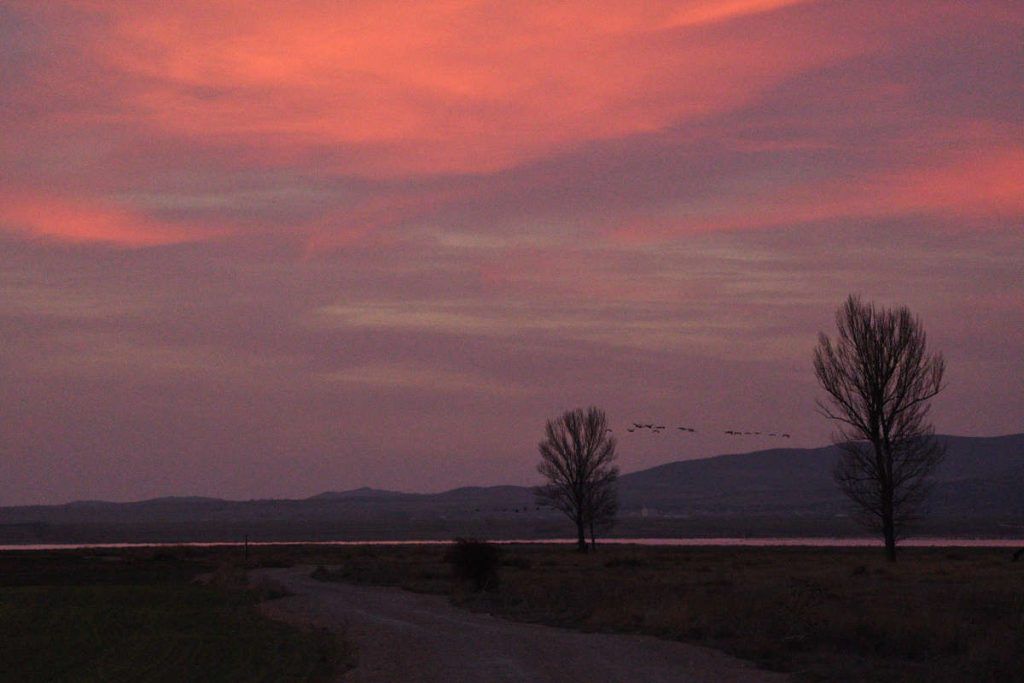
Without a doubt the best times of day to photograph and film the cranes are at sunrise and to sunsetAt dawn, the cranes take flight to continue their migration or to a nearby field to feed. At dusk, the cranes return from nearby fields or arrive directly from other resting places to sleep at the lagoon.
Knowing where the sun will rise or set is essential for taking good photographs. It's also essential to know what time the sun will rise or set. At dawn, we can photograph facing the sun, but only until it's fully risen. So, it's best to position ourselves in a place where we have cranes in the foreground (basic) and where we like the landscape. It's even better if the sun rises at a 90º angle to where we're pointing the camera (and not directly in front of us).
If there are small clouds at sunset, we can take photos with the reddish and orange colors so common in these plains.
Another good tip is to locate the hides and observation towers public places where we can stand. The position of the cranes in the lagoon will not only depend on the water level, but also on their emotional state :-). Cranes can take flight one morning from one part of the lagoon and the next day from a completely different one. Similarly, their entry into the lagoon in the afternoon is unpredictable. Yes, they're that capricious... But if we locate some spots around the lagoon with good backgrounds (villages, mountains, church towers...), we're sure to get some great photos.
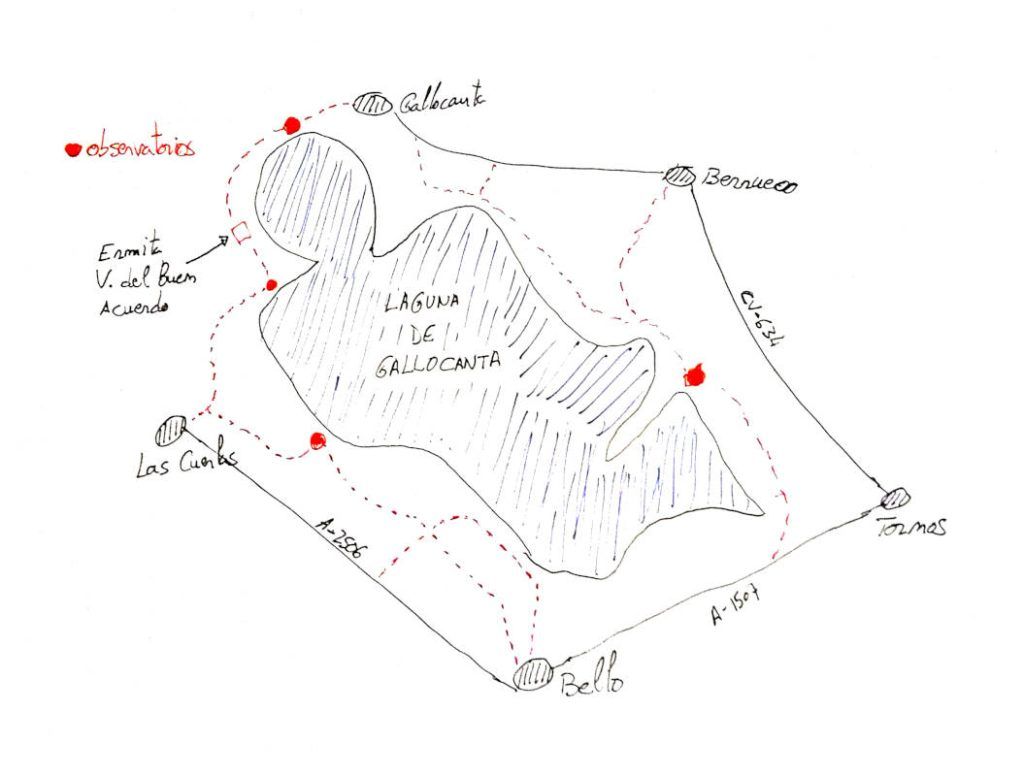
A high observation point that will always give us good results, especially at sunset, is the Hermitage of the Virgin of Good Agreement. Although in my case I prefer to get closer to the lagoon and stop at one of the observatories. At dawn the Los Angeles Observatory Black Eyes, near this hermitage, allows for good photos as the cranes take flight. In the afternoons, you'll find many observation points along the paths near the lagoon. Beautiful and The RopesBut perhaps the best point is the El Cañizar Observatory, between The Berrueco and Lathes.
The fact is that any spot around the lagoon will be good for crane watching, provided it's a rainy year and we visit the pond at the right time. If both conditions are met... all that's left to do is enjoy the flight and trumpeting of these slender birds, their elegant leaps and flapping on the ground, and the beautiful sunsets we can photograph while we watch the pond. annual migration of the cranes.
And since a picture is worth a thousand words, in addition to all the images posted in this article, I'm leaving you with a short video I filmed during my trip. This will give you a better idea of what the lagoon looks like and the number of winged visitors it receives at this time of year. I hope you like it.