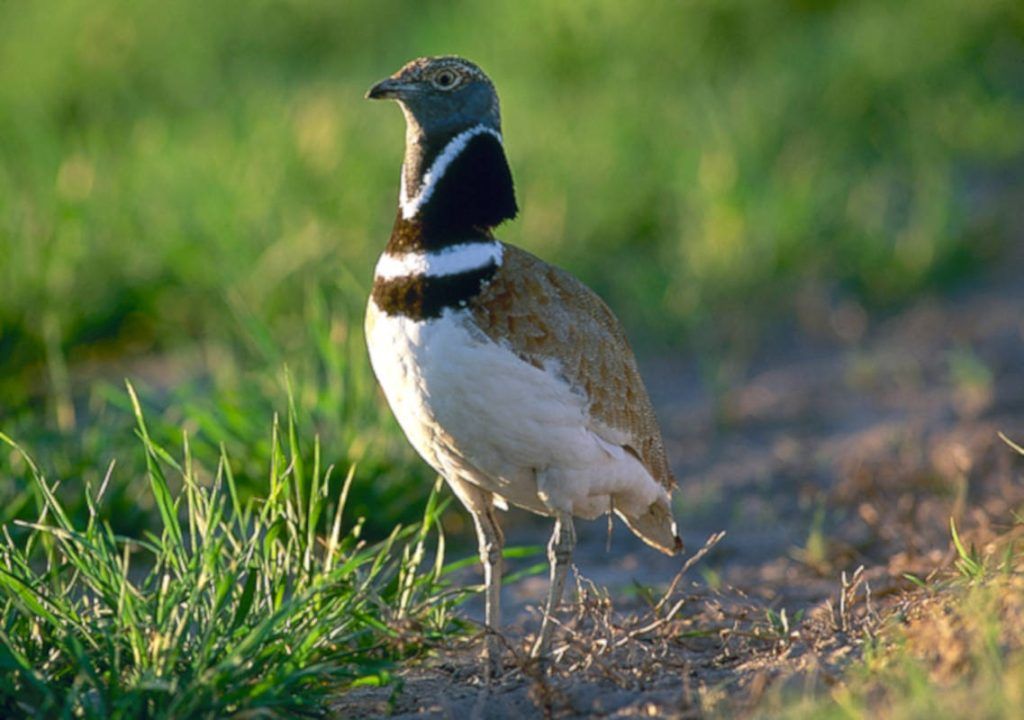
Overshadowed by the great fame of its cousin the great bustard, the common bustard It may not be the most representative bird of the steppe bird family. But that doesn't mean it isn't one of the most beautiful birds we can find in the Iberian Peninsula, especially during courtship. This is when the male little bustard shows off all its charms. Want to know more? Don't miss this article dedicated to the little bustard, the most unknown steppe bird of our plains.
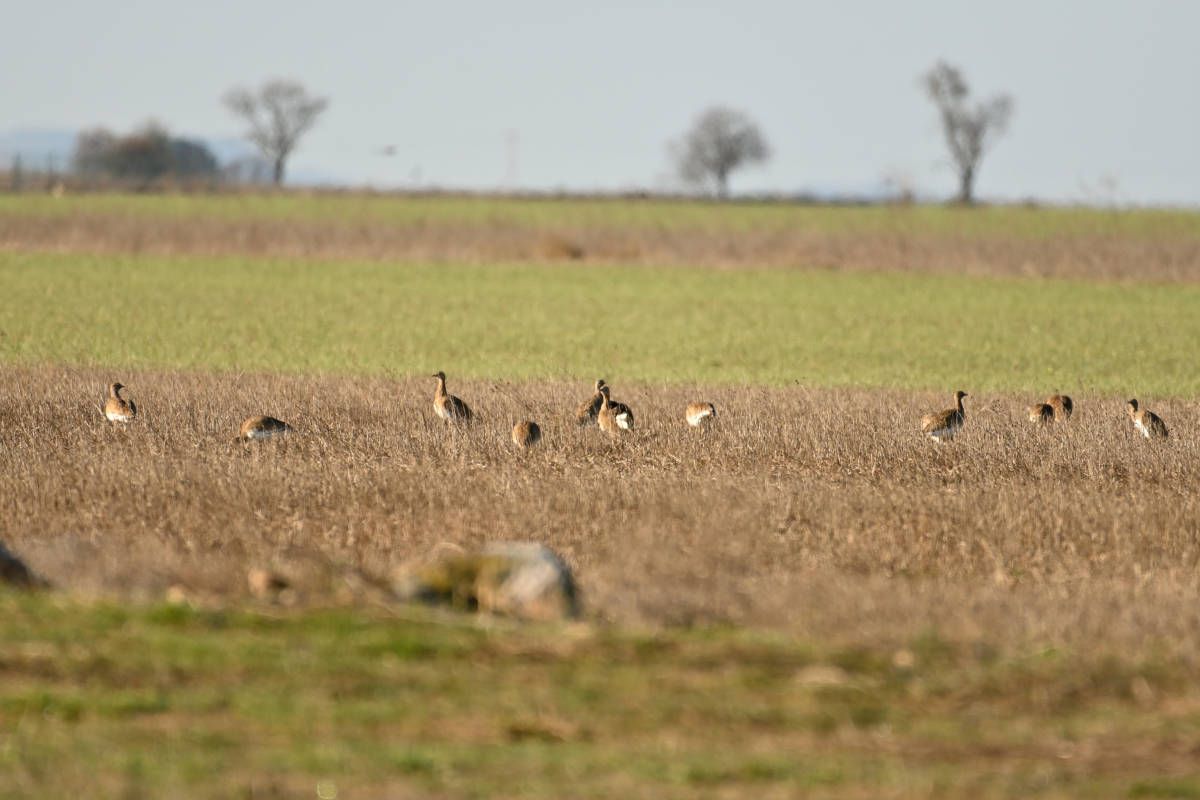
That day I was walking through the fields and plains of Lleida, specifically, the natural space known as Belianes-Preixana DrylandsThis area, declared a protection zone SPA For birds, it's a marvel for birdwatchers. Steppe birds and birds of prey, from the Montagu's harrier to the red kite. My idea that day was to capture some shots of the kites and other birds of prey hunting in the grain fields and nearby lagoons. But fate had something else in mind for me.
As soon as I arrived at the area and entered via one of the many farm roads, I came across a flock of birds eating carelessly. It was 8 a.m. and no one was walking through those fields, so it was the perfect time of day to relax and feed. As soon as I saw this group of large "chickens," I knew my idea of looking for birds of prey was in vain. Too small to be bustards, it could only be one thing: Little Bustards.
Years ago, little bustards roamed our farmlands, especially in those regions where we suffered the typical cold, dry, steppe-like winters. But the transformation that the Iberian Peninsula's agricultural landscape has undergone in recent years has reduced the feeding, courtship, and breeding grounds for these birds. Today, we can find them mainly in the agricultural regions of Extremadura and Castilla-La Mancha. However, there are also some areas in Aragon and Catalonia where we can see these beautiful birds.
Little bustards share many characteristics with their cousins, the great bustards, although they are often less well-known. gregarious birds. That is, birds that live in groups or flocks. They are fundamentally birds terrestrialMost of the time, we'll see them perched, searching for food with their distinctive gait. They like their feet on solid ground so much that they even make their nests on the ground, in abandoned or fallow fields, protected by vegetation. But don't be fooled; they can run, and very quickly, if they feel threatened or if we invade their living space.
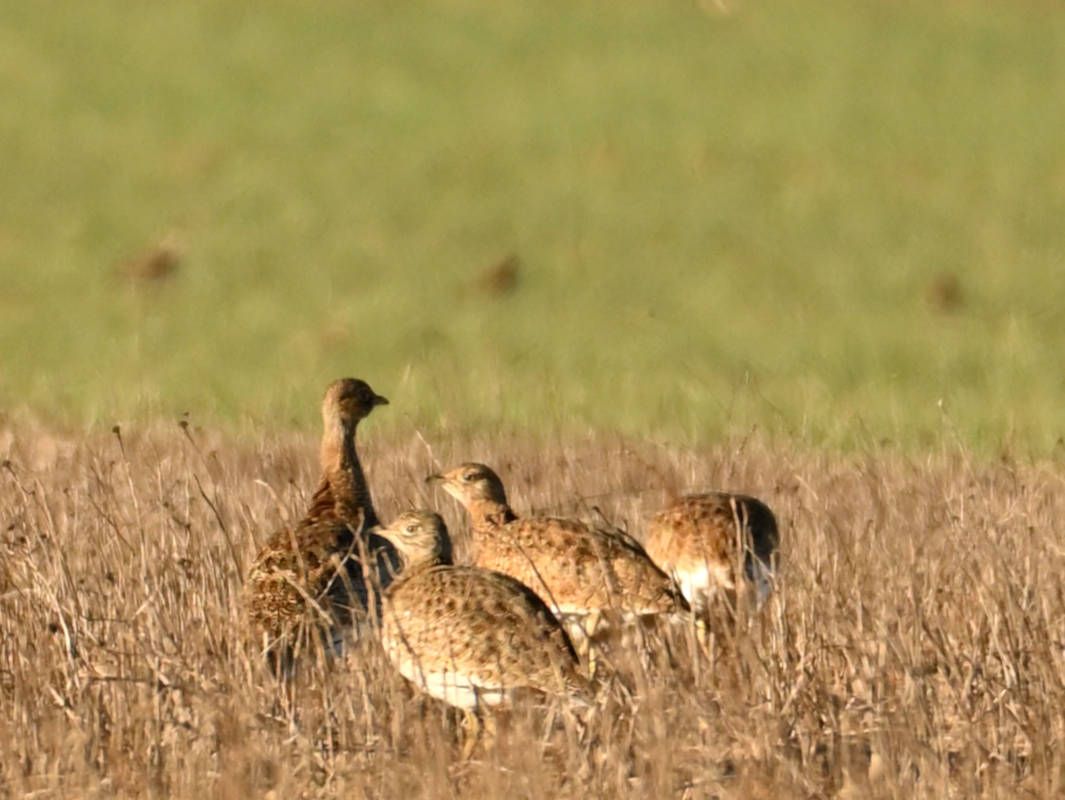
It's not easy to differentiate between males and females; they tend to be the same size. At first, I thought the flock I found that day was all females. But after analyzing the photos, I think there were some males among them. The only way to differentiate a male from a female is by the wedding period (the courtship period), but we'll talk about that a little later.
According to the latest data from SEO BirdlifeLittle bustards are widespread throughout the Iberian Peninsula. Although the map can be a little confusing and make us think they're easy to spot anywhere on the peninsula, nothing could be further from the truth. It's not easy to encounter these birds. Hence my surprise the day I stumbled upon them on the steppe plains of Lleida. The little bustards' preferred habitats have two basic characteristics:
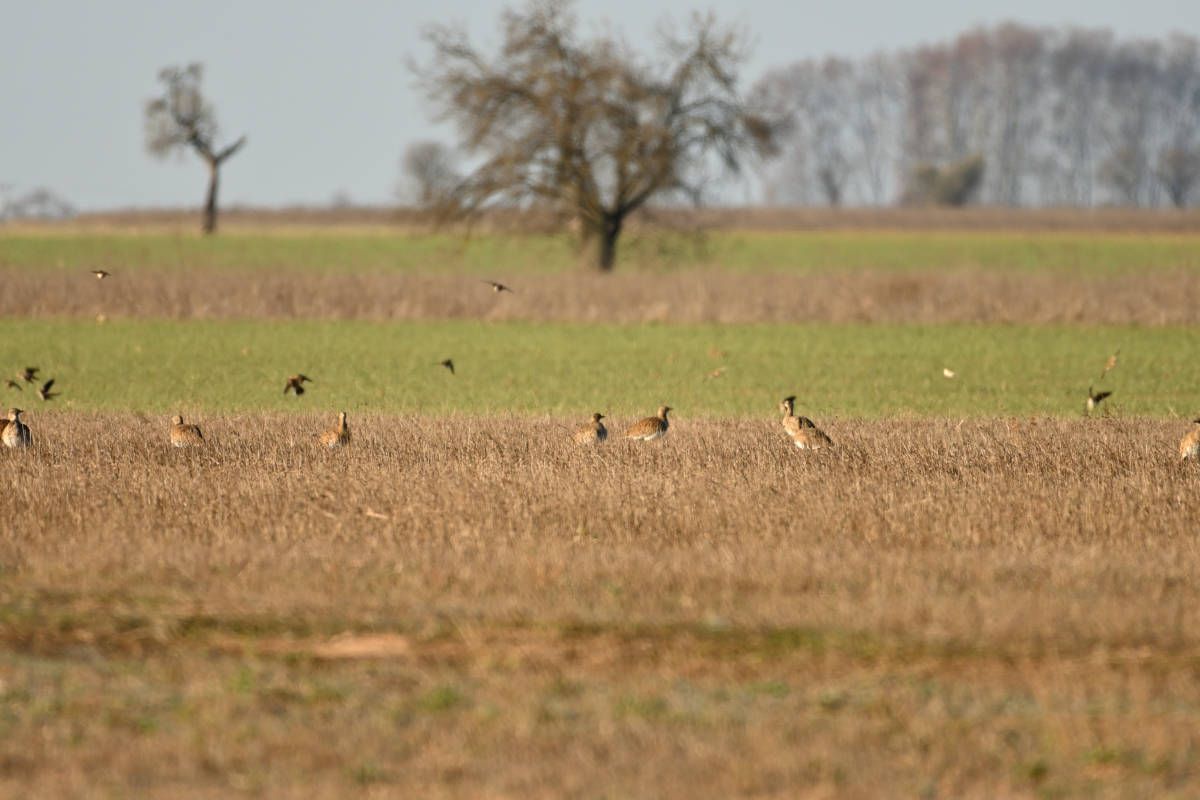
It's a bird resident, that is, they live year-round on the Peninsula, although in winter they like to seek out the warmer areas in the south of the peninsula. During the breeding season (between March and April), we can see them in these agricultural areas and, with luck, even witness their peculiar and amusing behavior. wedding danceBut we'll talk about this a little later.
Little bustards are not particularly sybarites and their diet varies greatly depending on the season and, of course, what they have. "by hand"In winter, they feed mainly on seeds and shoots. In spring and summer, they consume large quantities of insects. No big surprises there.
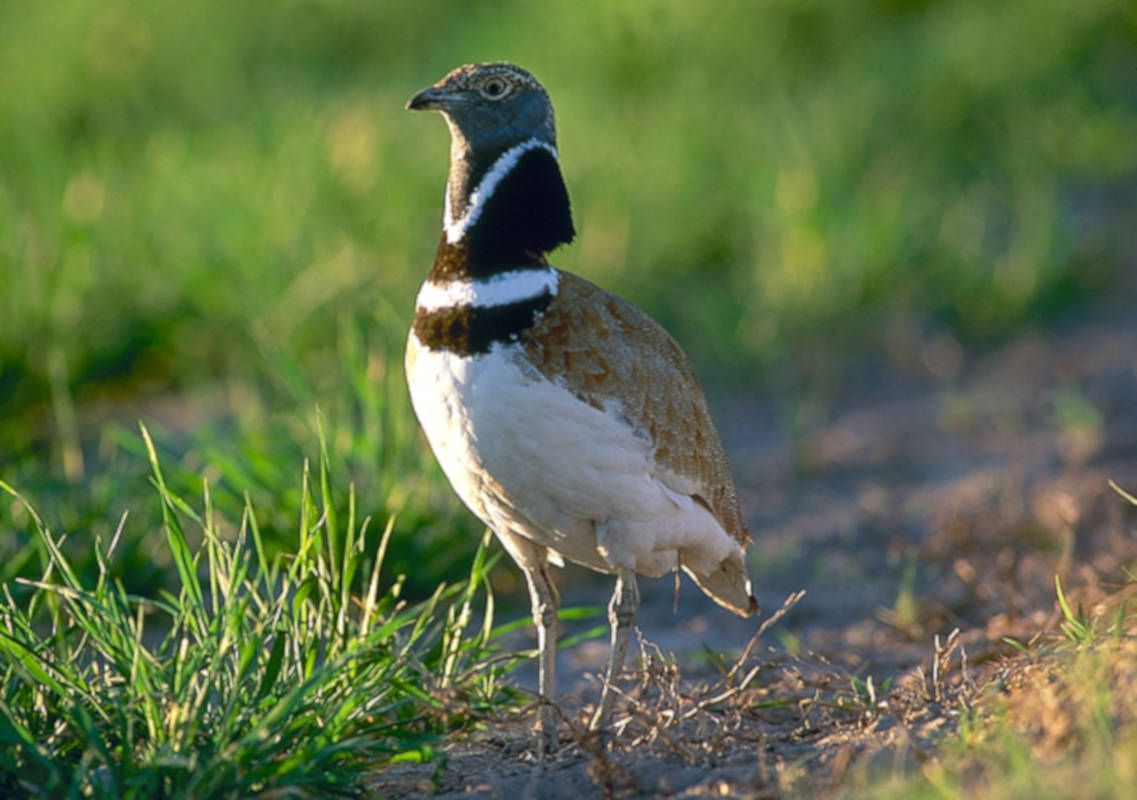
But let's get down to business. The Great Bustard transforms (literally) during the breeding season. And it's during this period that it reveals its charms and hidden beauty. Male Great Bustards change their plumage during the breeding season (between March and April) and their necks turn black with white stripes interspersed. Their chests also turn white and their heads turn grayish. The whole combination makes the male a unmistakableA priori, this could be a problem, as it becomes more conspicuous and visible to potential predators. But the male little bustard only has one thing on its mind during the mating season: reproduction.
Let's do a quick recap. We've said that these birds live primarily in large flocks. How can a male get the attention of a group of females among other males if they all (males and females) look the same? Well, obviously, before going out to flirt, you have to put on your best clothes. Hence, over time, males developed this ability to change their colors during the breeding season, to attract femalesIf we add to this the self-confidence of a peculiar and funny little dance.... because the male has the female almost in the boat.
So the perfect time to spot and identify little bustards without a doubt is during the breeding season. Their white colors, both on their chest and under their wings, make them especially unmistakable when observed in flight.

During the breeding season, males strut in front of large groups of females, puffing out their chests, opening their wings and performing a kind of dance (which some would call epileptic) with the sole purpose of catching a piece. After this period, the male stops raising his chicks. The females seek out fallow land, small depressions camouflaged by vegetation, where they can incubate their eggs, which usually hatch throughout the month of May. The chicks then remain in the nest for a while, until they are able to feed themselves and large groups of females form again, remaining together until the next breeding season.
Yes, my friends, what looked like a peaceful day of bird photography unexpectedly turned into a morning of researching and observing a flock of little bustards. But the surprise was worth it. I'd been on the hunt for a long time. photographic of steppe birds, and finding this little group of little bustards encouraged me to continue after several years of failure in the search for great bustards. It was almost the end of January 2022, in the steppe plains of Lleida, and little did I know what I would find just a month later in another nearby steppe region... but that's another story, which I will tell in another article. For now, I leave you with the video of this trip in case you want to know more.
Searching for steppe birds (Part 1)
All the best.