Hello friends,
Fotogario It feeds on great nature photographers, but sometimes the boundaries between disciplines aren't so clearly defined. This is the case with the photographer I'm bringing you this week, Sebastião Salgado, a social photographer who has traveled the world and in recent years has become a leading figure for conservationists and naturalists, all thanks to his work regenerating rainforests and tropical rainforests in Brazil. Want to know more about Sebastião?
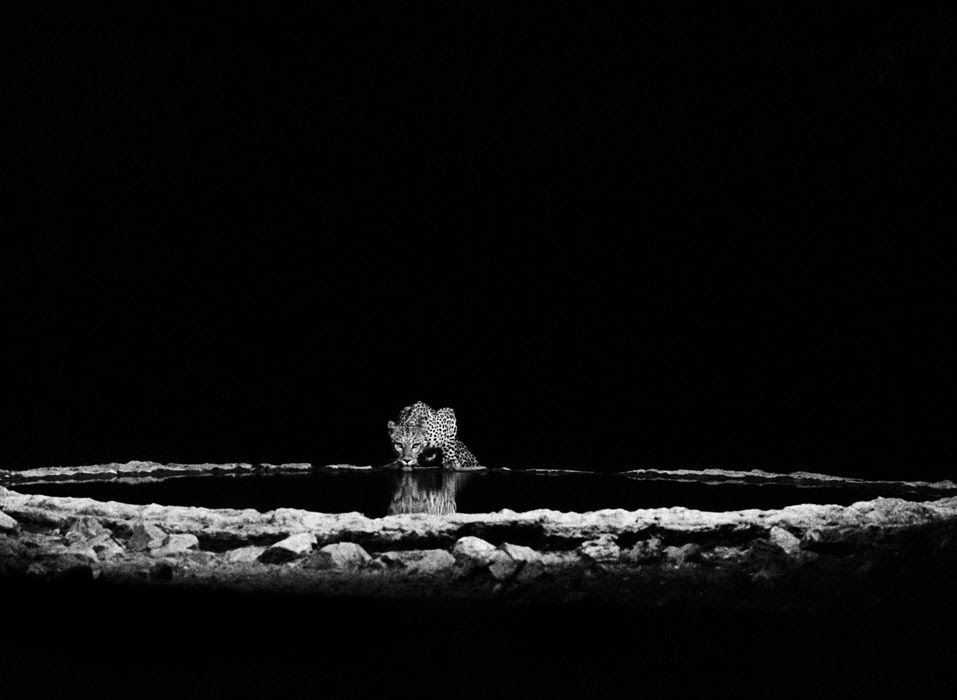
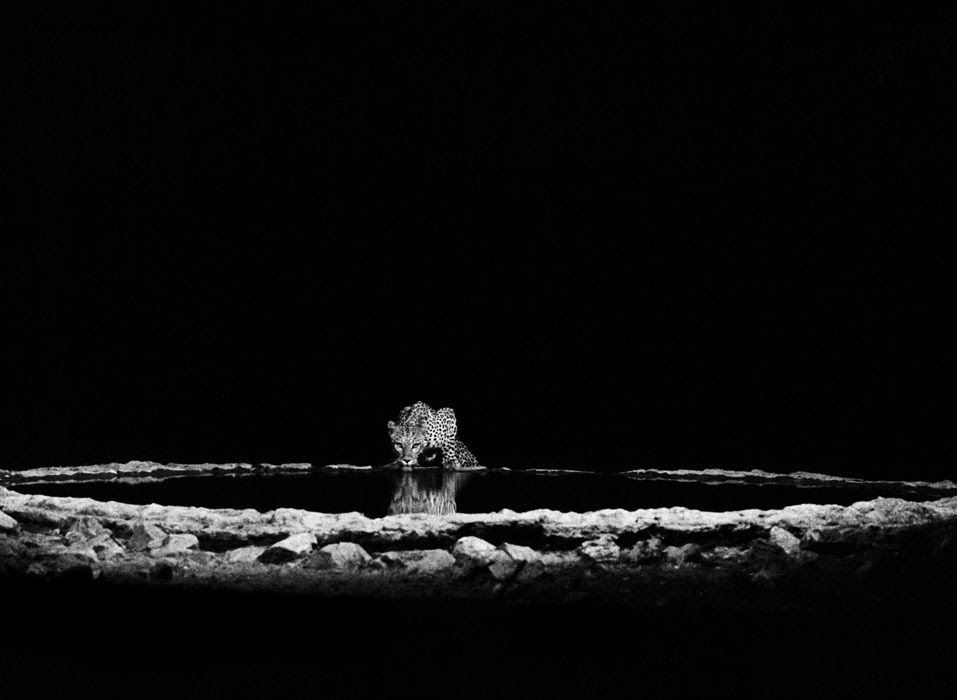
Personally, talking about Sebastião Salgado means talking about this photography. I first discovered this social photographer's work in 2014 when I visited his exhibition "Genesis"in Madrid. When I came across this photograph at the exhibition, I knew I was standing in front of a master and that someday, when I'm older, I too would like to take a similar photograph. "Leopard in the Barab River Valley" in Namibia. I could spend hours talking about this photograph and the feelings it evokes in me, but I want to focus on Sebastião and his work.
Sebastião He is a Brazilian photographer who, from a young age, dreamed of understanding how the world worked. He married young and emigrated with his wife to France in the 1960s, fleeing the harsh dictatorship of his native country. There, utilizing his economics studies, he began working for the International Coffee Organization. His career was (initially) predestined to pursue studies and work in international development and cooperation, but everything went awry when his wife (a musician and architecture student) bought a camera to document his architectural work.
Sebastião He borrowed the camera to photograph (as a tourist) his business trips around Africa, and within a few months, he realized that photography made him much happier than economic studies. He didn't think twice; he put everything aside and invested his few savings in photography equipment. His wife's unconditional support was also fundamental. From then on, he never let go of his camera.
His first works took him on an extensive journey through Latin America, photographing different isolated populations and tribes for years. The Andes and The AmazonBut his work took a complete turn when he began documenting the work of Doctors Without Borders in Africa. He fell in love with the continent and spent years photographing wars, migration, refugee camps... until the tragedy and genocide committed in Rwanda and Congo made him lose faith in human redemption.
Sebastião considered leaving the camera in a drawer. His recent work in the Congo had broken his spirit, and he lost faith in the goodness of man. He shut himself away in his home village and spent several months replanting the tropical forest his father and grandfather had known and whose deterioration he had observed. It was at this point in his life that his wife (once again) gave him the idea that would restore his desire to photograph. "Genesis", a documentary about those places in the world that haven't changed in thousands of years. Remote Antarctic islands, a visit to the Galapagos, the harshest and coldest regions of Siberia... "Genesis" is a work that straddles wildlife photography and ethnology, and I personally consider it one of the best photographic works of all time. Its unique feature? It's a complete work of wildlife, landscape, and travel photography, shot in black and white.
And why did I finally get around to talking about Sebastião Salgado? Because in recent weeks I've finally been able to see the film that Wim Wenders filmed telling the story of three generations of Salgados and because at the same time, I found one of those bargains I've been waiting for the official book of Sebastião's latest work, "Genesis." It's a marvelous A3-format book with hundreds of photographs of Sebastião's personal vision of the genesis of our world.
Friends, here's the trailer for "The Salt of the Earth," a wonderful film directed by Wim Wenders that tells the story of a great photographer.
Greetings to everyone and have a happy week.