We spent 8 hours locked in a photo hide observing the behavior of several species of birds of prey and scavengers. The experience inside the hide is something unique we'll never forget. Want to know why? Well, keep reading and find out how to take spectacular photos from a privileged hiding place.

It's clear what the main advantages of taking photos from a hide are. The big problem with photographing wild animals is that their behavior in nature can be unpredictableBut... what if we can minimize that problem?
A hide allows us to take photos hidden within a small enclosure. It's usually a kind of tent, shack, or small storage room, which isolates our movements and much of our noise. If, in addition to this, we promote actively getting the animals to approach that hide, the photos we will get will be spectacular.
And how do we do this? By attracting animals with food. But be careful. It's not about baiting the animals with whatever comes to mind. If you really want to photograph from a hide, it's best to rent one from professional companies that have all the necessary permits and are familiar with animal behavior.
The decisive and most important element of the hide is what we call a spy glassBut I'm getting ahead of myself... some of you may have never seen a hide. So let's take it step by step...
There's no simple description. There are many types of hides. Tents, camouflaged hides among trees and bushes, small shacks... Most of them will have four walls and a roof, visually isolating us from wild animals. And as we've already mentioned, the spy glass is the most important. Animals can't see us from the outside because the glass on that side is a mirror. Instead, from inside we'll be able to see, photograph, and record all the bugs' movements.
The quality of the glass is the most important thing. Most spy glass has some coloring that filters the light. Think about the tinted glass of a car. From inside the car, less light reaches us than there actually is. The spy glass decreases one or two stops of light. That's why we'll need good equipment to compensate for this loss of light, especially fast zoom lenses with a large aperture.
If our equipment is more modest, we'll have to put it to the test in extreme conditions. Increase the ISO, open the aperture to the maximum, and trust that the shutter speed will be fast enough to freeze motion and obtain sharp images. Despite shooting comfortably hidden in a small house, most of the tips in the article bird photography will help us get better photos.
If the spy glass is the most important part of the hide, we can't forget the rest of it either. accessories that will help us to be more comfortable within it. Keep in mind that depending on the species you're photographing, you'll need to remain in a small space for several hours without moving, making any noise, and, of course, without being able to leave at will. The key isn't just to take photographs, but to disturb the animals as little as possible while we take them.
 In some hides we will have to enter before dawn and stay there until sunset. You can imagine that we will need to bring some food and water to endure so many hours there. A little warmth won't hurt, depending on the season. Hides are minimalist spaces that usually don't have heating.
And the more astute among you will have already asked yourselves the following question: How do we go to the bathroom? Well, in these cases, we have to be creative and use the drink containers we empty throughout the day.
Another vitally important accessory is handkerchiefs and cloths. clean the spy glass before starting the session. The cleaner we keep the glass, the better the photos we'll get. Something that's often overlooked is the potential condensation of water vapor when breathing in a small space. The steam can fog up the glass and lenses of our lenses.
Otherwise... there are hundreds of different hides. Some have a simple chair, others have comfortable sofas or even bunk beds where you can place a sleeping bag. Some even have a small private bathroom, although of course, there's no running water, electricity, or anything that could emit sounds outside. The animals will know we're there by smell, so it's best not to make any noise or cause unwanted flashes of light.
 This type of experience will depend greatly on the species we are going to photograph. Birds are usually more suspicious than mammals when it comes to approaching, even when food is involved. My particular experience was both exciting and agonizing in equal measure.
For the first three hours, I just sat there watching large chunks of meat rot in the hot sun. A few crows perched on nearby tree branches, and small birds fluttered around the hide.
After those first 3 hours a large shadow was projected on the ground in front of the hide. Something BIG I was flitting leisurely over the area, but I couldn't see it because the roof of the hide obscured much of the angle of the sky. My first thought was hearing the soundtrack to the movie Jaws in my head. I felt like something very large was hovering around me, but I couldn't see it, and that, despite being prepared for the situation, made my heart race.
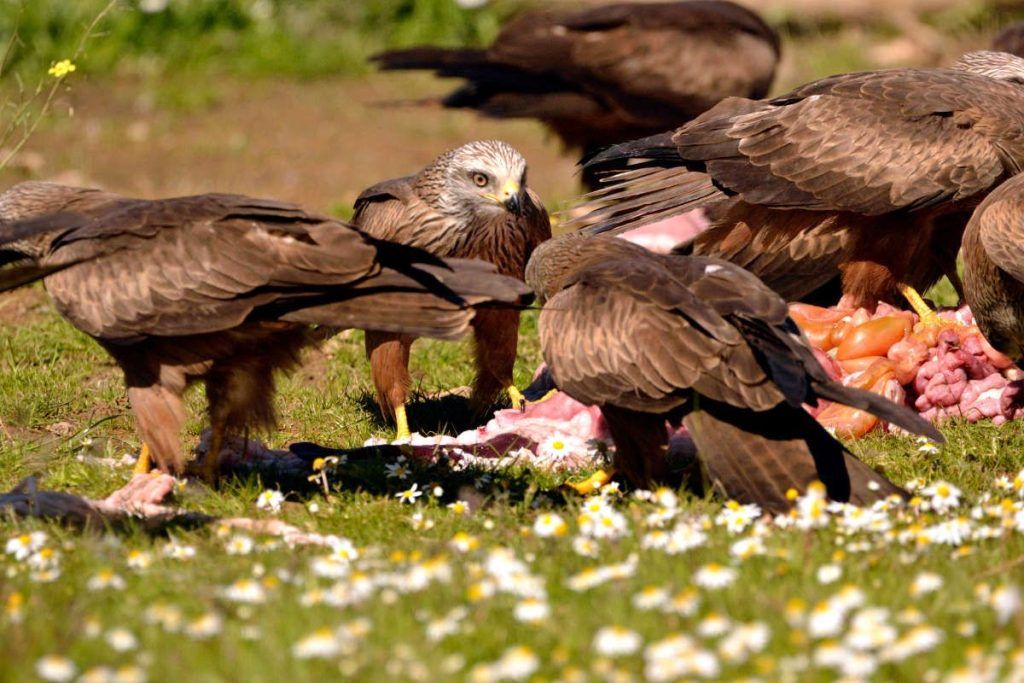
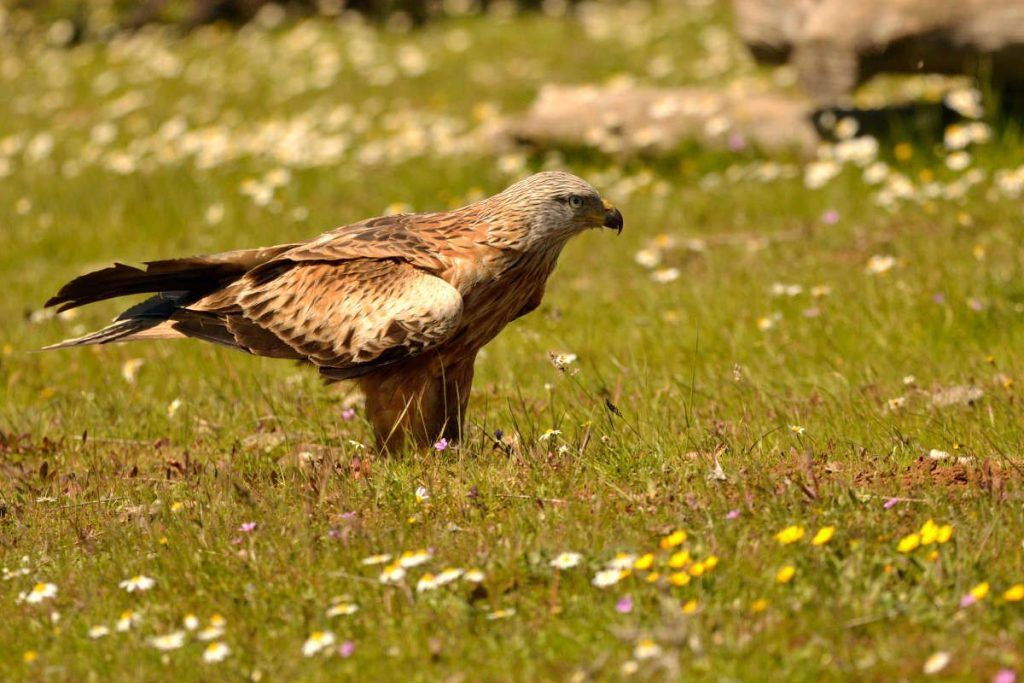
But the first species to land was not the vulture, but the kites. Black and royal, both began to eat with timid attacks, diving headfirst and tearing off small pieces of meat in mid-flight. I've already told you that birds in the wild tend to be very wary of eating near humans.
When they finally decided to land, the real spectacle began. While the kites were feeding on the ground, the first griffon vultures They perched on nearby trees, scaring away the timid vultures.
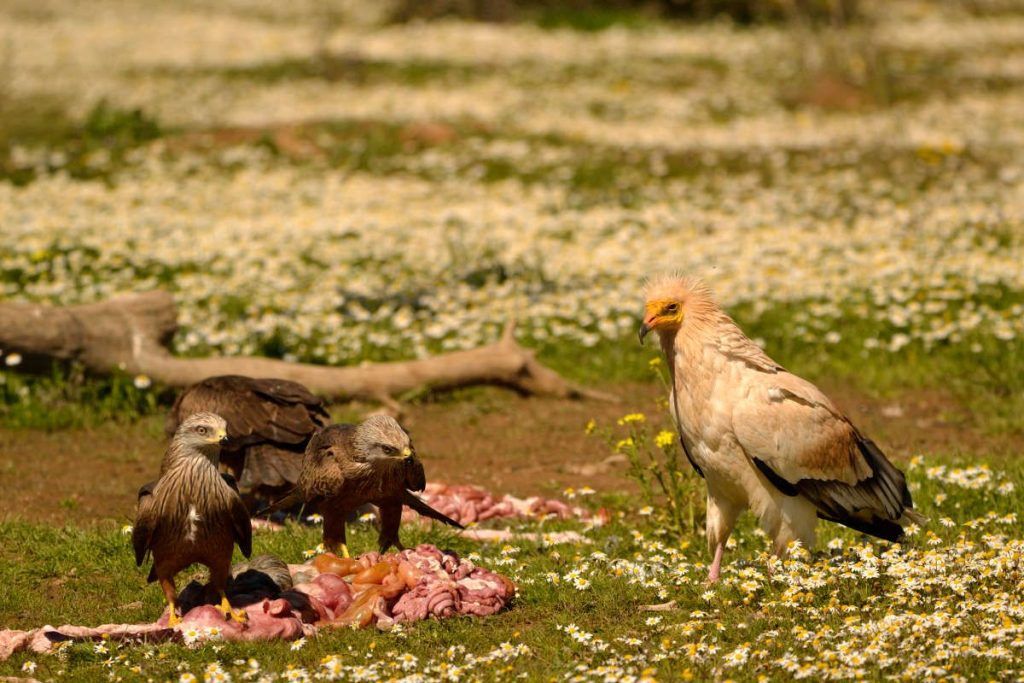
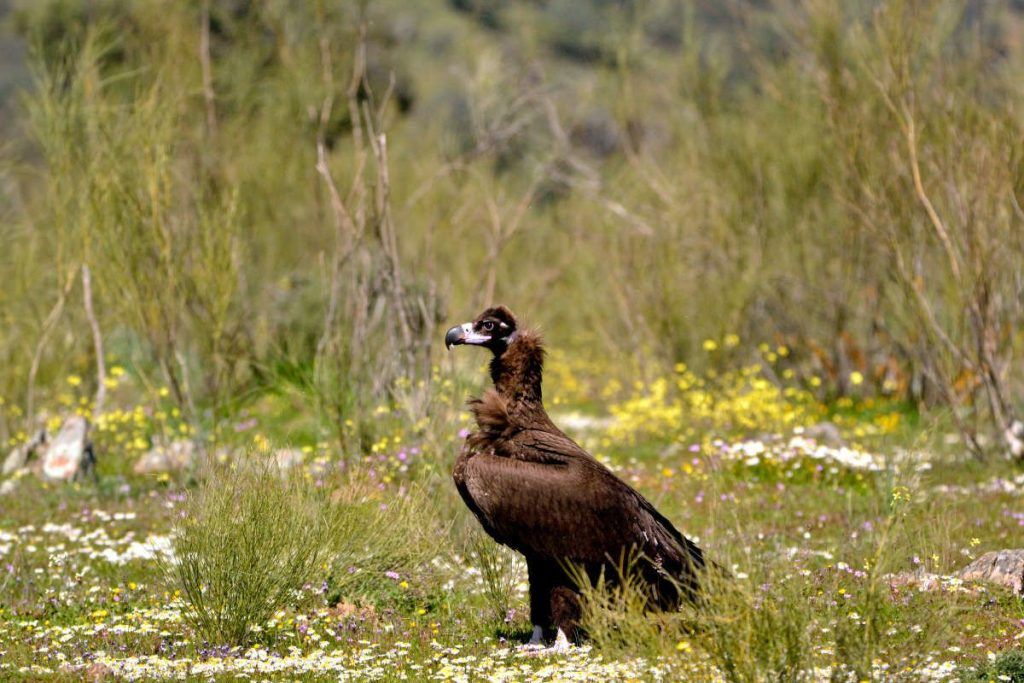
And then the swarm arrived. The first vulture landed, scaring some kites to a corner with very little meat and mobility. The rest of the vultures landed little by little. Griffon vulture but also the elusive and majestic black vultureThen noise and chaos took over. Vultures attacked each other to tear pieces of meat out of their mouths, frightening kites and small Egyptian vultures while tearing tissue, breaking bones... the noise was horrifying.
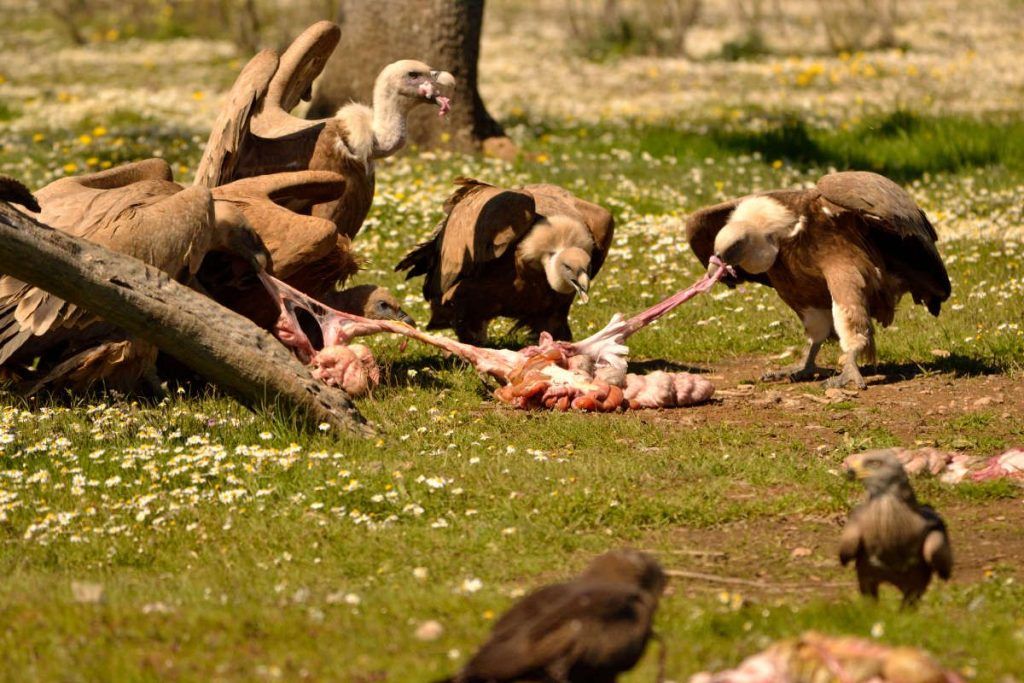
After five hours of feasting, all the meat was gone. It was a terrifying sight. I have 1,200 photographs taken in just five hours, and I can assure you that many of them are only for the strongest of stomachs.
It's a very strange feeling. We wildlife watchers occasionally use hides to take close-up photos of elusive, human-shy animals. To do this, we attract them with food. We know that what we're about to observe isn't a tasty dish, but at the same time, we feel the overwhelming need to photograph and show these images later.
Between photo and photo I took a little time to record some videosThe quality isn't great and the audio doesn't exist, but I can assure you the sound at that moment was terrifying. Dozens of vultures were waiting for their coffee and cigars after finishing off 80 kg of meat.
After eight hours of confinement, calm returned to the hide. The vultures slowly took off when they realized no waiter would bring them dessert. It was a slow farewell that allowed me to take the last photos of all the species that had landed for the feast. Griffon and black vultures, black and red kites, Egyptian vultures, and crows...
After remaining silent for a while and making sure that ALL The animals had taken flight and I was able to get out of the hide... This is the last of the precautions We should keep in mind when photographing from a hide. We must enter before the animals approach, and we cannot leave until we are sure all the animals have left. The general rule is that the hide owners usually come looking for us when everything is over, and we should not go outside until they appear.
And so ends the story of one of the most impressive experiences we can have in contact with nature. Using a hide, always recommended by professionals in the field, can provide us not only with stunning photographs, but also a spectacular memory that will remain in our memories forever.