Hello friends,
The steppe birds They have always attracted the attention of wildlife enthusiasts. Why? Perhaps because of their unique behavior during the breeding season. The fact is that these birds have been with us for hundreds of years, as long as we have maintained their natural habitat: cultivated land alternating with fallow areas.
These lands, however, are becoming increasingly scarce. Living off the land is not easy. As people abandon their fields or convert them into large estates, the habitat of steppe birds is shrinking every day. That's why it's important to raise awareness and protect the home of these species.
A few weeks ago we had the opportunity to participate in a small informative excursion by the local group of SEO BirdlifeThe aim was to introduce some of the steppe birds and birds of prey that can be found in the farming regions of Lleida.
First and foremost, we must thank the local SEO group and the entire organization for their work. Not only for their outreach, research, and protection of the peninsula's birds, but also for their excellent work in organizing these types of excursions, talks, and trips, which generate such a good vibe and atmosphere. pleasant that make a group of strangers forget that they are strangers.
This time, the excursion lasted a day, and we visited some of the most hidden and abandoned farming villages in the Lleida region. This remote area is difficult to find without a guide. Perhaps that's why the animals that inhabit it are easy to spot.
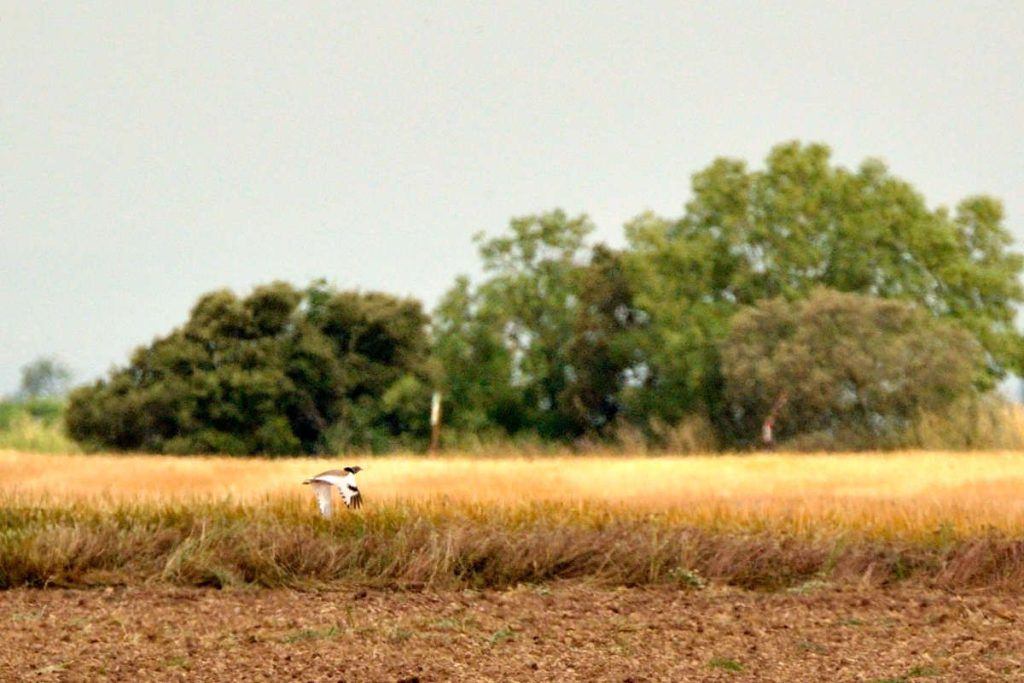 It's not easy to spot it among the fallow areas that alternate with crops. It's not a small bird, but it's familiar with humans and wary of them. Spotting it in flight isn't easy either, despite its bright colors, which should stand out against the straw yellow.
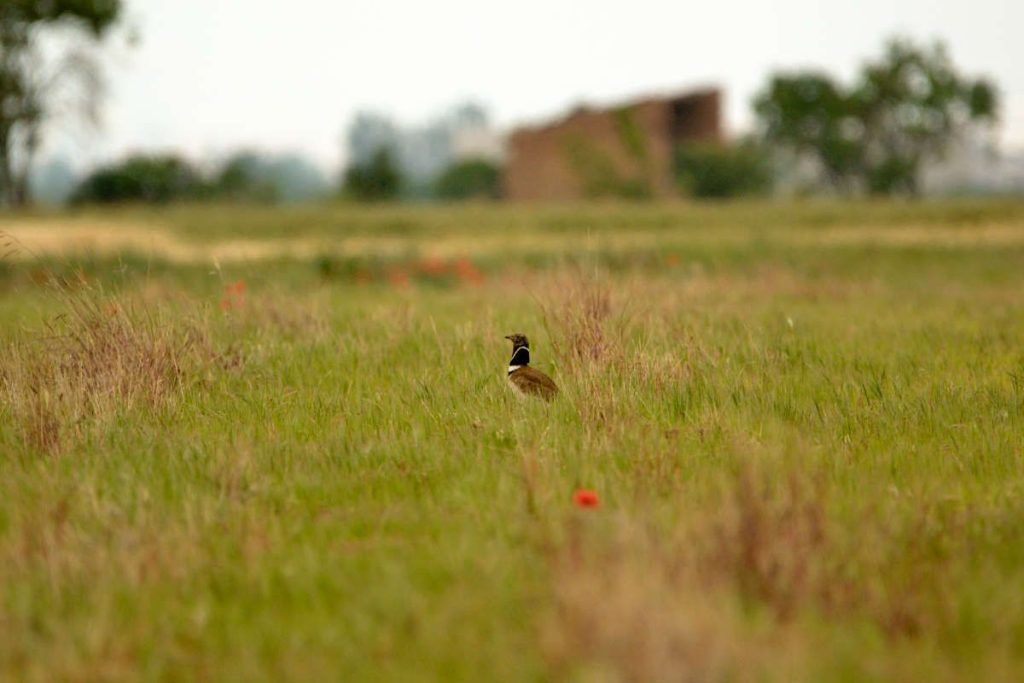
He common bustard It is a steppe bird found across much of the Iberian Peninsula. The photo that opens this post is a typical adult male. It is easily recognized by the colors of its neck: grayish and black, with a narrow white ring at the end.
Along with the great bustard, it is one of the birds recognized for its peculiar mating nuptial danceBetween March and April, the males display the colorful plumage on their necks and dance with short jumps to attract females.
The male in the photos was one of the first birds we encountered on our excursion. Despite the proximity of our cars, it wasn't at all wary and allowed us to observe and photograph it for quite a while.
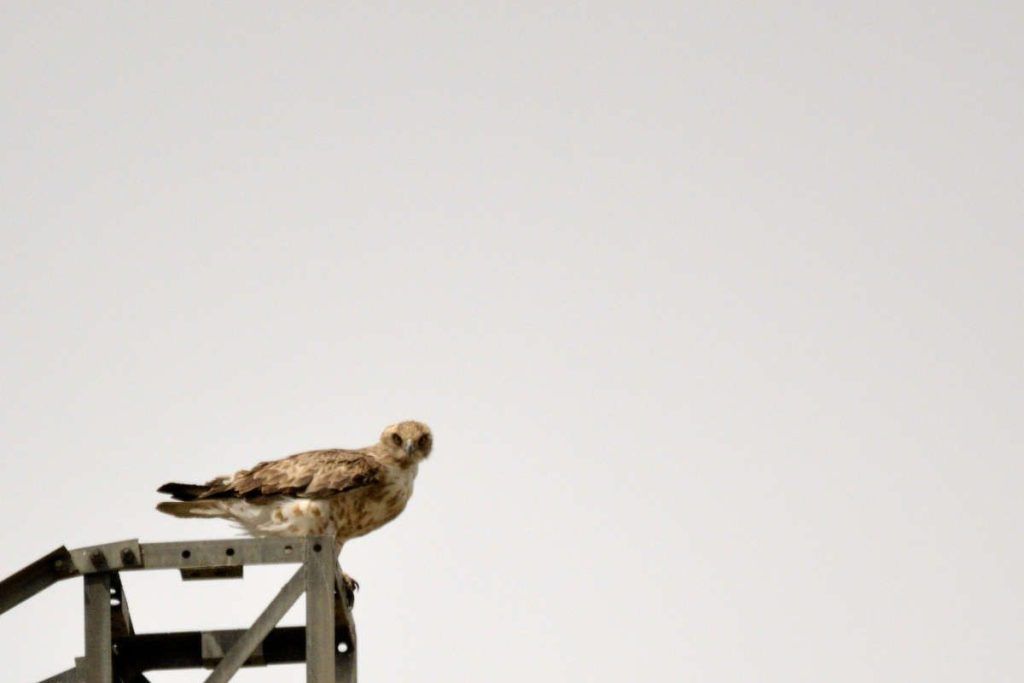 We also came across several Iberian birds of prey on our way. Kestrels, buzzards, griffon vultures, kites... But the bird of prey that allowed itself to be photographed the best was this one European short-toed snake eagle that was perched on a lamppost.
The unique feature of this raptor is its specialized diet. It feeds primarily on snakes, which are widespread throughout the peninsula. This is why we can find various varieties of snakes from coastal areas to forests at 1,500 meters above sea level.
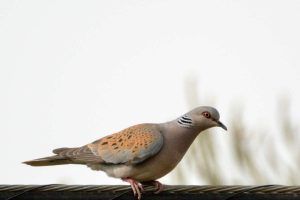 On our pleasant walk, as evening drew to a close, we encountered other small birds that also inhabit the areas of pastures and cereal crops. On these walks, we shouldn't just look up at the sky. Power poles and even power lines can be good places to find small winged species.
The photo on the left is of a European turtledoveIt's a migratory species capable of flying from northern Europe to North Africa. Despite being widespread throughout the peninsula, it's not easy to locate. You have to know what you're looking for and where to look for it.
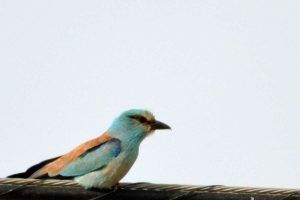 The photograph on the right is of a European ratchetEasily identifiable by its blue coloring and the coppery brown of its wings, it is a small bird that arrives on the peninsula from Africa between March and April and leaves again at the end of summer. It typically feeds on small insects and lizards.
The main distinctive feature and identifying characteristic of this bird is its song, similar to the sound produced by those old wooden toys called rattles. Hence its name.
Throughout the day, we were able to observe other small birds. Great spotted woodpeckers, shrikes, bee-eaters, larks, great tits, rock thrushes, and magpies... these small species are difficult to photograph, especially when we spot them at great distances with the aid of telescopes and binoculars. Therefore, the help and comments of our guide from the local SEO group were essential for observing all these species.
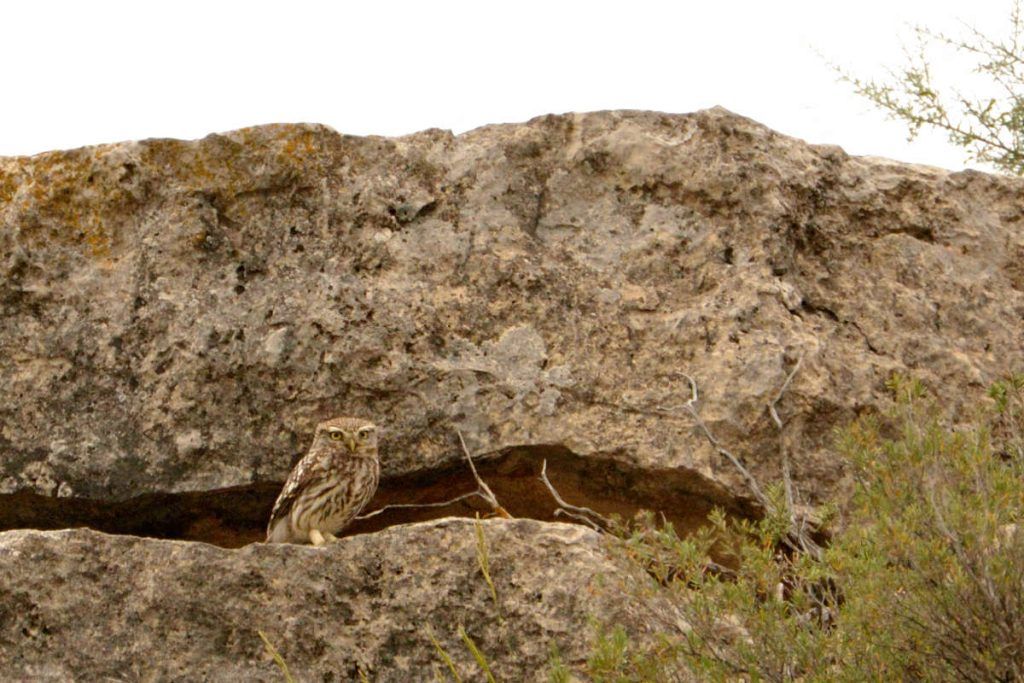
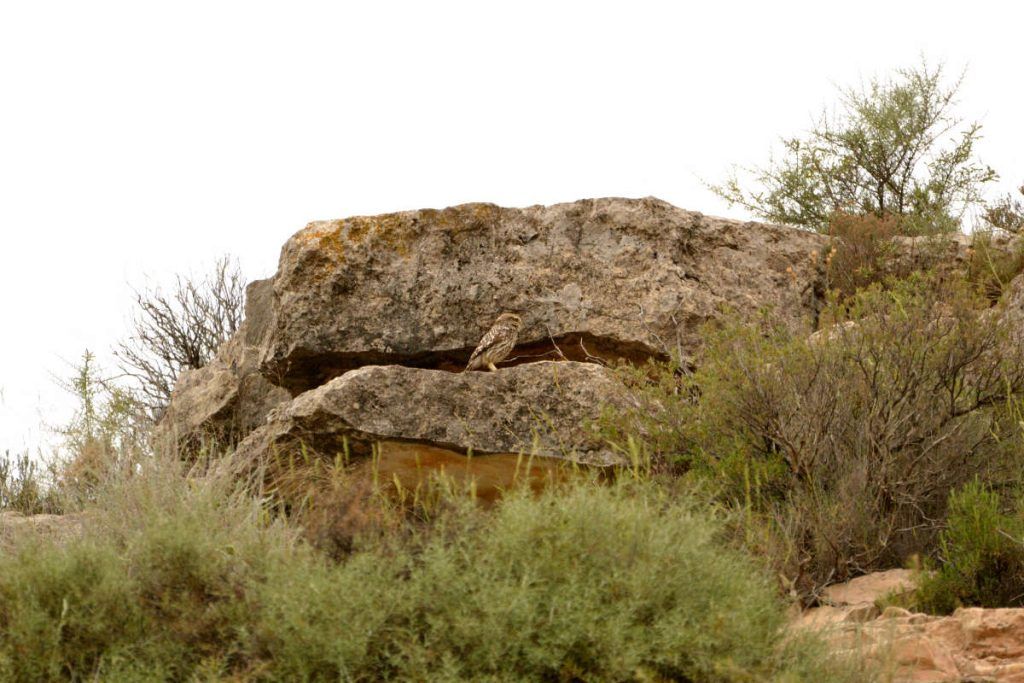 Of course, there was still the big final surprise before the night enveloped us. I have to admit that the European owl It's one of my favorite owl varieties. It brings back fond memories of my childhood, when the owls could be seen at dusk in most of the villages on the Iberian Peninsula. The abandonment and disappearance of the farmland surrounding these villages has condemned the owl and other owls to increasingly remote areas that still rely on old-fashioned cereal farming.
I had joined the local SEO group as the only wildlife photographer (with my large zoom lens and tripod slung over my shoulder). While the rest of the group used their binoculars and spotting scopes to observe distant wildlife, I carried my tripod around. After 10 hours of struggling with long focal lengths to get a handful of decent photos, finding a small owl on some rocks a few dozen meters away was the icing on the cake.
Photograph this owl already the snake It was reward enough for me. Of course, the company, commentary, and information from our guides and fellow hikers were crucial to creating a very pleasant atmosphere throughout the day.
I'm looking forward to repeating the experience with the SEO group. We'll probably meet again in September in the Ebro Delta for a weekend of photography and birdwatching. Until then, I'll cherish the memories and the good taste left in my mouth from the excursion through the steppes of Lleida.
Greetings