Hello friends,
At the end of August I made a small photographic getaway to Zakopane, in southern Poland, to visit some mountains that have attracted me powerfully since I was young, The CarpathiansThis mountain range is known for being the natural habitat of the king of European mammals. If Africa has the lion, we have the grizzly bear, and the Carpathian Mountains are home to the largest brown bear population on the continent. I knew it would be difficult, but I secretly dreamed of photographing a brown bear during the few days I would spend in Zakopane. Do you want to know if I succeeded?
 The challenge I had set myself was huge: to take advantage of my vacation to a place still unknown to me and organize a photography trip to the Polish Carpathian Mountains where I wanted, in addition to photographing landscapes, to find the trail of large mammals such as deer, wolves, or, if we're dreaming, brown bears.
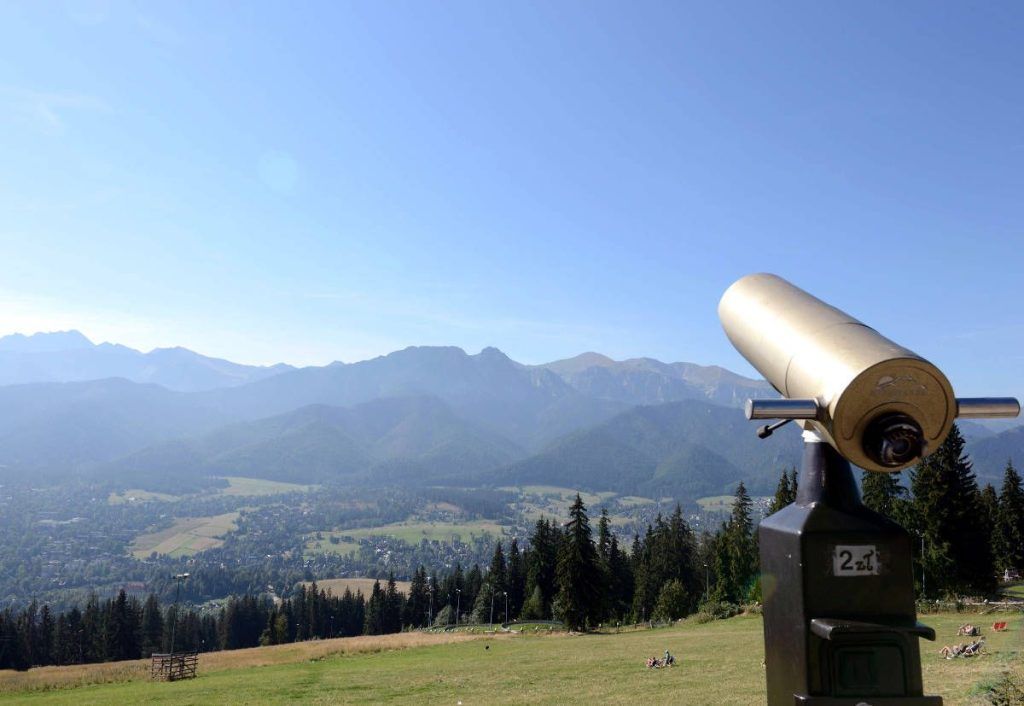
The image that opens the post is a beautiful panoramic view of the place where we stayed, the town of Zakopane. The idea of this trip was to try a new wide-angle lens, ideal for taking pictures of landscapes. In the background we see the Tatra Mountains, a natural border between the countries of Poland and Slovakia, and part of the Carpathian mountain range.
In addition to making hiking trails Around Zakopane, the star excursion was, of course, the visit to the Morskie Oko Lake, one of Poland's most famous lakes. The literal translation of the lake's name is "eye of the sea," and it is believed to be the largest lake in the Tatra Mountains.
 To get to the lake there are several hiking trails, some even marked as GR (European hiking trails)The distances and times it will take to travel these routes also vary. From Zakopane, there's a 26-km route to the lake. We can also take several bus lines from Zakopane that will drop us off in an adjacent valley, about 9 km walk from the lake and with a 1,000-meter elevation gain. This is the route I chose, knowing I had limited time.
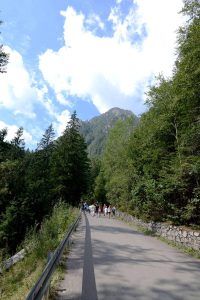
Something that I didn't like very much and that I have to mention is the overcrowding that both the natural park and the surrounding towns have, and Zakopane in particular, which reminded me of a mix between Baqueira and Oropesa del Mar. The climb to Morskie Oko was especially crowded. In the photo on the right, you can see a group of hikers at the beginning of the ascent toward the lake.
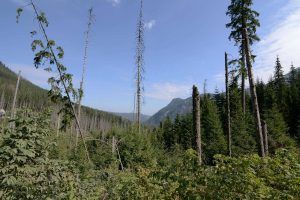 Despite the 30-degree temperature and the elevation gain, I took my time testing the new lens; the views were certainly worth it. To the left and right of the trail, we encountered the typical trail of uprooted trees left by winter avalanches. It was a typical high-mountain landscape, something rarely seen in a country like Poland.
Halfway up, we stopped to rest and appreciate one of the most beautiful views of the hike. We were at an altitude of 1,000 meters, and the mountains in front of us could have risen hundreds of meters above our heads.
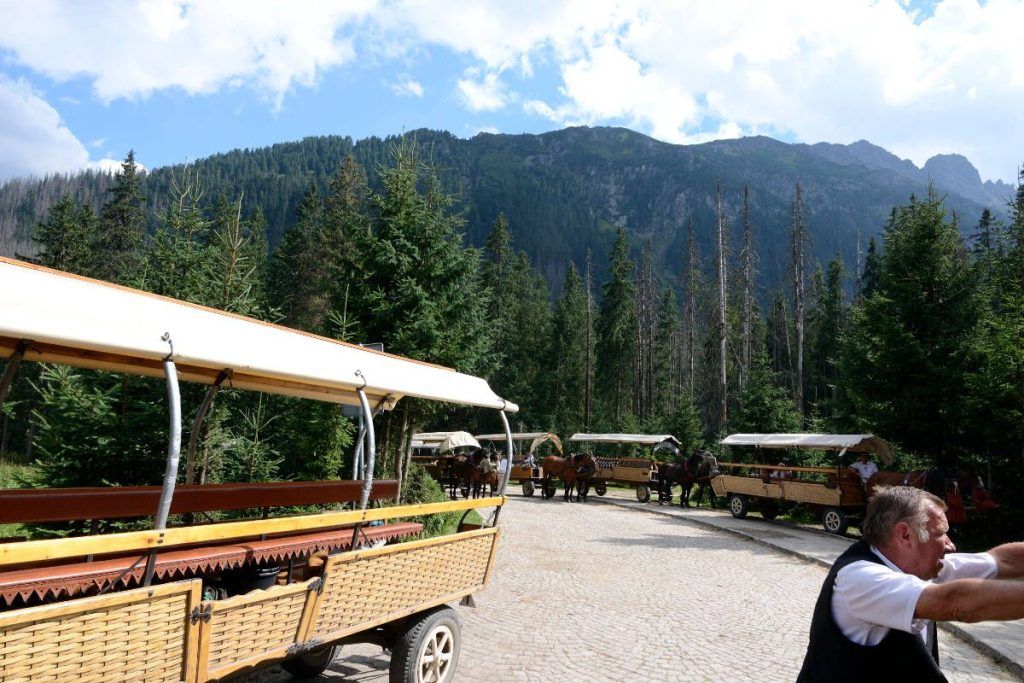
 Yet some tourists preferred to enjoy an ice cream (did I mention it was very hot?) rather than look up at the colossal mountains.
There was something in the air... not only were we arriving (slowly and dying of heat) to our destination, that famous lake that looks like an eye seen from the sky, but we were also entering the territory of the brown bear, the largest predator on the European continent. It is estimated that around 100,000 bears live in the entire Carpathian mountain range. 7,000 brown bears, the vast majority in the mountainous regions of Romania, but I knew that brown bears had been frequently sighted in the Tatras.
The climb to the lake can be tough in some sections, especially if we choose the summer months and the middle of the day. But little by little we reached the summit, until at last...
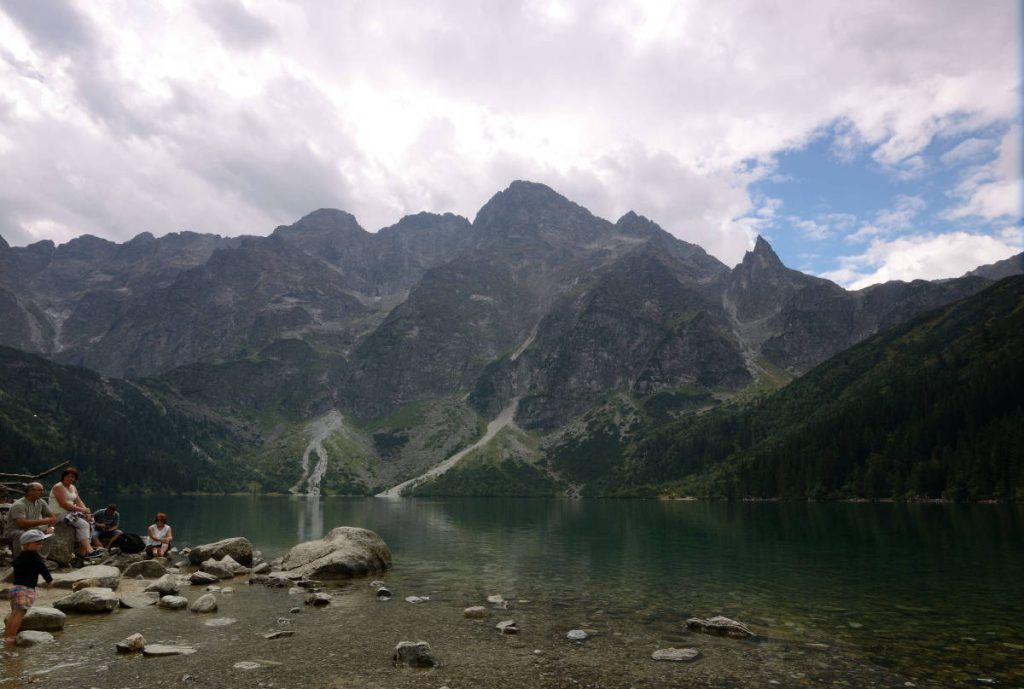
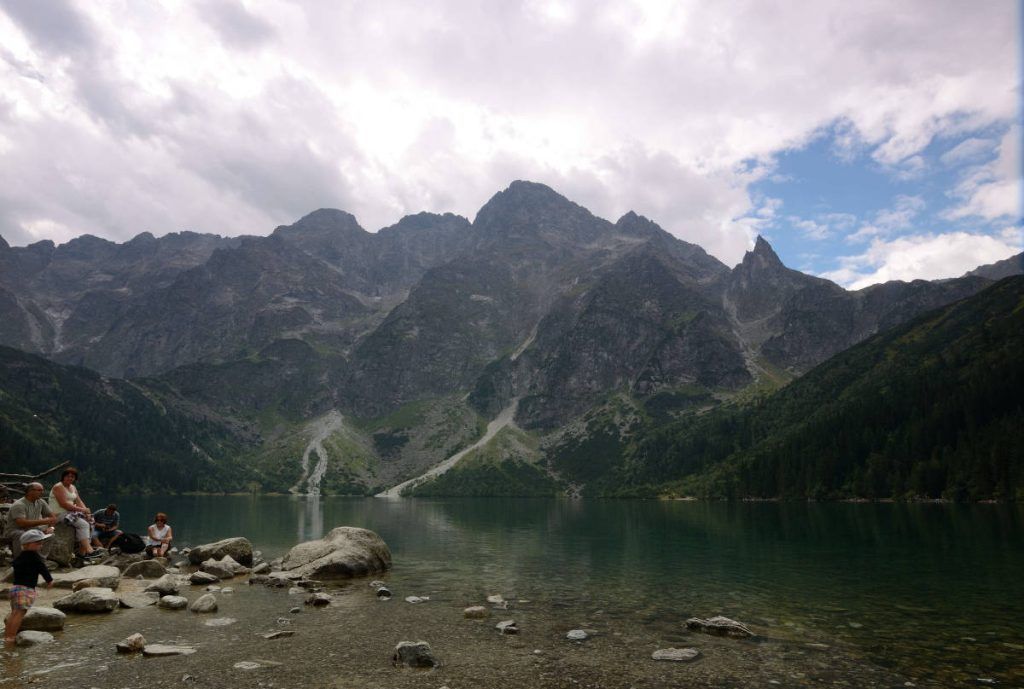
Maybe it was summer, maybe it was because after the intense climb I found myself surrounded by tourists... but the lake seemed smaller than I expected. Needless to say, getting a picture of the lake without people around was mission impossible. Unfortunately, we couldn't reach the summit of the peaks seen in the background, which would have offered us the best views of the lake, of course. But we already know that for our next trip... photographic trip In the Tatra Mountains, the challenge is to climb above the Morskie Oko to photograph it in all its splendor.
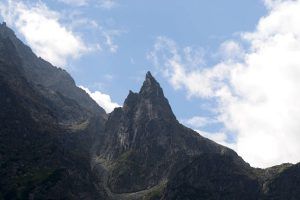 The wide-angle lens lived up to expectations, as you can see in the image above. After taking several similar photos, there was a little time to explore the details the lake could offer, specifically using the lens. telephoto lens to capture one of the most famous peaks of Morskie Oko, as you can see in the image on the left.
Once this was done, all we had to do was start the descent again (did someone say ice cream cone?) in search of a snack and a cool shower.
Friends, I only have to say goodbye with this post of our escape photographic to Zakopane... wait... there was something left to explain, right?... Oh, yes, the bear thing!
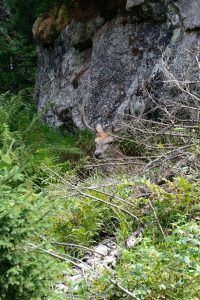 Well... as we climbed up Morskie Oko, my spider sense told me something was watching us from a safe hiding place. That feeling had stayed with us especially on the final stretch of the climb. We felt eyes on us, the unwary tourists... what was that moving in those bushes?
Horns, I see horns! Do bears have horns?... I'd say no... I think it's time to change lenses and use the telephoto zoom on my back...
Yes friends, out of the blue we came across a small deer perched among the rocks, feeding while watching us. He felt so secure in his shelter about 100 meters away, separated from us by a stream and dense undergrowth, that he allowed us to photograph him (or at least the part of his body visible in the bushes) at leisure.
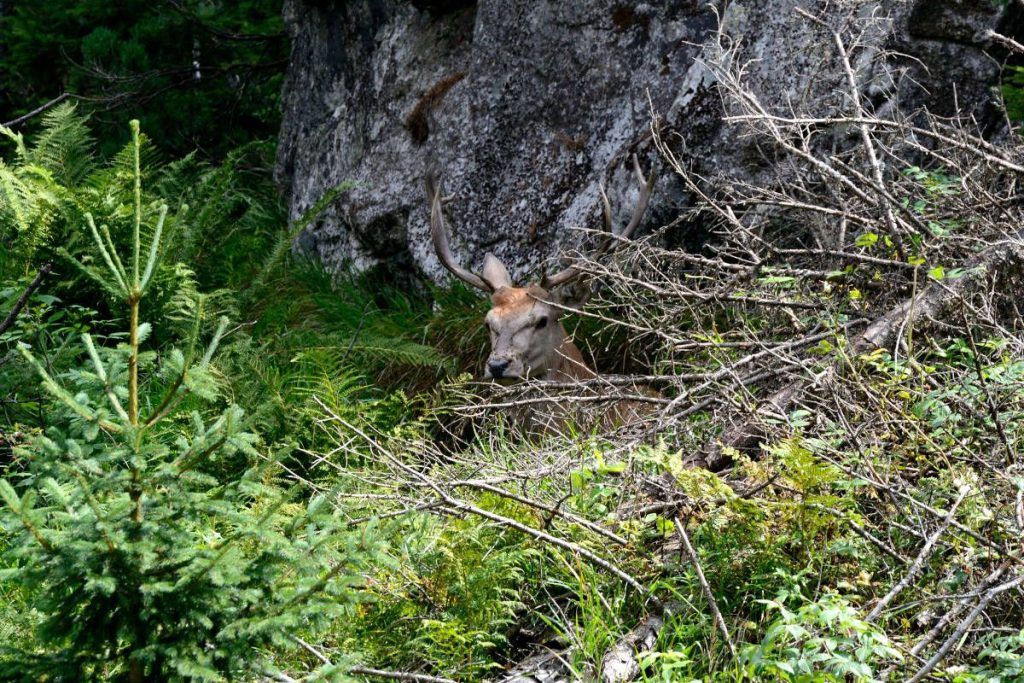
A deer weighing around 150 kg (330 lb) was right in front of us, with no intention of fleeing. The deer I've encountered on the Iberian Peninsula flee before you even notice them, and you only have time to see a fleeting shadow after hearing the stamping of their hooves. Deer tend to be shy by nature, but this one in particular wasn't keen on escaping our flashes 😉
We didn't find any brown bears... too bad... but that's what two and a half days of traveling through the Carpathians gives you. In any case, I'm left with two objective facts: deer are natural prey for brown bears... and during my visit to the National Museum in the Tatra Mountains National Park, I was told that brown bears and their cubs had been sighted last spring... or so I thought I understood in my humble Polish 😉
In any case, the Tatra Mountains deserve (and will have) another longer visit in which we will dedicate ourselves to thoroughly searching for the largest predator on the European continent... but that will be a story for another post 😉
Friends, greetings and a happy start to the week.