Hello friends,
Spring arrives, and with it, the summer species. These are species that migrate to the Iberian Peninsula to spend the summer. Some of them even raise their offspring here. And among all of them, I had a scheduled meeting with a very special bird of prey, possibly the smallest bird of prey who visits our peninsula in the summer. Yes, I'm talking about the lesser kestrelAnd if you're not familiar with it, I think this article will give you all the information you need about this curious bird of prey.
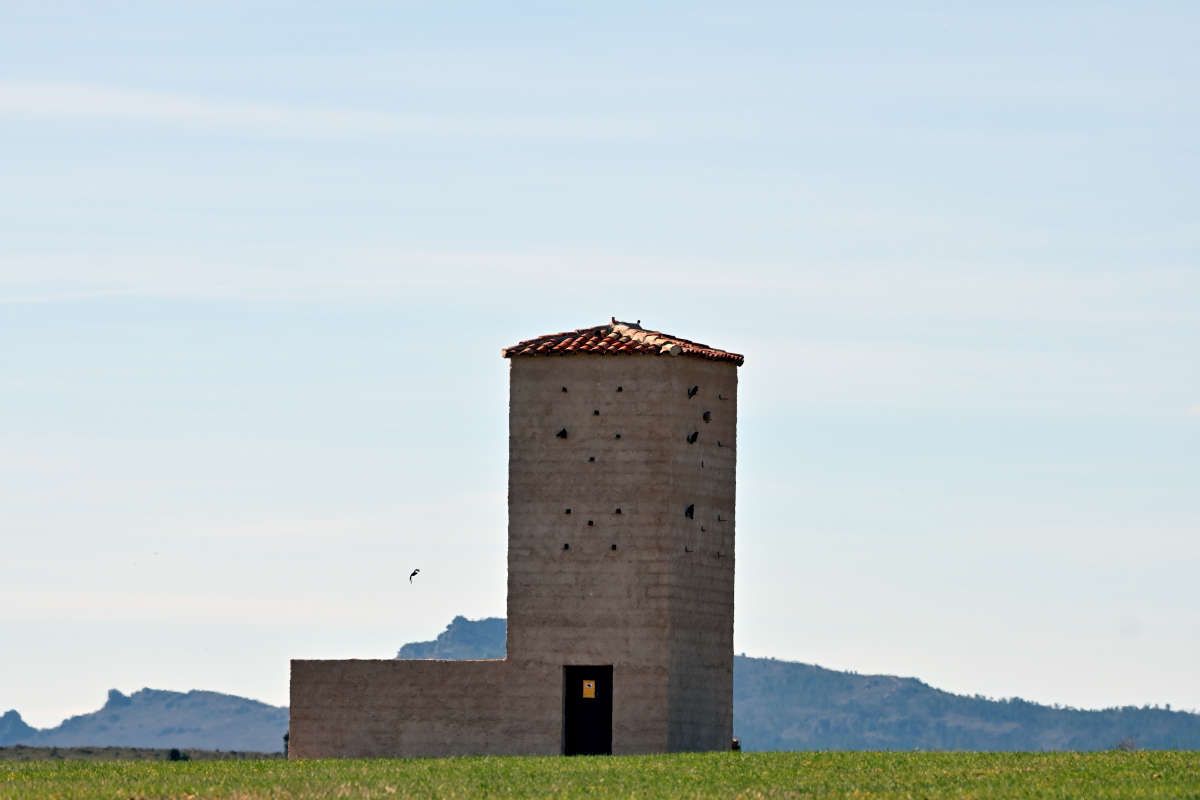
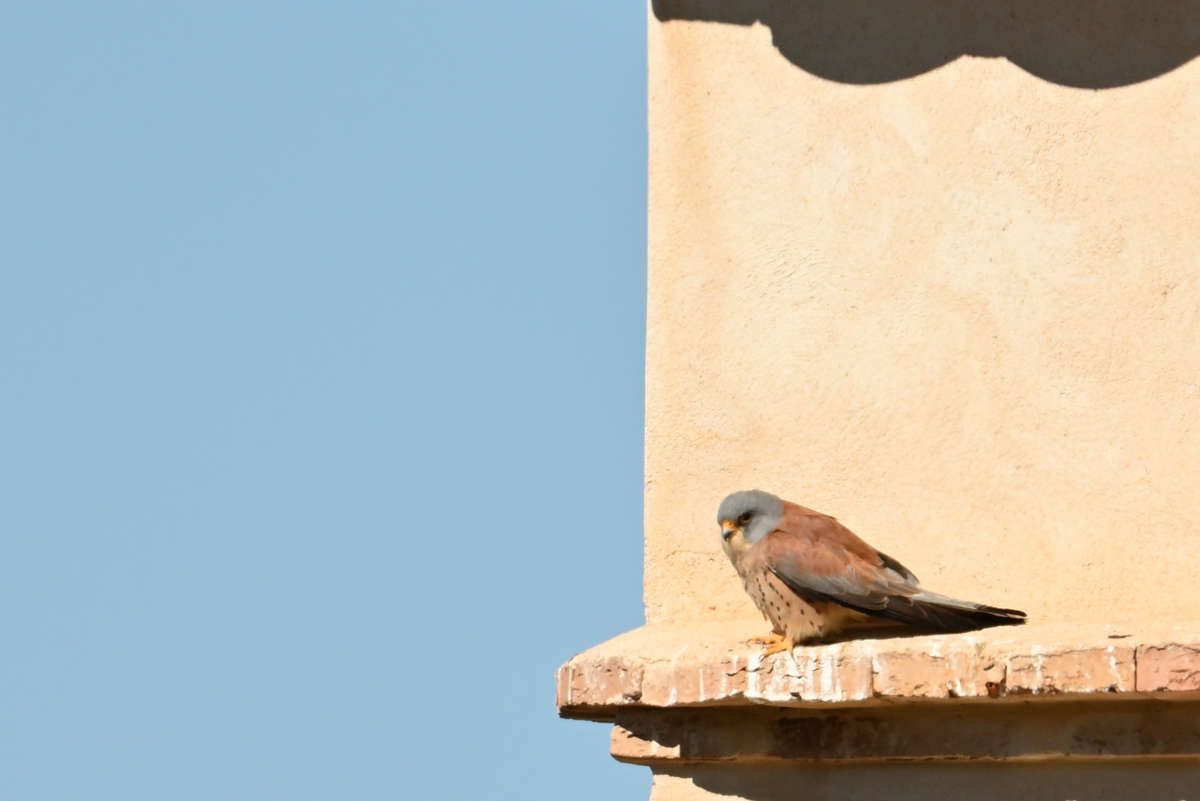
The photograph above shows what would be the natural habitat where we can find the lesser kestrel... today. And I mean today, because the building seen in the photograph is a "primillar" (a kind of shelter) built specifically for this type of bird to shelter and raise its chicks.
Kestrels, both common and lesser, have always felt comfortable in the great cereal plains of our country. In the past, towers, village churches, shepherd's houses, and even castles were the perfect hiding places. The kestrel loves to enter these buildings through small holes, the size of which they are, and build their nest in a small space within these spaces.
And we have commented on it in previous articles. Most birds associated with agriculture have gradually lost their usual refuges over the past century as agricultural techniques became mechanized. In the case of the kestrel, the abandonment of buildings of towns, churches, towers, birthing pens... contributed to the collapse of these buildings.
That is why not long ago, some associations and foundations related to the recovery of fauna began to build primillares. Towers similar to those in the photograph, with nesting spaces (small nest boxes) of a specific and appropriate size for kestrels.
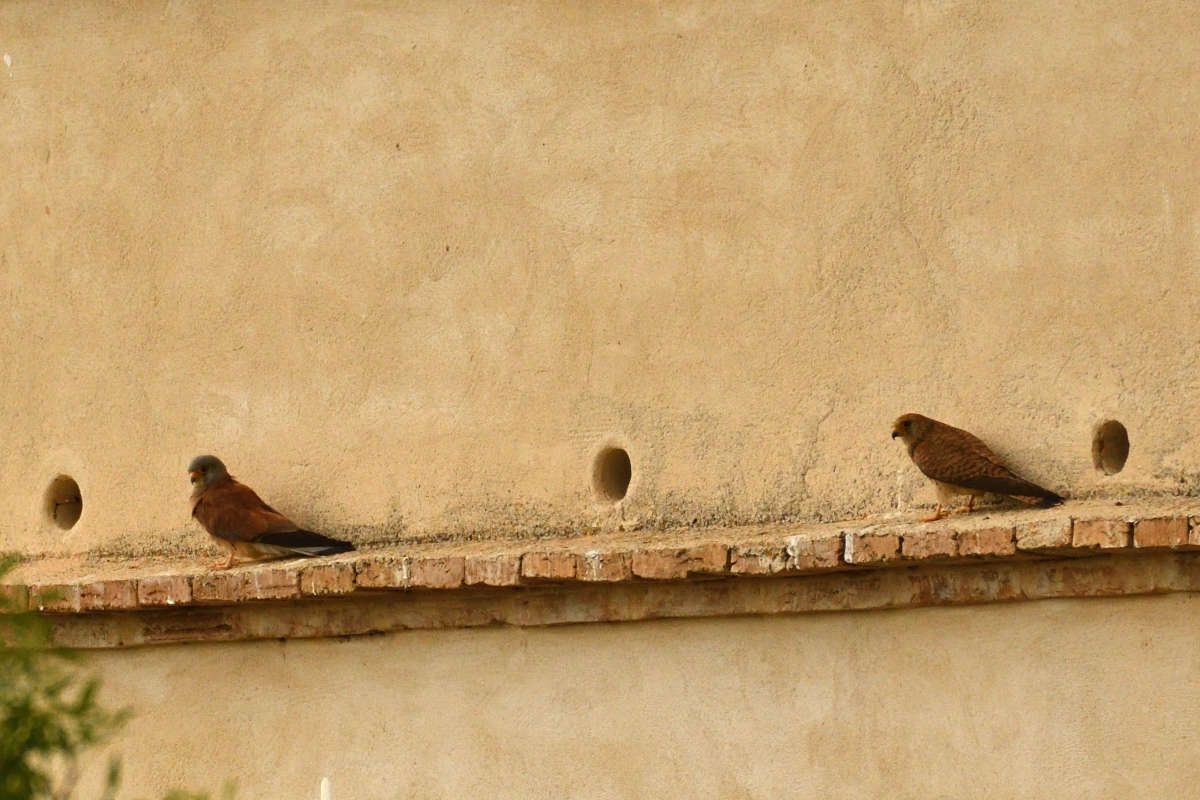 Identifying lesser kestrels is not easy unless you have binoculars, a telescope, or a camera with a good telephoto lens. the smallest birds of prey on the peninsula (I will never tire of commenting on this) and that is why it is not easy to appreciate them without these objects.
But their identification, paradoxically, is very simple. They are falcon-shaped, with kestrels being the smallest falcons, and lesser kestrels even smaller than common kestrels. What's more, if you can see their claws, you won't be mistaken. Lesser kestrels usually have white claws, while common kestrels have black ones.
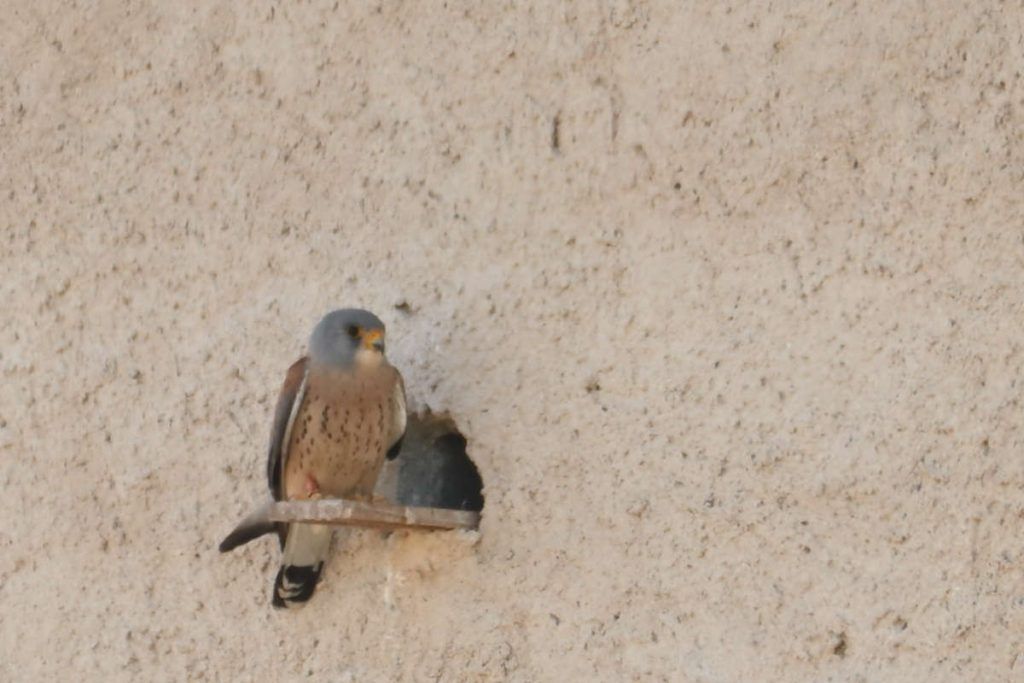
Male lesser kestrels are easily identifiable by their creamy-brown breast with black markings, their golden back, and their bluish-gray head. This bluish color of the head is the characteristic that best defines the males. Females, on the other hand, have a more uniform and duller hue, mainly brown, tending toward reddish.
Kestrels are summer birds of prey. They arrive with good weather, spend the summer on the Iberian Peninsula, raise their chicks, and in the fall, most return to Africa. It's true that some may spend the winter here, in southern Spain, but the vast majority return to the African coast.
Their distribution across the Peninsula is fairly homogeneous, although they are harder to find as we move further north. As for the areas they like to colonize most, as I mentioned earlier, they prefer the large agricultural areas. Steppes, moorlands, and grasslands. It's not uncommon to see them in the small towns of rural Spain, occupying bell towers, mansions, and old livestock pens.
Lesser kestrels are insect eatersThey are attracted to grasshoppers, crickets, and locusts. However, they are also not averse to worms, beetles, and other insects. Therefore, large, open fields are their favorite habitat, both for living and hunting.
And this is where it comes in the particularity and specialty of the kestrelIts small size and design allow it to be hover over the fields while locating its prey, as if locking onto a guided missile's laser. Once this is done, it launches at high speed to capture its prey.
It is very common to see these small, tiny birds of prey in spring and summer. flying suspended, as if it were a helicopter, while they locate small insects. They are birds of prey that are too small to hunt rodents or small mammals, like their larger cousins, the falcons, but their small size gives them a definite advantage when it comes to capturing insects. No other bird of prey is as effective as the kestrel when it comes to hunting insects.
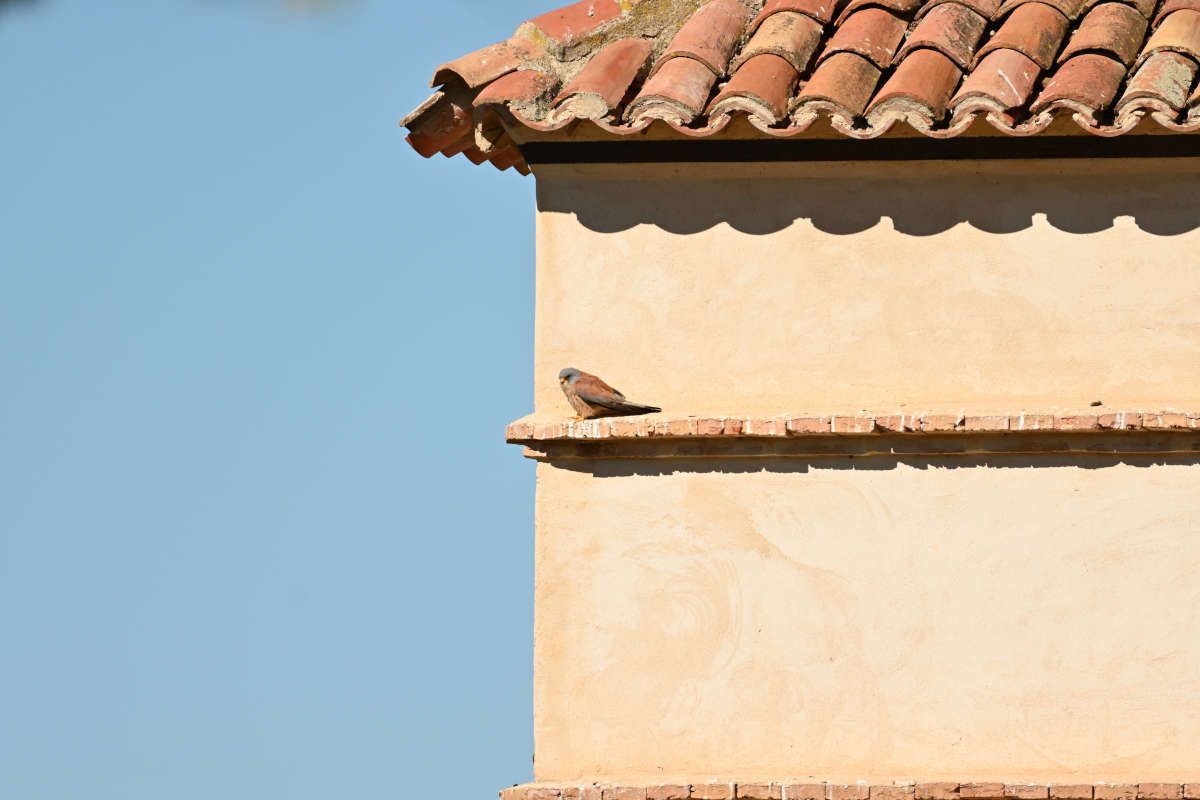
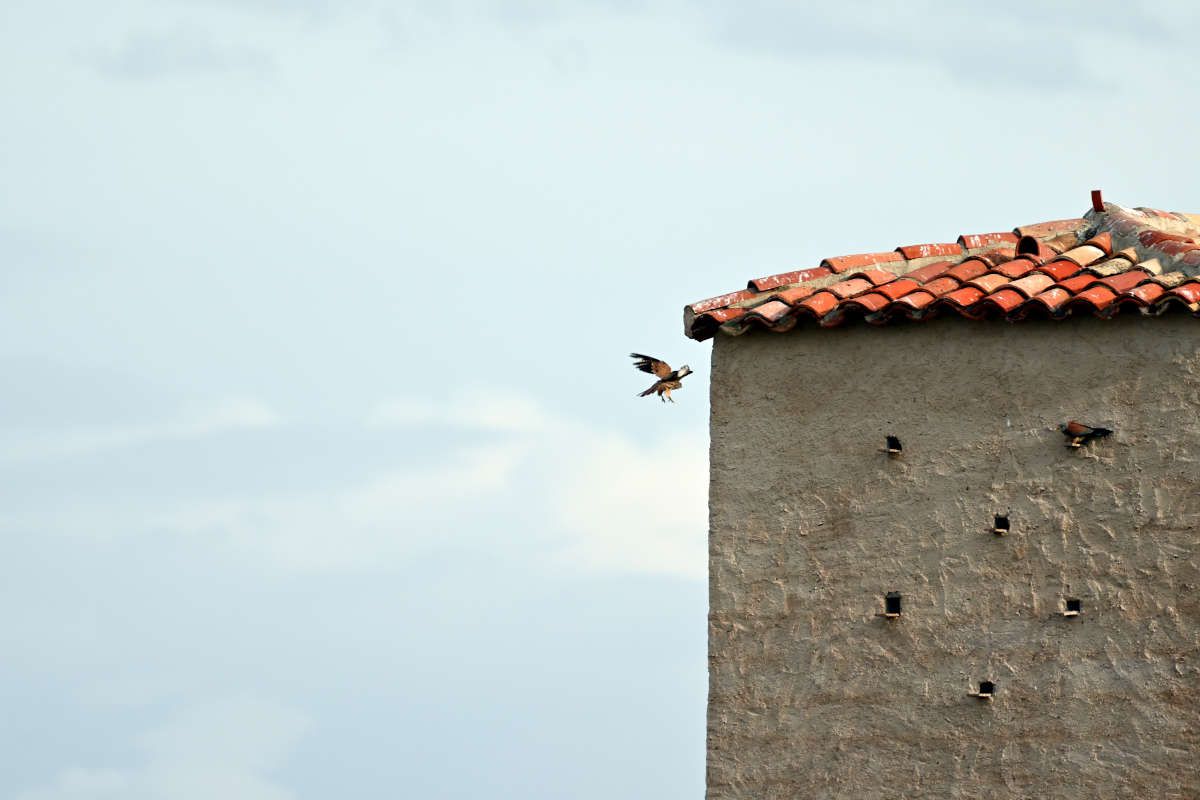
I've already told you. In spring, kestrels seek out bell towers, towers, shepherd's houses... any building with a small, appropriately sized hollow in which to nest. They can even nest under tiles or in holes in any wall. That's the first difference from other large birds of prey. They do not build nests, but rather look for a small gap in buildings where they can hide.
The second difference is that kestrels breed in large colonies. They prefer to gather together to feel more protected in large flocks. So it's common to find these primillares created by the hand of man with dozens or even hundreds of couples.
Friends, you still have time to explore the fields and vast expanses of land this summer to spot and enjoy the flight of this peculiar and tiny bird of prey. At the end of summer, with the arrival of cold weather, the kestrels will take flight to Africa... a flight of thousands of kilometers for a bird of prey that weighs just over 150 grams.
If you want to know more about this little bird of prey, don't miss the video published on our YouTube channel: