Hello friends,
Second entry on the exciting photographic trip to Donna Nook in which we will learn a little more about the dominant species that inhabits these shores: the gray seal. If you have missed the first entry, I recommend you read a little more about this project. nature photography which I carried out last December.
Very good question. On a normal day at Donna Nook, we can observe female seals feeding their pups and the pups playing with their mothers. Although most of the time, all we see are hundreds of seals taking a peaceful nap on the seashore. It's at dusk when things really get crazy. As the sun sets, the males become more active, chasing the females and trying to fertilize those who aren't busy feeding their pups.
One of the things I wanted to photograph at Donna Nook was a fight between two males. It wasn't possible... a huge mistake in my foresight. The big males' tooth-and-nail fights occur on the seashore, and are caused by the dominant male wanting to secure the best place to enter from the water onto dry land. But I already have a new challenge for my next photography trip to Donna Nook.
The reserve has become such a protected area that it's virtually impossible for tourists to reach the seashore. However, nature photography enthusiasts can wander freely along a strip of land where they can photograph the females, their young, and the few males who have managed to overcome almost a kilometer of battles to get close to the enormous colony.
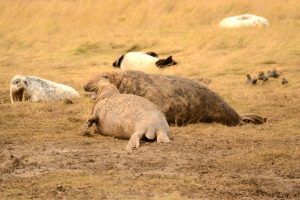
So the only "fights" the fan can safely see are the typical amorous dalliances provoked by pheromones. In this sequence you see a large male (darker in color) using the tactic of Do you study or work? with a paler female.
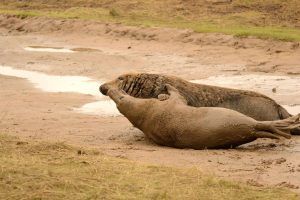
If the female's young have not yet finished nursing, the female will resist the male's playfulness. For 20 days, feeding the young is the mother's sole concern. Therefore, some of these fights end happily. Others, however, end with the male shorn and his pride wounded. It is not uncommon to see an injured or even bleeding male after one of these fights.
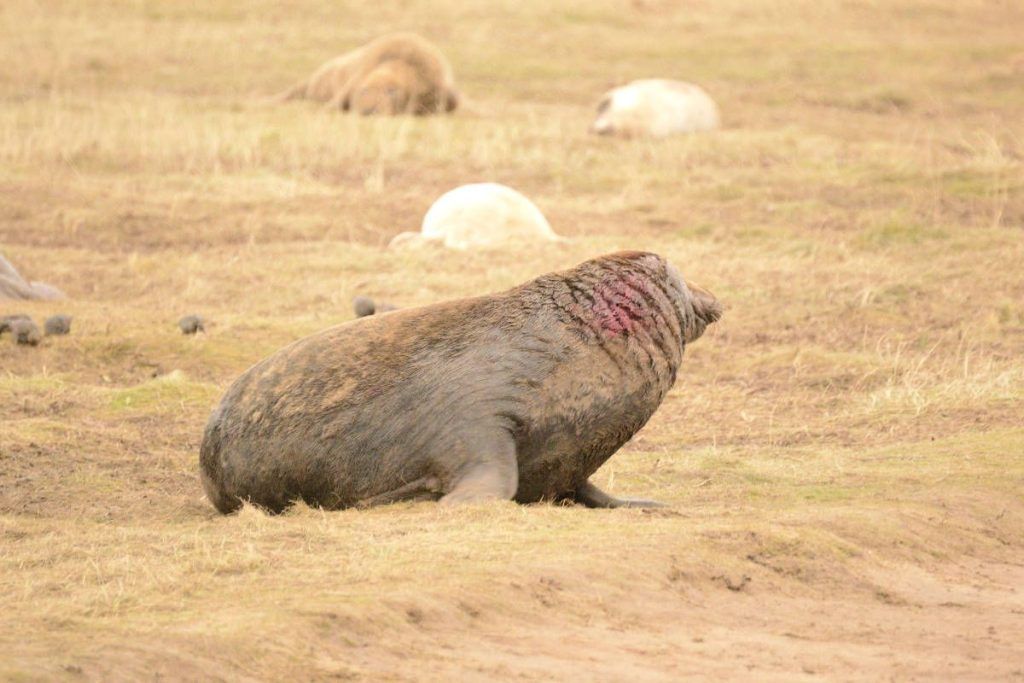
If we're lucky, we'll see some of these amorous dalliances. If we're accredited professionals (researchers or crazy people who get up at 3 a.m.), we'll see a live birth (sorry, I don't have any photos of this). If we're none of the above... most of the scenes we'll see will be seals taking a nap.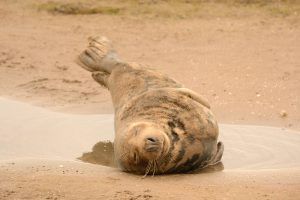 .
.
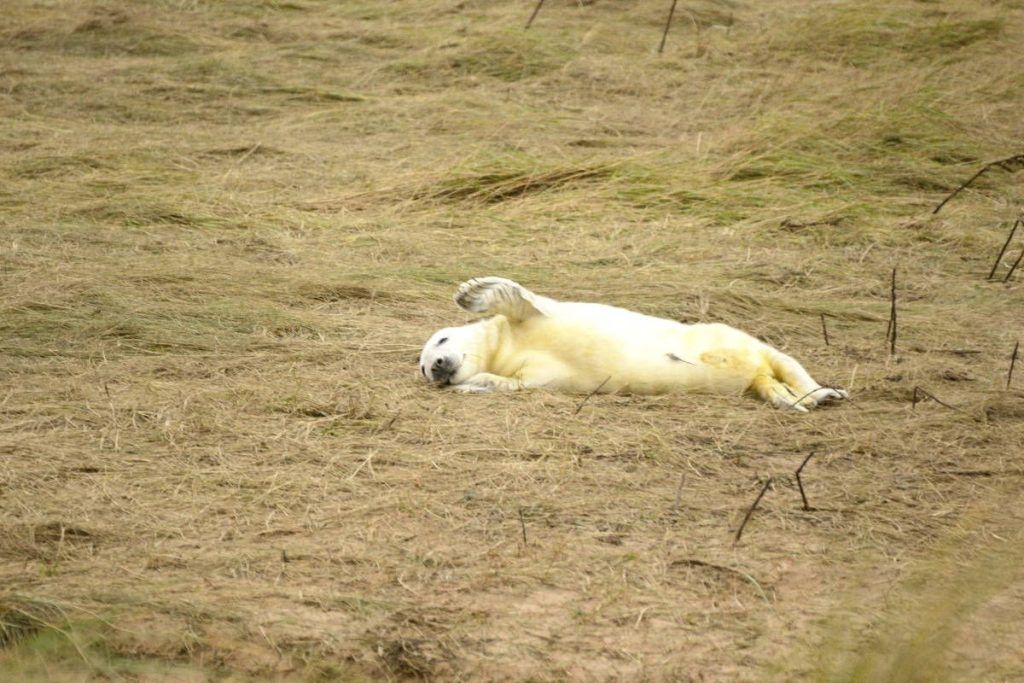
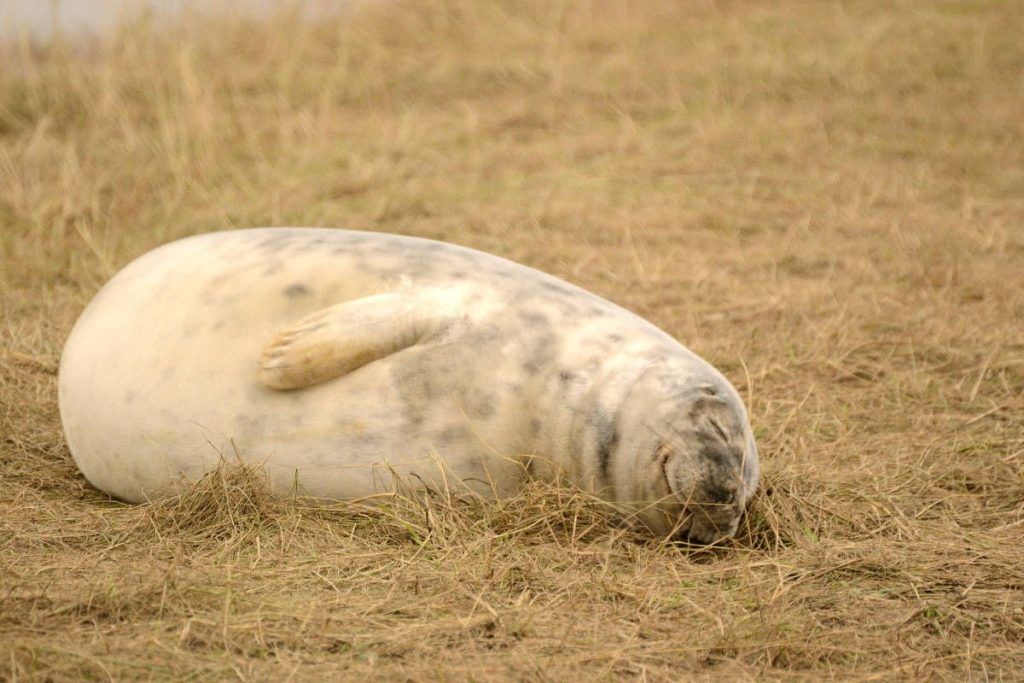
Exhausted mothers capable of falling asleep in the most bizarre positions. I can assure you I spent 20 minutes watching this seal, and she only opened her eyes once to check I was still there... she seemed to be enjoying herself being photographed like a celebrity diva posing for the paparazzi. I've tried sleeping in this position... impossible.
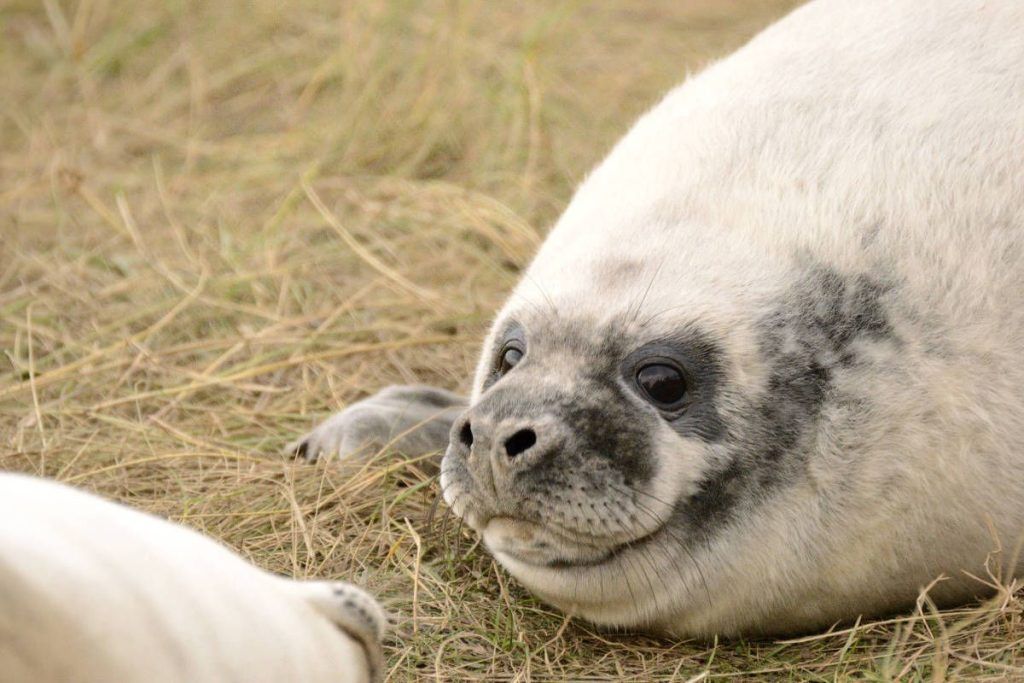
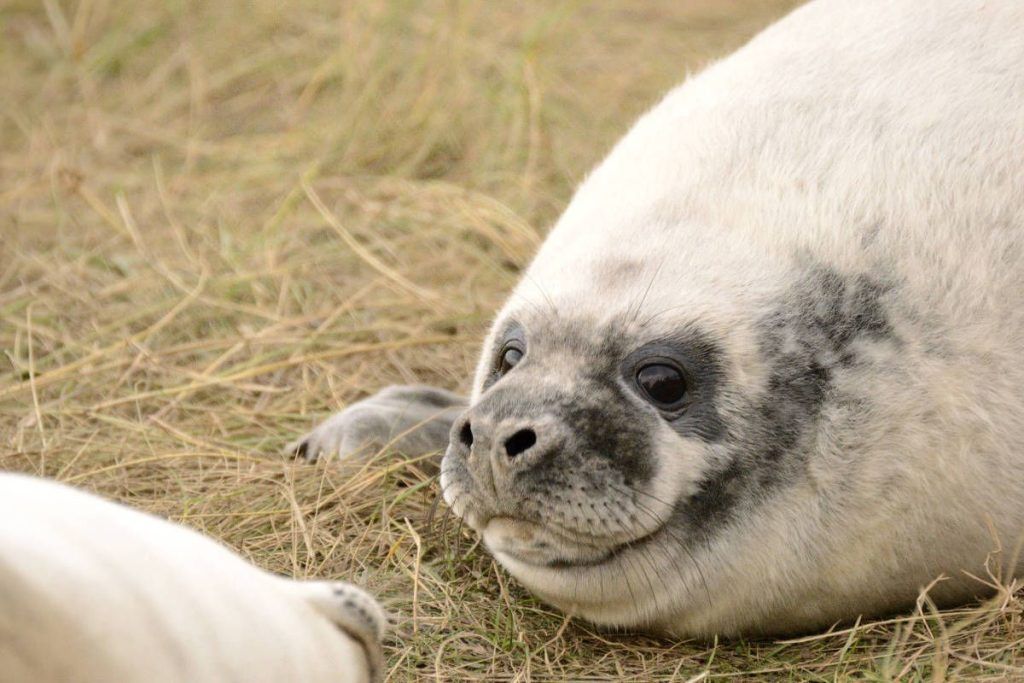
Of course, we will also find babies peacefully enjoying the winter chill while taking a nap. mortality The national mortality rate for grey seal pups (in England) is 15%, although in some areas it can reach 50%. However, the mortality rate of pups at Donna Nook does not exceed 10%. A smooth, rock-free coastline, a lack of natural predators, and human protection (this remains a nature reserve) all contribute to a decrease in these figures.
Of course. The gray seal has several natural predators. The pups are easy prey for the so-called leopard seal, an impressive predator. But the gray seal's main enemy is the orca, or killer whale.
Fortunately for our colony, none of these predators are found on the shores of Donna Nook. This is why the mortality rates of seal pups in this reserve are so low. On the Scottish coast, the same seal colonies are depleted by orca attacks. At Donna Nook, females and pups enjoy a few pleasant weeks on the beach with no enemies to hide from.
Friends, I think these explanations have answered any questions you may have. I'm sure I've forgotten some important questions, so of course, I'll be happy to answer any other questions you may have... if I can answer them, of course, hehe.
Greetings to all and as my friend Nooky says, See you next time!