Hello friends,
A couple of weeks ago I published a brief review of the photographic filters most commonly used in landscape photography. If you've ever been interested in this photographic discipline, you've probably read or heard about the advantages of using a polarizing filterBut what are these filters and how do they work?

Today we're going to delve a little deeper into the physical qualities of light and why a polarizing filter acts in such a specific way. Natural light, the light that surrounds us and that we perceive, is unpolarized. This means that the light waves that surround us vibrate on all planes of space.
A polarizing filter consists of two superimposed crystals that form a microgrid. This microgrid filters out all light that doesn't vibrate in the same plane as the grid. In other words, the filter only allows light that vibrates in a specific plane to pass through to the camera sensor.
What does all this physics talk translate to? Well, depending on how we orient our polarizing filter, and how we orient ourselves relative to the sun when taking the photograph, the filter will allow certain light waves to pass through, enhancing certain colors and canceling out most reflected light waves.
Polarizing filters are used when we want to eliminate reflections in our photographs, especially reflections from non-metallic surfaces (glass, bodies of water, etc.). This is why landscape photography is one of the disciplines that benefits most from these filters. In fact, if we photograph on a sunny day, facing the sun at a right angle will enhance the filter's effect.
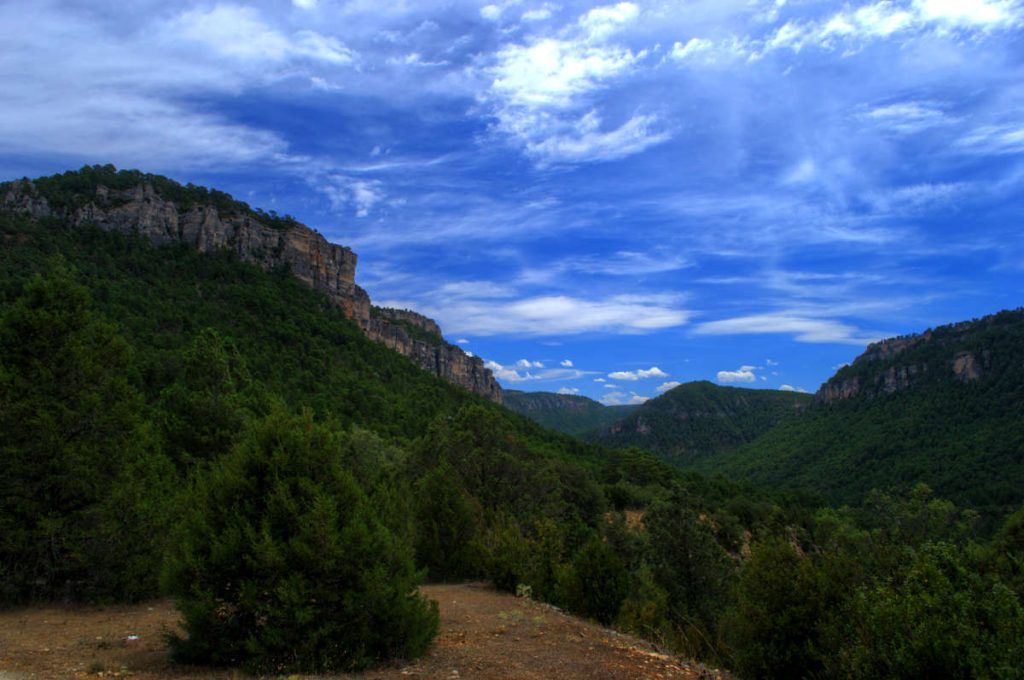
In the previous photograph taken at the Pareja basin, in the Entrepeñas reservoir, we can see at a glance all the effects that the polarizing filter causes on the image:
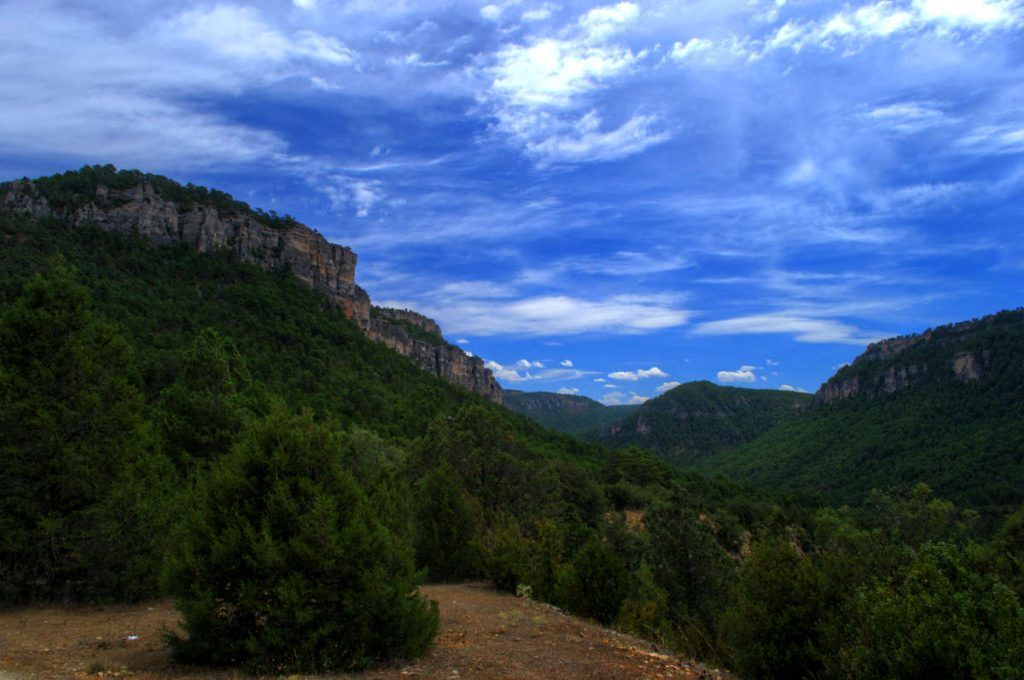
In this other image, we have another perfect example of the effects caused by a polarizing filter in landscape photography. It darkens the blue of the sky, highlighting the white of the clouds. At the same time, it enhances the green tones.
 In the specific case of the polarizing filter, and if our camera is a DSLR (a digital reflex) I always recommend using circular filtersThe polarizing filter acts according to its position relative to the object being photographed and its position (or our position) relative to the incident light source (the sun, in the case of landscape photography). Circular polarizing filters have a polarizing ring, which allows us to rotate them (previously screwed onto our lens) until we obtain the image we most desire. As we turn the ring, we will see how the green and blue tones gradually change, and reflections appear and disappear in the image.
Rotating a rectangular polarized filter mounted on a filter holder is a little more complex. Personally, I find the circular option easier for this type of filter.
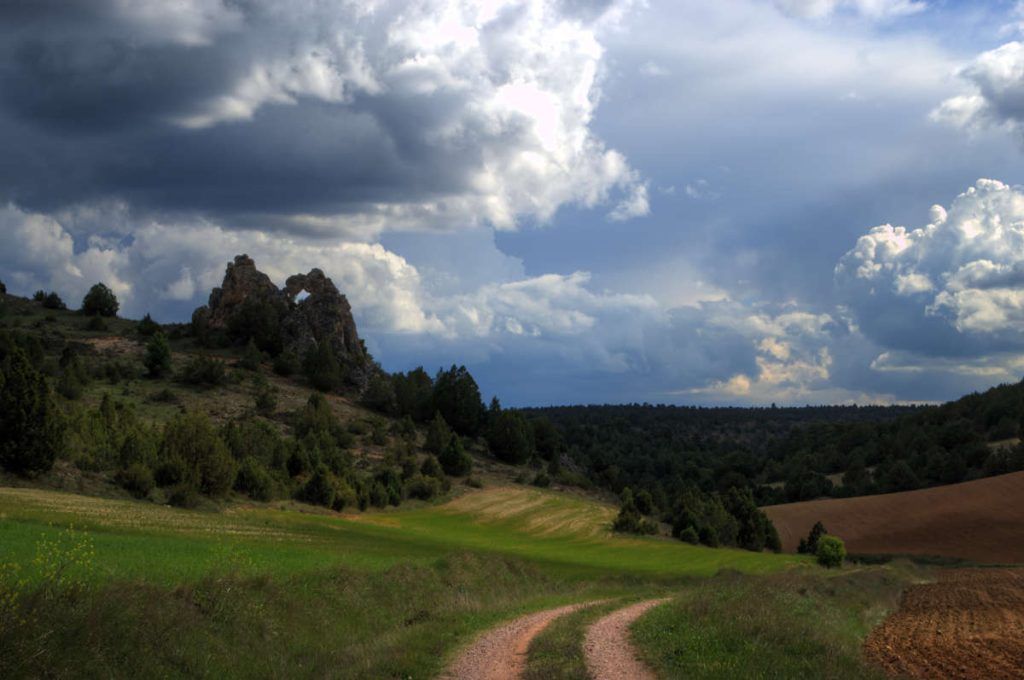
I leave you with one of my favorite photographs, both because of the place where it was taken and because of the memories it brings back. The moorland known as "The Stone of the Hole" in my favorite natural park, the Alto TajoThere are purists who would not recommend using the polarizing filter if we do not have sun, but on stormy days (and applying a HDR posterior) we can also obtain curious images.
In any case, summer, which is almost here, is the season par excellence to use this filter for outdoor photography. However, it's not just landscape photography that benefits from the polarizing filter. Whenever we want to eliminate reflections on crystalline or watery surfaces, or enhance bluish and greenish colors without having to resort to the "photoshopped" This filter will be our best bet. And as a button in this shows article.
Greetings to everyone and have a nice weekend.