It might be difficult to describe the sensations experienced with the ultra telephoto lens Tamron 150-600mm after the first 48 hours spent with your sigma homologous target. But it isn't. Both lenses, Tamron and Sigma, are as similar as they are different. I spent 48 hours in Monfragüe National Park using this enormous yet simple zoom lens and took some spectacular photographs with it. Want to know more?

This time there were no surprises due to the enormous weight of the lens. I had already practiced with the Sigma before, and in that sense, the lens Tamron 150-600mm It doesn't offer anything new; the weight differences are minimal. Even so, handling this ultra-zoom lens handheld isn't easy. Fortunately, we have a vibration reduction system as advanced as that of the major brands, Nikon and Canon.
But we're not here to talk about the specifications of Tamron's telezoom. We already did that in the previous articleIn this case I want to focus on the sensations to photograph with this ultra lens. So without further ado...
The previous photograph was one of my most sought-after photos for a couple of years now. Could anyone tell me what species we can see in it? Yes, it's no less than two. black storks.
It is a species unknown to most of us. Much more elusive than the widespread white storks, the black storks They do not build their nests near humans. Instead, we can find them in forests of tall, leafy trees and in rocky regions.
Being able to photograph these two specimens in their nest on a small rock in the Gypsy Leap, the southern entrance of the Monfragüe National ParkIt was one of the most pleasant experiences I've ever had with this lens. As I said, I've spent three long years searching for black storks in forests across half of Europe, and if I had made it to Monfragüe with my 300mm, I would have been left wanting and disappointed by the experience. That's why the first feeling I can relate is the joy of having been able to successfully photograph this elusive species.
But of course... What sensations does the Tamron leave me with? As far as the focus motor I found it much more fast and silent than the Sigma's. As I mentioned in the previous article, the Tamron lens is simpler than the Sigma's, which may explain the slight difference in motor speed.
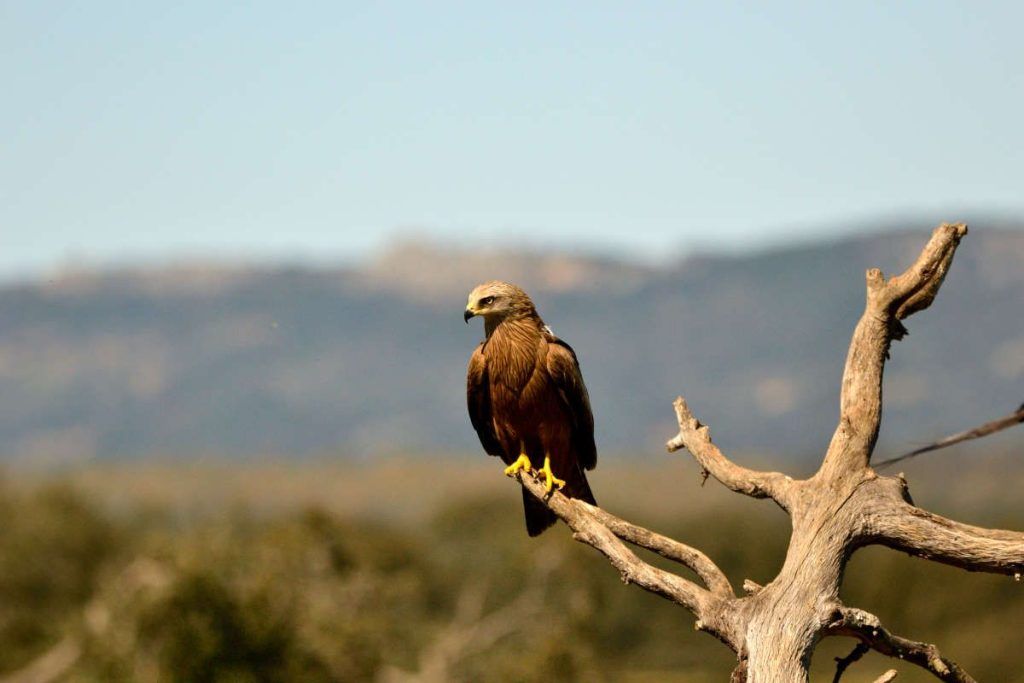
He Bokeh effect It's a lens's ability to create a blur in certain areas of the photograph. In the case of the Tamron, it's simply phenomenal. Look at the blur of the mountains behind the silhouette of this beautiful black kite.
It's true that this lens, like its Sigma counterpart, demands a lot of light... it devours it. That's the disadvantage of such a long focal length with a minimum aperture of f/5. But when we have light in the scene... oh... when we have light in the scene, the bokeh we can achieve is wonderful.
The Tamron telezoom's vibration reduction system is a marvel. Simple yet effective, it allows us to shoot handheld at maximum focal length without losing quality. Of course, you have to take certain precautions and be extremely careful with vibrations. You have to stabilize your body well before pressing the shutter button... but in an emergency, you can shoot handheld with this lens...
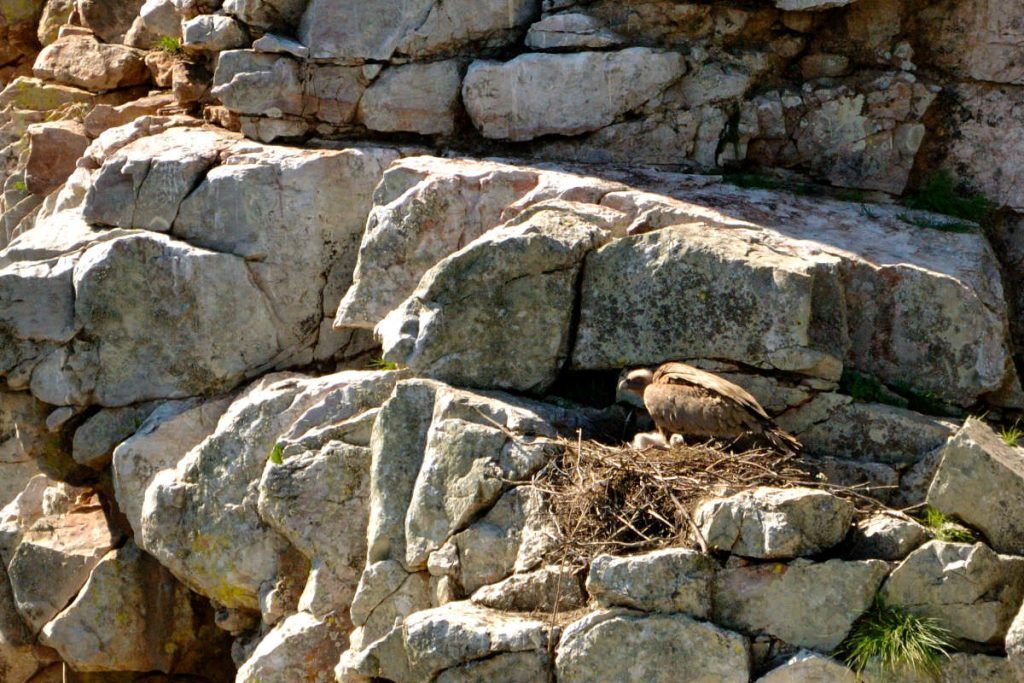
...And get photographs as beautiful as this one. A chick of griffon vulture peeking out of their nest. At this time of year, the chicks have grown enough to occasionally peek out and demand food. It's during these months of the year that we can observe them with binoculars on the rocky ledges they inhabit, as is the case in Monfragüe.
Yes, my friends. Both the Tamron and the Sigma 150-600mm are two great machines. My impressions of both lenses have been very similar. This is logical considering they are two equivalent telephoto lenses designed by two "generic" companies to compete with competitive prices in a very specialized and therefore very expensive market.
Greetings.