
Hello friends,
During this month of March we are testing two monsters, two ultra telephoto lenses which combined with an APSC camera allow us to reach a focal length of 900mm! If you haven't yet experienced what it means to photograph with one of these lenses, in this article I will try to describe the good and bad things, the impressions and sensations to handle the Sigma 150-600mmWant to know more? Keep reading.
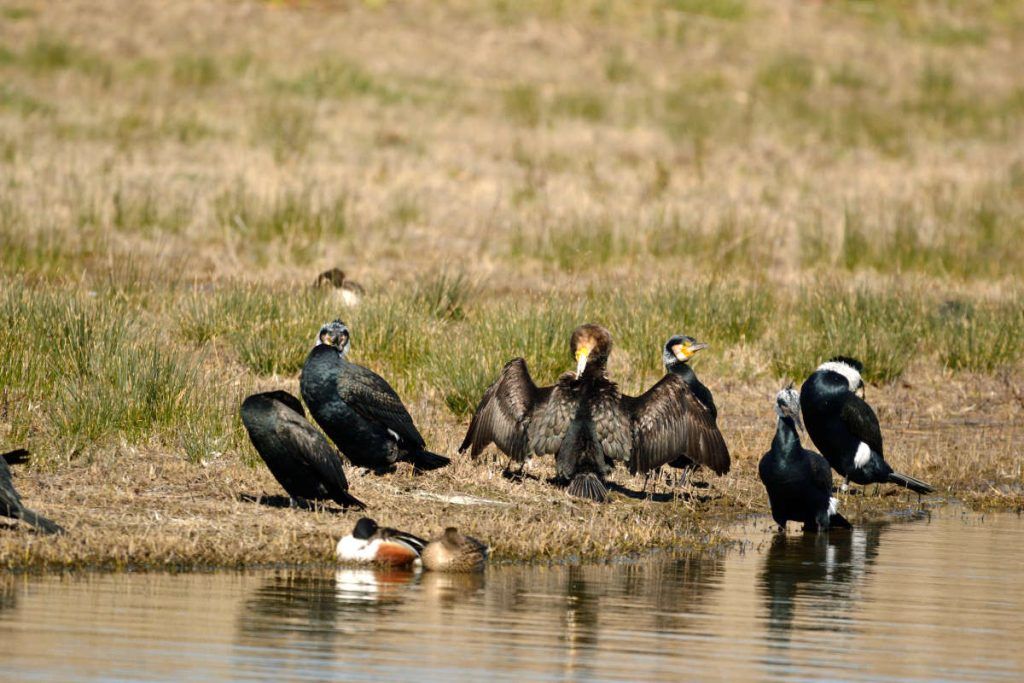 Handling a telephoto lens of this focal length is not easy. Focusing sharply on the subject, controlling vibrations (shaking), and framing at maximum focal length are complex tasks when handling a lens weighing almost 2 kg. previous article I've already told you about the most important features and specifications of the Sigma 150-600mm. In this article, I want to focus on the sensations this ultra-telephoto lens leaves on our "photographic palate" when we shoot with it. What are the good and bad things about using a bug of this size. So without further ado, let's get to it with the summary of my impressions and sensations.
 Very simple. The first thing you feel when shooting with this lens is... the enormous weight of the gadget. As you've already read, the telephoto lens weighs 1.9 kg. And that's the first limiting factor of this lens. It's not something we can hang around our neck while sightseeing in the city... although it wouldn't be very... useful if what we want to do is travel photography.
Shooting handheld with it is possible... although we have to check very well ours heart rate, position ourselves so that we rest our elbows against our own chest and with our legs firm and open at a good angle for greater stability. Of course, if we want to shoot without a tripod we will have to use the vibration reduction mode I, as I already explained in the previous article.
When I first shot the Sigma 150-600mm with this reduction mode activated, I was in for a big surprise. The system is agile and silent. It is also very fast and it takes practically no time to stabilize. We noticed the change as soon as we pressed the shutter button halfway and focused. The telephoto lens motor stabilizes the image without us even noticing. There's no additional noise or vibration, and the image stops "tremble"in the blink of an eye.
I have to say I was very surprised. I was used to shorter lenses, like my Tamron 70-300mm. But the speed, silence, and agility of this telezoom's Vibration Reduction mode is astonishing.
It's true. I thought that at long distances focusing could be a nightmare... and in some ways it is. You have to be very clear about what you're going to photograph, how fast the subject of the action will be moving (if it's moving at all), and how to choose the focus mode suitable for our camera before shooting.
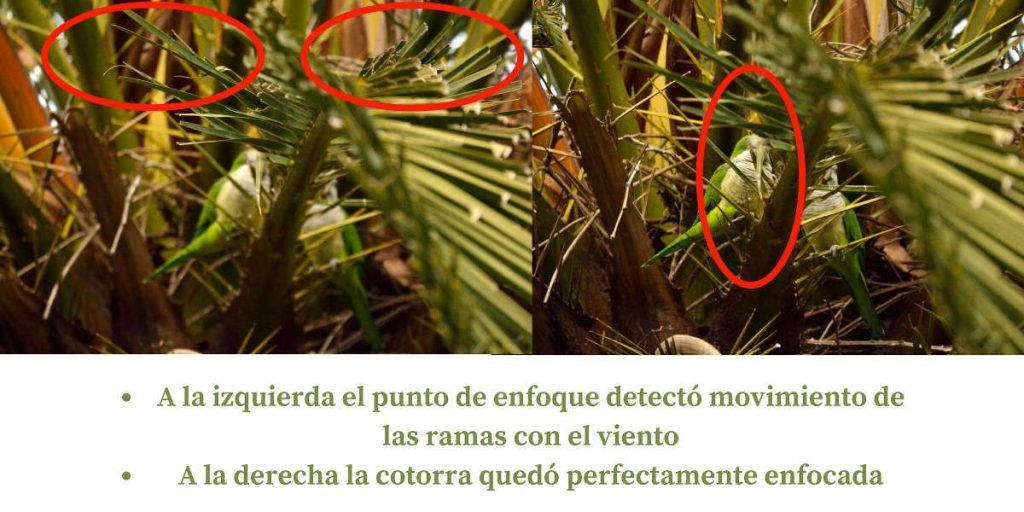
In this photo you can see a clear example of what choosing a mode of wrong approachI was taking photos of Argentine parakeets in flight when I suddenly spotted this parakeet perched among the leaves of a palm tree. Since my focus mode was set to continuous focus and the wind was moving the branches, the camera focused on the palm tree leaves on the first attempt. Only when I selected the correct focus mode did the parakeet appear sharp and in focus in the next shot.
Once the correct focus mode is chosen, the lens does practically the rest. The system that Sigma has installed with a 3-position focus limiter It may seem cumbersome at first, but it's very intuitive and also greatly improves focusing speed and accuracy. We can limit the focus between 2 and 10 meters, from 10 meters to infinity, and from 0 meters to infinity. Clearly, this last option requires more focusing time and consumes more battery.
 In short, the Sigma 150-600mm is a bug Very serious. Getting used to its weight is a matter of time, and I personally found it to be a very quick process. Managing its vibration reduction system is also very intuitive, and mode II Designed specifically for lateral vibrations mounted on a tripod, it is a success that other models have not been able to copy.
Let's not kid ourselves. This isn't a lens for portraits or travel photography. It's an ultra-telephoto lens that fulfills its basic purpose: long-distance wildlife, sports, and action photography. And it fulfills that purpose remarkably well, and is equally at home with more expensive lenses in the same focal range.
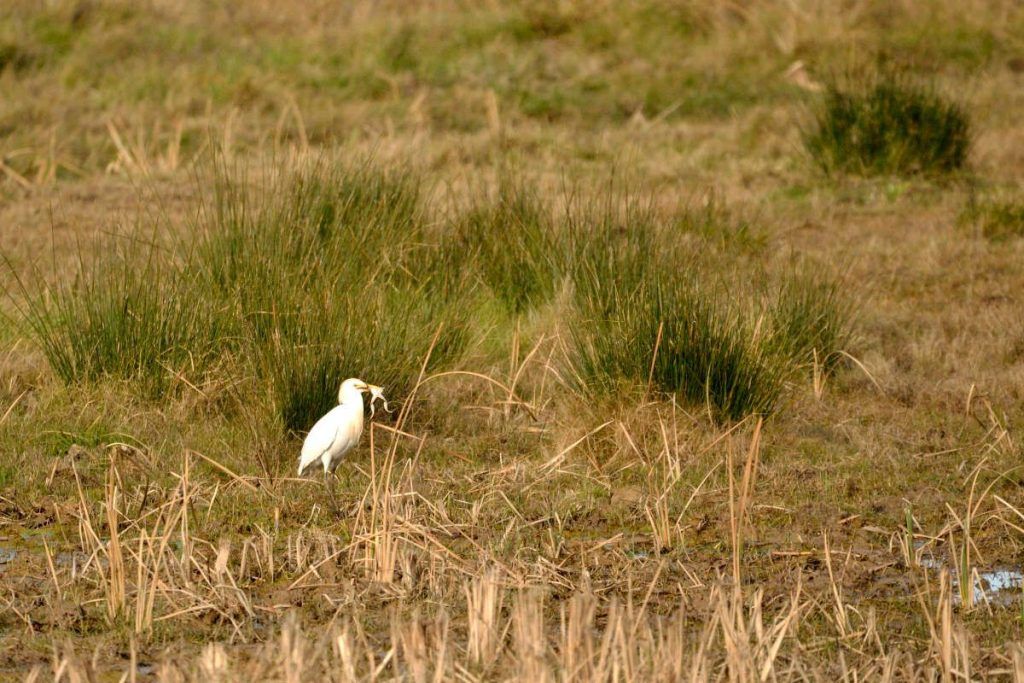
The images we get with this lens will astonish us. If it weren't for the Sigma 150-600mm, I would never have discovered what this little egret had in its beak. With a medium telephoto zoom, we would never have appreciated the detail of the tiny toad it was feeding on.
Friends, the sensations With this Sigma ultra telephoto lens, they've been fantastic. After 48 hours with it, I've managed to get "closer" to those remote areas where wildlife lives and coexists, and which surprise us so much when we discover them.
It's not a cheap lens, although if you're into sports or wildlife photography, you'll eventually be tempted to try one of these ultra zooms. And once you try it... you'll be lost 😉
Happy Easter and don't miss the following articles dedicated to another of the ultra telephoto lenses on the market: the Tamron 150-600mm.