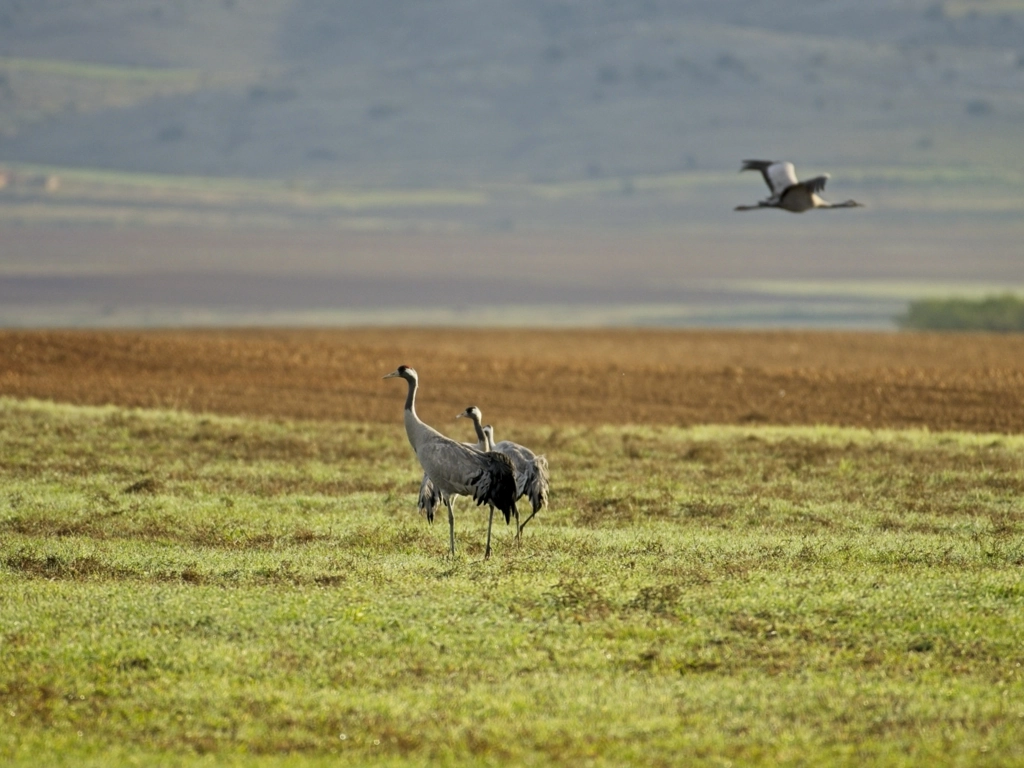
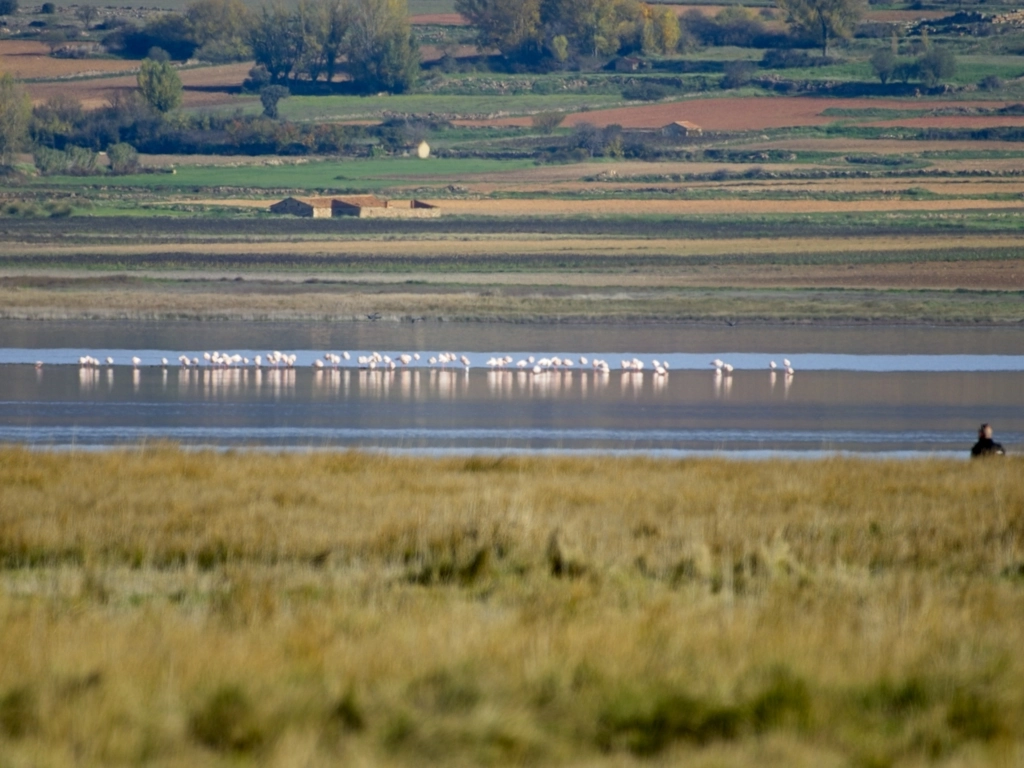
The Gallocanta lagoons, straddling Teruel and Zaragoza, are one of the usual roosting sites for European cranes during their winter migration to warmer regions.
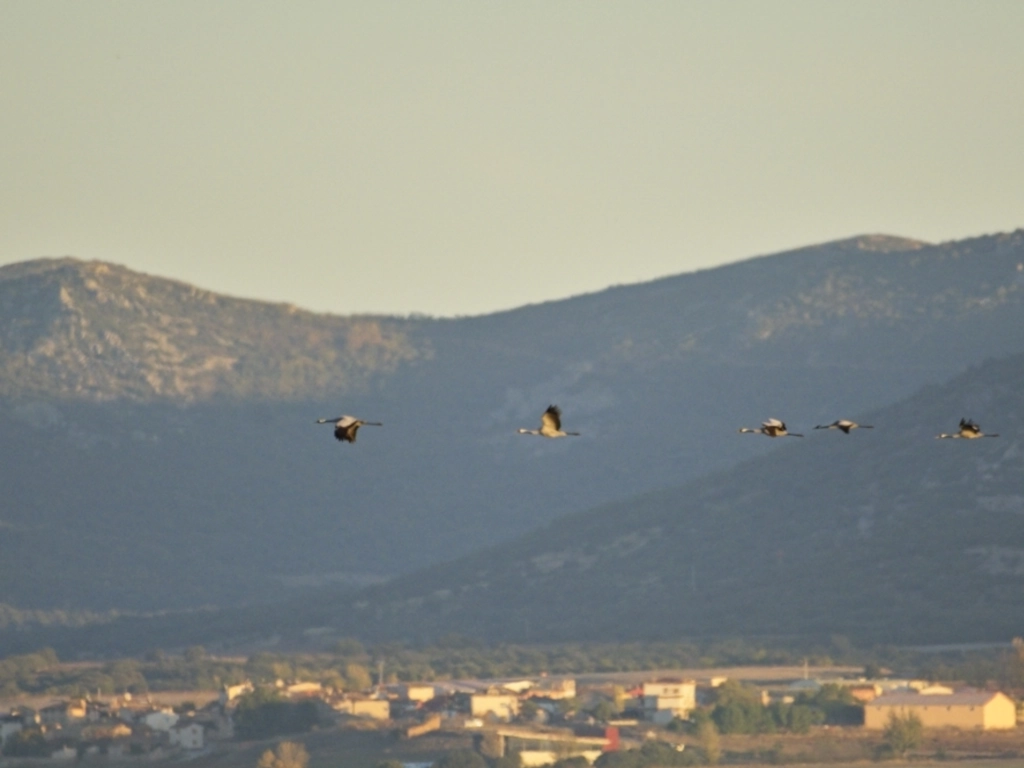
Between November and February, thousands of cranes gather in the region. On peak days, you can see up to half a million cranes in a single day.
On those days when the cranes number in the tens or even hundreds of thousands, hearing the sound of their arrival or departure from the lagoon is one of the most breathtaking experiences in nature.
During this day dedicated to cranes, we will spend our time learning more about their winter habits on the Iberian Peninsula. Why do they migrate in winter? What do they eat? Where do they sleep?
At dawn, we will watch and listen as the cranes take flight, heading toward nearby fields to feed and spend the day.
After breakfast we will travel across the Gallocanta basin, visiting its various lagoons and landscapes while learning more about crane behavior and diet. During the early weeks of winter, we might even spot crane pairs with their chicks!
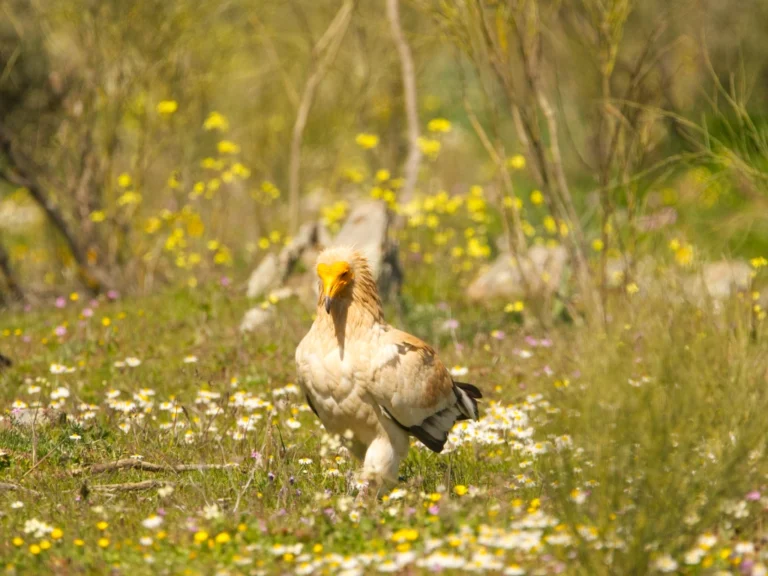
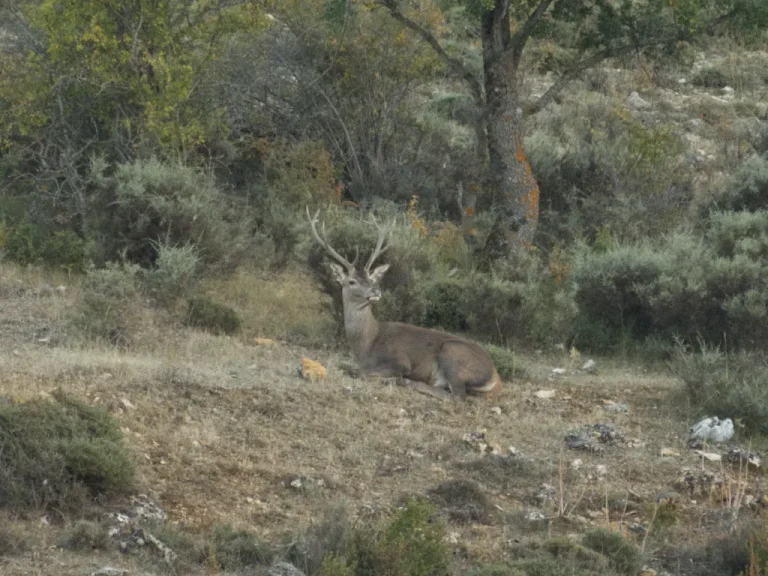
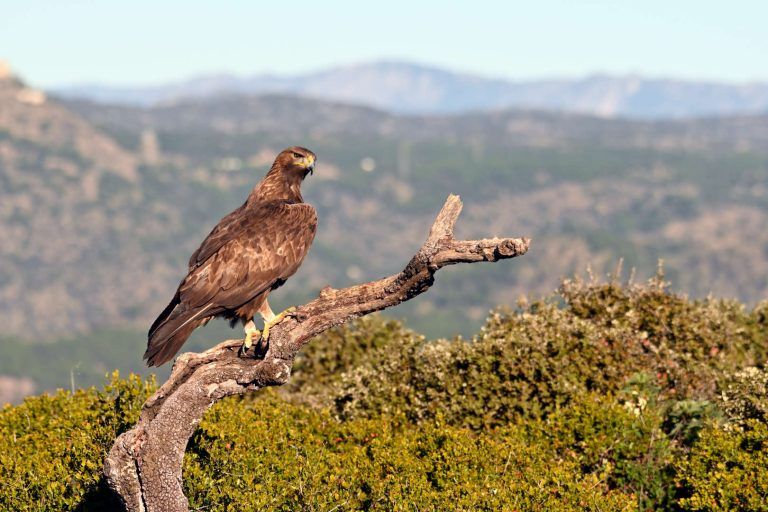
After lunch we will visit other parts of the region to discover and observe other inhabitants of Gallocanta. The area is home to over 220 bird species, not to mention a wide variety of mammals we can track, including a brief activity focused on identifying animal footprints.
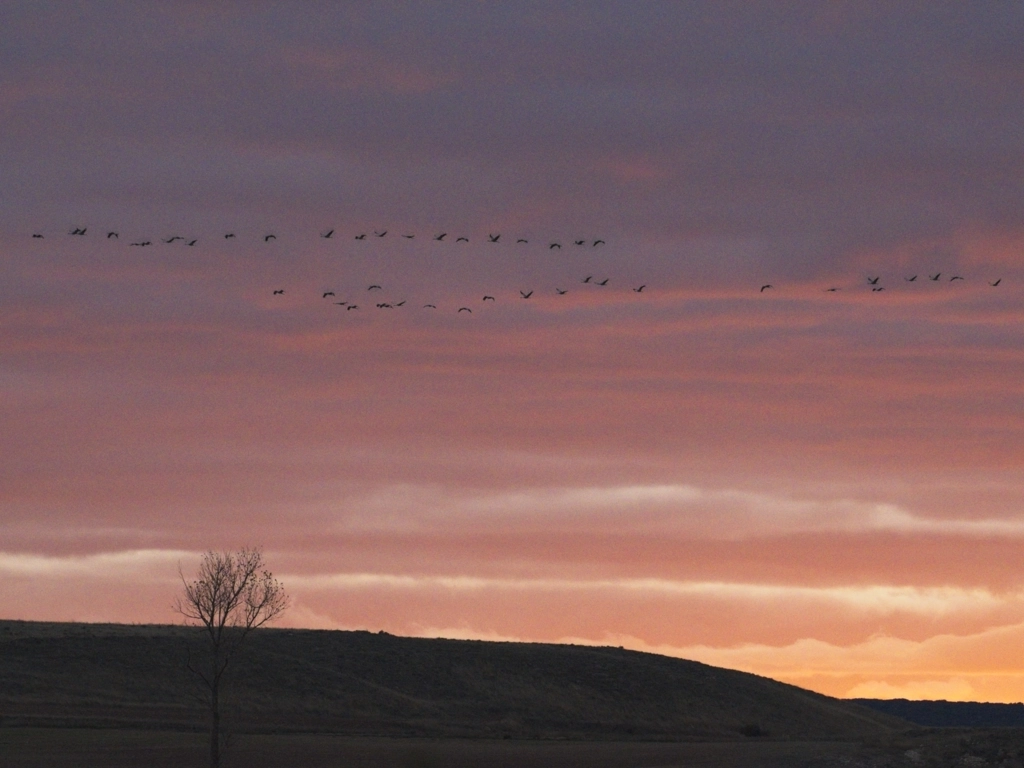
At dusk, we will return to the main lagoon to watch and listen as the cranes arrive at their roosting site—one of the most rewarding spectacles of the day.

From the meeting point, we’ll drive along well-maintained forest tracks around the Gallocanta lagoon and reach some of the best areas and observation spots.
Keep in mind that this activity takes place during sunrise, or the sunset. The Gallocanta region is especially cold in winter, so make sure to bring warm clothes and always check the local weather forecast.
The Gallocanta lagoon is a specially protected area. Besides being a Special Protection Area for Birds (SPA), there are some places and spots near the lagoon with restricted access. But don’t worry—you’ll be surprised at how close we can see the cranes from some of the observation points.
At dawn, we will watch the cranes take flight, and afterwards, we will have time for a hearty breakfast, leisurely gathering strength for the rest of the day.
During the morning, we will explore the Gallocanta basin, observing cranes at their feeding grounds, as well as other seasonal birds, wintering raptors, and the occasional curious mammal that might approach us.
We will dine at one of the region's restaurants, savoring traditional dishes.
In the afternoon, we will carry out a brief tracking and footprint identification activity to learn about the mammals inhabiting the Gallocanta area.
At dusk, we will return to the main lagoon to watch the cranes arrive at their roost and enjoy a final snack while listening to the deafening calls of these beautiful birds.
Of course! Let me know what you're interested in and we'll work it out for you.